Lucid Motors Unveils Strategic Overhaul: $1.4 Billion Savings and Future Growth Pillars
Lucid Motors has announced a comprehensive “operational reset” aimed at stabilizing its financial position and charting a path to profitability. The ambitious plan centers on achieving $1.4 billion in cash reductions while simultaneously advancing three critical “must-win” initiatives: a mid-sized electric vehicle, the completion of its AMP-2 factory in Saudi Arabia, and a new robotaxi program. However, the anticipated mid-sized vehicle, initially projected to launch by late 2026 with a starting price under $50,000, is now delayed until next year. New CEO Silvio Napoli emphasized a commitment to quality, stating, “Our objective is clear: Mid-size will launch only when every process and quality requirement have been met. We will not repeat the mistakes of the past by bringing a product to market before it is ready.”
To realize the $1.4 billion in cash savings, Lucid plans to reduce capital expenditures by $500 million, project savings of $600 million to $800 million in inventory, and cut operating expenses by $200 million. These measures, if successful, are expected to provide sufficient liquidity well into 2027. Napoli, in his inaugural quarterly earnings call as CEO, was candid about past shortcomings, acknowledging that Lucid had “disappointed on several fronts” due to inconsistent execution, missed commitments, premature product launches, and slow responses to quality issues. In response, the company has already initiated significant changes, including a leadership shake-up, the hiring of several new top executives, a reduction in direct reports to the CEO, and a layoff of 18% of its workforce (approximately 1,500 employees) in June, following an earlier 12% cut. Additionally, Lucid eliminated the second shift of EV production at its Casa Grande, Arizona factory, contributing to $158 million in projected annualized savings.
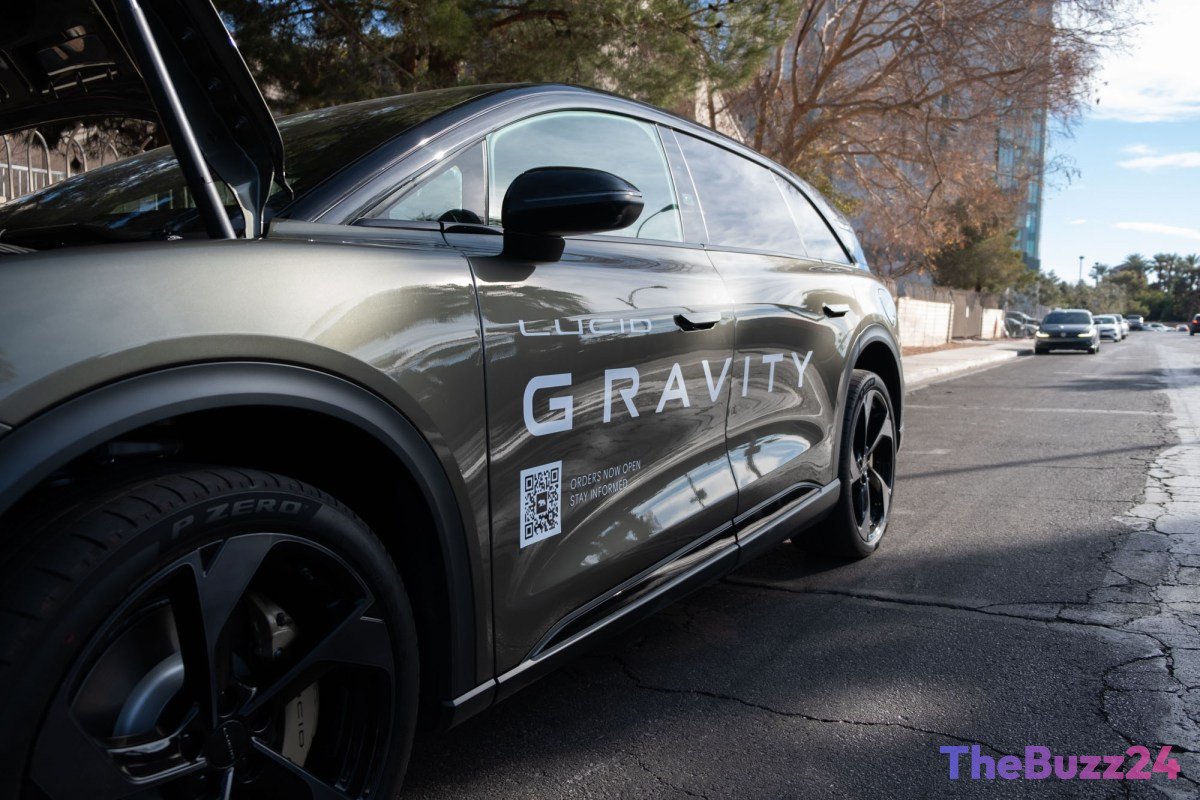
Despite these strategic maneuvers, Lucid’s second-quarter earnings report revealed ongoing financial challenges. The company reported revenue of $405 million, an increase from $259.4 million in the same quarter last year, but also a net loss of $1.26 billion, or $3.30 per share, compared to a loss of $855.3 million, or $2.80 per share, a year prior. Lucid concluded the second quarter with $3 billion in total liquidity. Beyond cost reductions, the company is heavily banking on its “must-win” projects. The mid-sized EV, codenamed Cosmos, remains a core strategic element despite its delay. Furthermore, Napoli expressed strong confidence in the robotaxi program, a collaboration with Uber and Nuro, which integrates Nuro’s self-driving technology into Lucid Gravity SUVs for a premium service operated by Uber. This initiative is seen as a high-margin opportunity to diversify earnings beyond direct consumer sales, leading to the creation of a new business unit, Lucid Technologies, focused on AI, advanced driver assistance systems, and digital technology. Testing of 100 vehicles is underway in Houston and the San Francisco Bay Area, with regular production for the robotaxi service expected to begin in the fourth quarter for a late 2026 launch.
Addressing recent market speculation, Napoli firmly denied rumors that the company had engaged consulting firm AlixPartners to explore bankruptcy. He clarified that AlixPartners’ involvement was solely focused on supporting Lucid’s cost-savings plan and streamlining operations, with their assignment expected to conclude by the end of the current month.
Key Takeaways
- Lucid Motors is implementing a major "operational reset" targeting $1.4 billion in cash savings through reduced capital expenditures, inventory optimization, and operating cost cuts.
- The company's future growth hinges on three key initiatives: the delayed mid-sized electric vehicle (Cosmos), the AMP-2 factory in Saudi Arabia, and a high-margin robotaxi program with Uber and Nuro.
- Despite a significant increase in Q2 revenue, Lucid reported a larger net loss, underscoring the urgency of CEO Silvio Napoli's turnaround strategy which includes leadership changes and workforce reductions.
Editor’s Analysis & Impact
Lucid Motors’ comprehensive operational reset underscores the intense capital demands and competitive pressures within the electric vehicle industry. While the $1.4 billion in cost savings is crucial for immediate liquidity, the delay of the mid-sized EV, a key volume driver, could impact market perception and competitive positioning against rivals. The strategic pivot towards a high-margin robotaxi service with Uber and Nuro represents a significant diversification effort, potentially unlocking new revenue streams beyond traditional vehicle sales and aligning with broader industry trends in autonomous mobility. However, successful execution of these ambitious plans, alongside restoring investor confidence and improving operational consistency, will be paramount for Lucid’s long-term viability in a rapidly evolving market.
Frequently Asked Questions
Q: What are the main components of Lucid Motors' "operational reset"?
A: The reset focuses on achieving $1.4 billion in cash savings by reducing capital expenditures, optimizing inventory, and cutting operating expenses. It also prioritizes three "must-win" initiatives: launching a mid-sized EV, completing the AMP-2 factory in Saudi Arabia, and developing a robotaxi program with Uber and Nuro.
Q: Why is Lucid Motors delaying the launch of its mid-sized electric vehicle?
A: CEO Silvio Napoli stated that the mid-sized vehicle, codenamed Cosmos, is being delayed until next year to ensure all process and quality requirements are met. This decision aims to prevent past mistakes of bringing products to market before they are fully ready, emphasizing a commitment to quality and consistent execution.
Q: How does Lucid Motors plan to generate revenue beyond traditional EV sales?
A: Lucid is investing significantly in a robotaxi program through a partnership with Uber and Nuro. This initiative, managed by a new Lucid Technologies unit, aims to leverage AI and advanced driver assistance systems to offer premium self-driving services, projecting margins that vastly exceed those of the traditional retail model.
AI Disclosure: This article is based on verified data and official reports. Our Team and AI have cross-referenced every financial detail with primary sources to ensure total accuracy.
More from this Category