Hungary Faces Political Transformation as Péter Magyar Prepares to Take Power
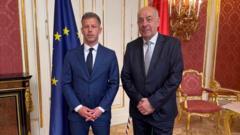
Péter Magyar has officially begun the transition of power in Hungary following his Tisza party’s landslide victory, which effectively ended the 16-year governance of Viktor Orbán. During a high-stakes meeting with President Tamás Sulyok, Magyar moved to solidify his mandate, with expectations mounting that he will be formally nominated as the next prime minister. Magyar has expressed an urgent timeline, aiming to assume office by early May to begin addressing the nation’s pressing domestic and international challenges.
A primary pillar of Magyar’s incoming administration is the complete restructuring of Hungary’s public media sector. Having long criticized state-run outlets as instruments of political propaganda, Magyar has moved to suspend current news operations. He plans to install a new, independent broadcasting authority tasked with restoring journalistic integrity and ensuring that public media serves as a neutral source of information for all citizens. Magyar maintains that this transition is a necessary step toward transparency rather than an act of political vengeance.
On the international stage, the change in leadership signals a potential thaw in relations between Budapest and the European Union. Hungary has been embroiled in a long-standing dispute with Brussels, resulting in the freezing of billions of euros in funding due to concerns over democratic standards. Magyar has already initiated discussions with European Commission President Ursula von der Leyen, aiming to unlock these vital financial resources. Furthermore, his administration is expected to re-evaluate Hungary’s stance on regional aid, including the contentious issue of support for Ukraine, as the nation seeks to realign itself with broader European policy objectives.
Key Takeaways
- Péter Magyar is set to become Hungary's next prime minister following a decisive parliamentary victory that ended the Fidesz party's 16-year rule.
- The new administration plans to overhaul state media, replacing current operations with an independent authority to ensure unbiased reporting.
- Magyar is actively working to repair relations with the European Union to unfreeze billions in suspended funds and shift Hungary's foreign policy stance.
Editor’s Analysis & Impact
The political shift in Hungary represents a significant realignment for Central Europe. By moving to dismantle the state-controlled media apparatus and engaging directly with the European Commission, Magyar is signaling a pivot toward democratic institutionalism. The market impact will likely be positive in the short term, as the potential release of €17 billion in EU funds could stabilize the Hungarian economy and improve investor confidence. However, the transition faces hurdles; the legacy of the previous administration’s policies, particularly regarding the veto on Ukraine aid and deep-seated cronyism, will require delicate maneuvering. The international community will be watching closely to see if Magyar can successfully balance domestic reform with the geopolitical pressures of the EU and the lingering influence of the former ruling party.
Frequently Asked Questions
Q: What is Péter Magyar's primary goal for Hungarian public media?
A: Magyar intends to suspend current news operations and establish a new, independent broadcasting authority to eliminate political bias and restore public trust in state media.
Q: How will the change in leadership affect Hungary's relationship with the EU?
A: Magyar is actively seeking to mend ties with the European Commission to unfreeze billions of euros in suspended funding and realign Hungary with European democratic values.
AI Disclosure: This article is based on verified data and official reports. Our Team and AI have cross-referenced every financial detail with primary sources to ensure total accuracy.
More from this Category