Powerful 7.5-Magnitude Earthquake Triggers Tsunami Warnings Across Japan’s Coastline
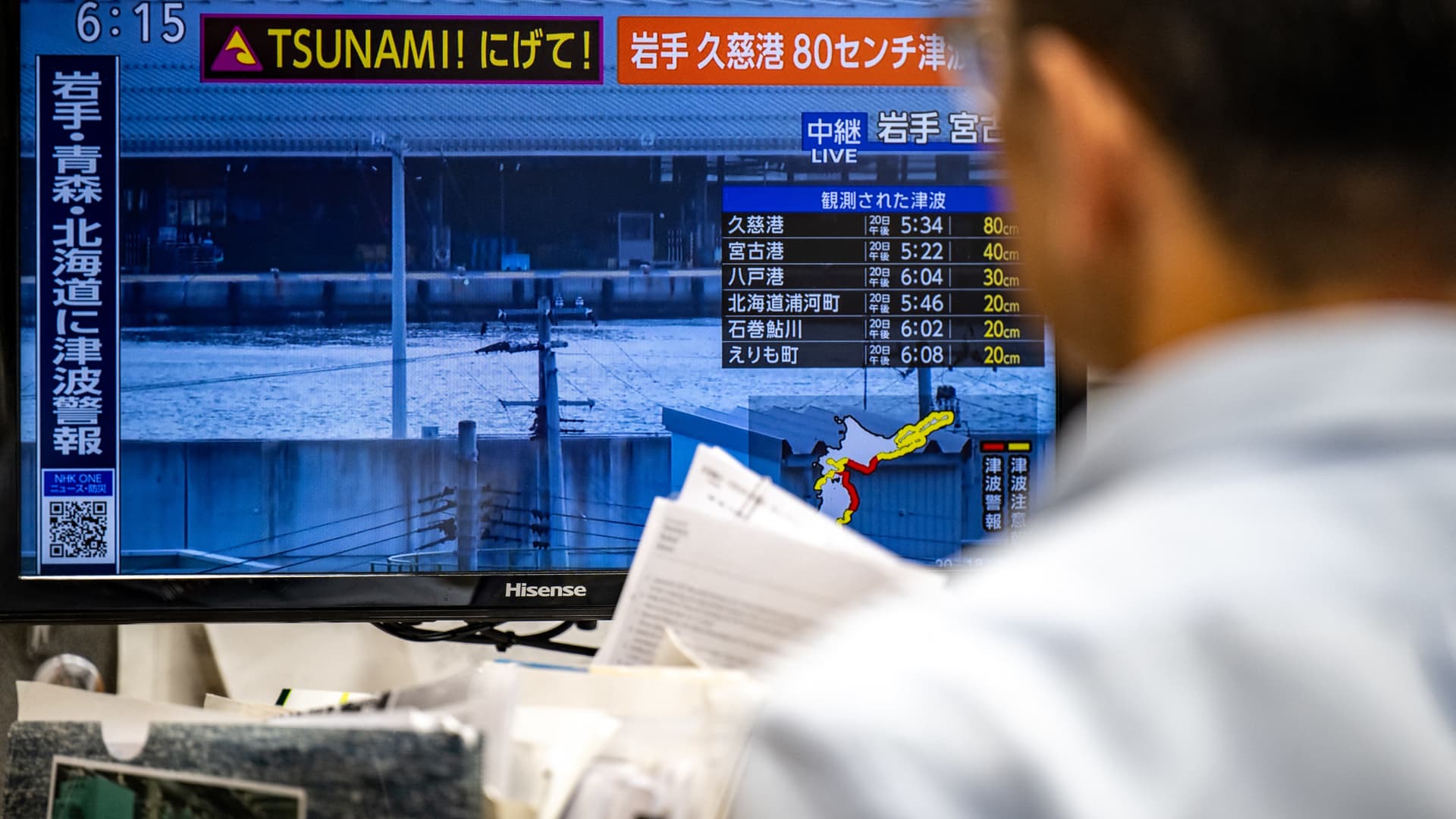
A significant 7.5-magnitude earthquake struck off the northeastern coast of Japan on Monday, triggering urgent tsunami warnings and mass evacuation orders for residents in low-lying coastal areas. The seismic event, which occurred at 4:52 p.m. local time, prompted officials to warn of potential waves reaching up to 3 meters in height. While initial observations recorded smaller waves of approximately 80 centimeters, authorities have maintained high-alert status for the northern regions of Honshu and Hokkaido, where the threat of larger surges remains a critical concern.
Government officials have confirmed that there are no immediate reports of casualties or widespread structural collapse, though the situation remains fluid. As a precautionary measure, transportation infrastructure has been significantly impacted, with bullet train services suspended and several major motorways closed to ensure public safety. Communities such as Otsuchi and Kamaishi—areas still bearing the memory of the 2011 disaster—have initiated swift evacuation protocols to move thousands of residents to higher ground.
The Japan Meteorological Agency reported that the earthquake originated at a depth of 10 kilometers in the Pacific Ocean, registering an ‘upper 5’ on the local seismic intensity scale. This level of shaking is sufficient to cause significant difficulty in movement and potential damage to unreinforced concrete structures. Experts are cautioning that the region should prepare for a series of powerful aftershocks that could persist for days or even weeks, posing a continued risk of flooding and debris displacement.
Despite the severity of the tremor, energy infrastructure appears to have remained stable. Both Hokkaido Electric Power Co and Tohoku Electric Power Co have reported no abnormalities at their idled nuclear facilities in the affected region. Japan remains one of the most seismically active nations in the world due to its location along the Pacific ‘Ring of Fire,’ a reality that necessitates the country’s highly advanced disaster preparedness and rapid-response systems.
Key Takeaways
- A 7.5-magnitude earthquake struck off Japan's northeastern coast, triggering immediate tsunami warnings for coastal residents.
- While no immediate casualties were reported, transportation services including bullet trains were suspended as a safety precaution.
- Nuclear power facilities in the affected region remain stable and have reported no abnormalities following the seismic event.
Editor’s Analysis & Impact
The recent earthquake serves as a stark reminder of Japan’s perpetual vulnerability to seismic activity and the effectiveness of its robust disaster management infrastructure. From an economic perspective, the immediate suspension of transport networks highlights the fragility of supply chains in disaster-prone regions, though the lack of damage to energy infrastructure is a positive indicator of improved safety standards since the 2011 Fukushima crisis. Moving forward, the focus will shift to the long-term psychological and economic recovery of coastal communities that remain on high alert. The incident underscores the necessity for continued investment in early-warning systems and resilient infrastructure, as the ‘Ring of Fire’ remains a constant variable in the nation’s long-term economic and social planning.
Frequently Asked Questions
Q: Are there any reports of nuclear power plant damage?
A: No. Both Hokkaido Electric Power Co and Tohoku Electric Power Co have confirmed that their idled facilities in the region are operating normally with no abnormalities detected.
Q: Why is Japan so prone to earthquakes?
A: Japan is located along the Pacific 'Ring of Fire,' a major area in the basin of the Pacific Ocean where a large number of earthquakes and volcanic eruptions occur due to the movement of tectonic plates.
AI Disclosure: This article is based on verified data and official reports. Our Team and AI have cross-referenced every financial detail with primary sources to ensure total accuracy.
More from this Category