Parisian Engineer Secures Picasso Masterpiece in Record-Breaking Charity Raffle
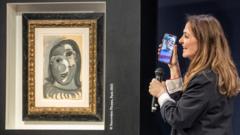
A 58-year-old engineer residing in Paris has emerged as the winner of a prestigious 1941 Pablo Picasso portrait, ‘Tête de Femme’ (Head of a Woman), following his participation in a global charity raffle. The artwork, which depicts the artist’s famous muse Dora Maar, was the grand prize in the ‘1 Picasso for 100 euros’ campaign. The winner, Ari Hodara, reportedly entered the contest on a whim, only to find himself the owner of a significant piece of art history.
The initiative proved to be a massive success, drawing in over 120,000 participants who purchased tickets at €100 each. The campaign generated approximately €11 million in total proceeds. After covering the acquisition costs of the painting from the Opera Gallery, the surplus funds are being directed toward humanitarian initiatives and medical research, with a specific emphasis on supporting France’s Alzheimer’s Research Foundation.
This event represents the third iteration of this unique fundraising model, which has previously supported heritage preservation in Lebanon and sanitation infrastructure in Africa. Given that the winner is based in Paris, the logistics of transferring the valuable painting are expected to be seamless. The substantial donation is set to provide a major financial injection into scientific research aimed at finding treatments for Alzheimer’s disease.
Key Takeaways
- Parisian engineer Ari Hodara won a 1941 Picasso portrait, 'Tête de Femme,' through a charity raffle.
- The '1 Picasso for 100 euros' campaign raised €11 million to benefit Alzheimer’s research and global humanitarian projects.
- The raffle sold over 120,000 tickets, marking the third successful iteration of this unique fundraising model.
Editor’s Analysis & Impact
The success of the ‘1 Picasso for 100 euros’ raffle illustrates a powerful shift in philanthropic strategy, where high-value assets are used to incentivize mass-market participation. By lowering the barrier to entry for owning a blue-chip artwork, the organizers have created a scalable model that generates significant capital for non-profits. This approach not only provides a unique liquidity event for the art market but also demonstrates how cultural prestige can be leveraged to address urgent global health and social issues. Moving forward, this model could serve as a blueprint for other organizations looking to modernize fundraising, provided they maintain rigorous standards of transparency and provenance. The ability to turn a single piece of art into an eight-figure donation suggests that the intersection of luxury assets and social impact will remain a potent force in future charitable endeavors.
Frequently Asked Questions
Q: What specific artwork was the grand prize in the raffle?
A: The prize was a 1941 gouache-on-paper portrait by Pablo Picasso titled 'Tête de Femme' (Head of a Woman), featuring his muse, Dora Maar.
Q: How will the funds raised by the raffle be utilized?
A: The majority of the €11 million raised is dedicated to supporting humanitarian initiatives and, specifically, France’s Alzheimer’s Research Foundation.
AI Disclosure: This article is based on verified data and official reports. Our Team and AI have cross-referenced every financial detail with primary sources to ensure total accuracy.
More from this Category