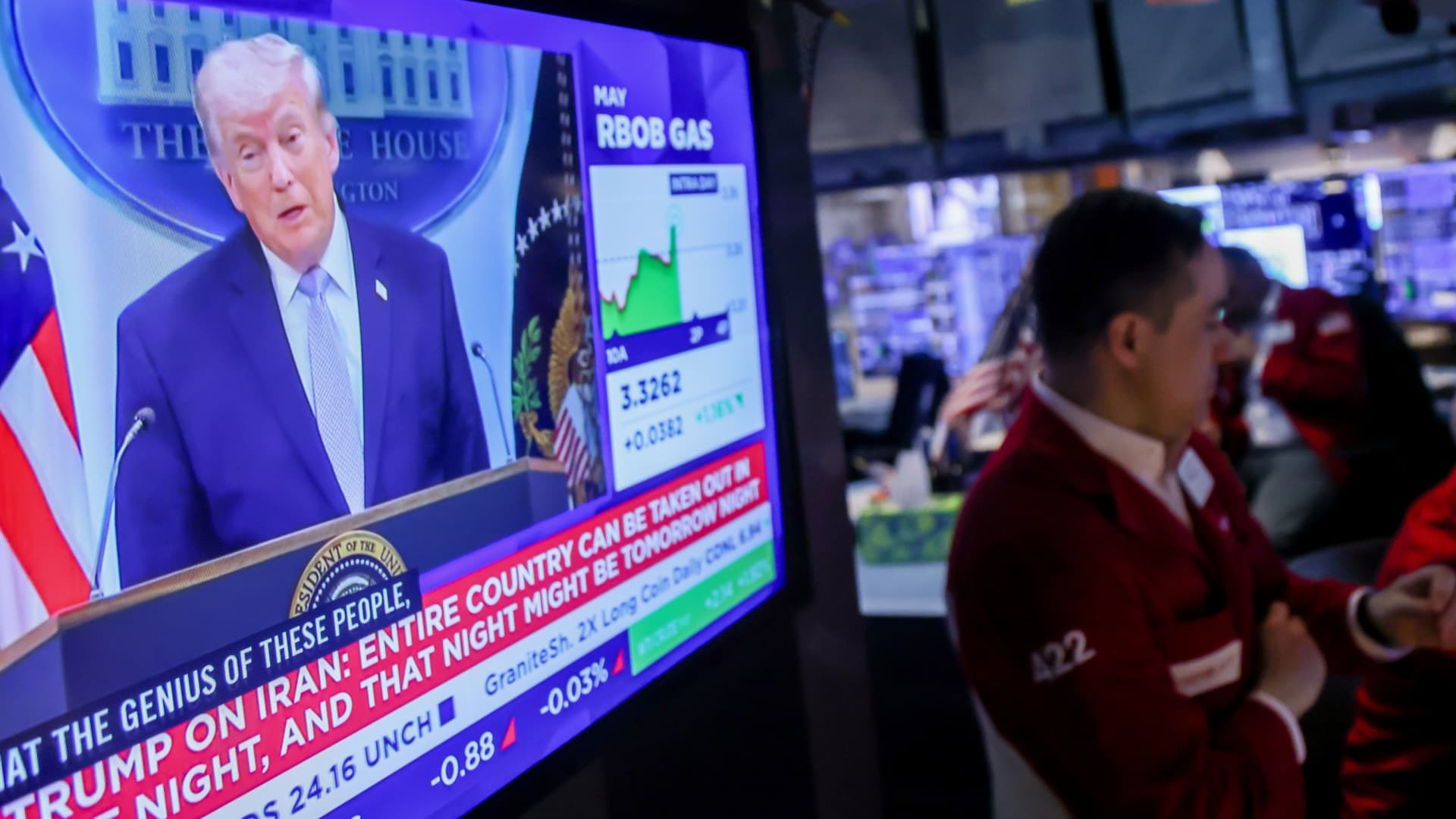
The ‘TACO’ Trade: Why Wall Street Is Betting Against Political Volatility
Wall Street has increasingly embraced a tactical market approach known as the ‘TACO’ trade, a strategy built on the premise that political brinkmanship rarely survives the pressure of economic reality. Since April 2025, market participants have observed a notable decline in volatility following geopolitical flare-ups, signaling a growing consensus that much of the current political rhetoric is performative rather than a precursor to fundamental structural shifts.
This evolving sentiment has led to a significant change in how institutional portfolios are managed. Rather than retreating during periods of political tension, many large-scale investors are now treating market dips caused by policy disputes as buying opportunities. This strategy relies on the assumption that government officials are ultimately tethered to the necessity of maintaining financial stability, forcing them to eventually walk back aggressive stances to avoid economic fallout.
However, the widespread adoption of this strategy has sparked debate among market analysts regarding its long-term viability. The ‘TACO’ trade operates on the belief that financial markets serve as a reliable check on governance. Critics warn that if this dynamic shifts—or if policymakers prioritize ideological agendas over market stability—investors who have become conditioned to expect a cycle of threats followed by concessions could face significant exposure to sudden, unpriced policy changes.
Key Takeaways
- The 'TACO' trade is a strategy where investors buy market dips caused by political rhetoric, betting that officials will prioritize economic stability over aggressive policy.
- Market participants have increasingly viewed geopolitical tensions as performative, leading to a decrease in volatility during periods of political friction.
- Analysts warn that relying on this strategy could be dangerous if the historical correlation between political threats and market-friendly concessions breaks down.
Editor’s Analysis & Impact
The emergence of the ‘TACO’ trade reflects a sophisticated, albeit risky, evolution in institutional risk management. By commoditizing political volatility, investors are essentially betting on the rational self-interest of policymakers. While this has proven profitable in the short term, it creates a dangerous feedback loop where markets may become desensitized to genuine geopolitical risks. The broader implication is a potential ‘boy who cried wolf’ scenario; if the market consistently ignores political warnings, a truly disruptive policy shift could catch the financial system entirely off guard. Moving forward, the sustainability of this trade depends on whether governments continue to view market stability as their primary mandate. If the political landscape shifts toward populism or protectionism that disregards market signals, the ‘TACO’ trade could quickly transform from a reliable strategy into a significant source of systemic vulnerability.
Frequently Asked Questions
Q: What does the 'TACO' trade stand for in the context of Wall Street?
A: The 'TACO' trade refers to a market strategy where investors capitalize on political volatility by buying into dips, operating on the belief that political threats are performative and will eventually be tempered by the need for economic stability.
Q: Why are some analysts concerned about the 'TACO' trade?
A: Analysts worry that the strategy assumes financial markets will always act as a check on government policy. If policymakers decide that economic stability is no longer their top priority, investors relying on this cycle of threats and concessions could face unexpected and severe losses.
AI Disclosure: This article is based on verified data and official reports. Our Team and AI have cross-referenced every financial detail with primary sources to ensure total accuracy.
More from this Category