Mass Evacuations Ordered as Intense Wildfires Sweep Through Southern France
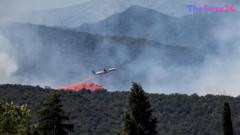
A massive wildfire in the foothills of the French Pyrenees has triggered the emergency evacuation of over 10,000 residents across more than a dozen towns and villages. The blaze, centered near Trévillach in the Pyrénées-Orientales region, has already consumed approximately 4,600 hectares of land. Authorities are currently engaged in a desperate battle to contain the flames, which have been exacerbated by high temperatures and strong, unpredictable winds that threaten to push the fire toward residential areas.
The scale of the emergency has necessitated significant logistical adjustments, including the disruption of the Tour de France. Organizers have issued an urgent plea for spectators to avoid the final 40 kilometers of the race’s third stage to ensure that emergency vehicles and firefighting equipment have unobstructed access to the affected zones. Race director Christian Prudhomme emphasized that the severity of the fire requires exceptional measures to prioritize public safety and firefighting efforts.
International support is bolstering the local response, with the European Commission deploying specialized firefighting aircraft from Cyprus and Sweden to assist in the containment efforts. The situation remains critical as the region faces a persistent heatwave, with temperatures forecasted to reach 40C. Similar wildfire threats have been reported across the border in Spain, where thousands of hectares have been scorched, highlighting a broader regional crisis driven by extreme weather conditions and a rapidly warming climate.
Key Takeaways
- Over 10,000 people have been evacuated from towns near the French-Spanish border due to a rapidly spreading wildfire.
- Tour de France organizers have restricted public access to the final stage of the race to prioritize emergency vehicle movement.
- International aid, including specialized aircraft from the EU, has been mobilized to assist in containment efforts amid a regional heatwave.
Editor’s Analysis & Impact
The current wildfire crisis in Southern France and Spain serves as a stark indicator of the increasing volatility of the European climate. As Europe continues to warm at a rate significantly higher than the global average, the frequency and intensity of summer heatwaves are placing unprecedented strain on emergency management infrastructure and public safety protocols. From an economic perspective, these events disrupt vital tourism and sporting events, while simultaneously creating long-term fiscal pressure on governments to invest in more robust fire-suppression technology and climate-resilient urban planning. The future outlook suggests that without significant adaptation strategies, the Mediterranean region will face recurring, high-impact environmental emergencies that threaten both human life and local economies, necessitating a shift toward more proactive, cross-border disaster management frameworks.
Frequently Asked Questions
Q: Why were spectators asked to stay away from the Tour de France?
A: Spectators were urged to stay away to ensure that emergency vehicles and firefighting equipment could access the fire-affected areas without being blocked by crowds or race-related traffic.
Q: What is driving the increased frequency of wildfires in this region?
A: The wildfires are being driven by a combination of extreme heatwaves, strong winds, and a long-term trend of rising temperatures in Europe, which is warming faster than the global average.
AI Disclosure: This article is based on verified data and official reports. Our Team and AI have cross-referenced every financial detail with primary sources to ensure total accuracy.
More from this Category