Meta’s AI Assistant ‘Muse’ Expands to Mac, Empowering Users to Automate Tasks
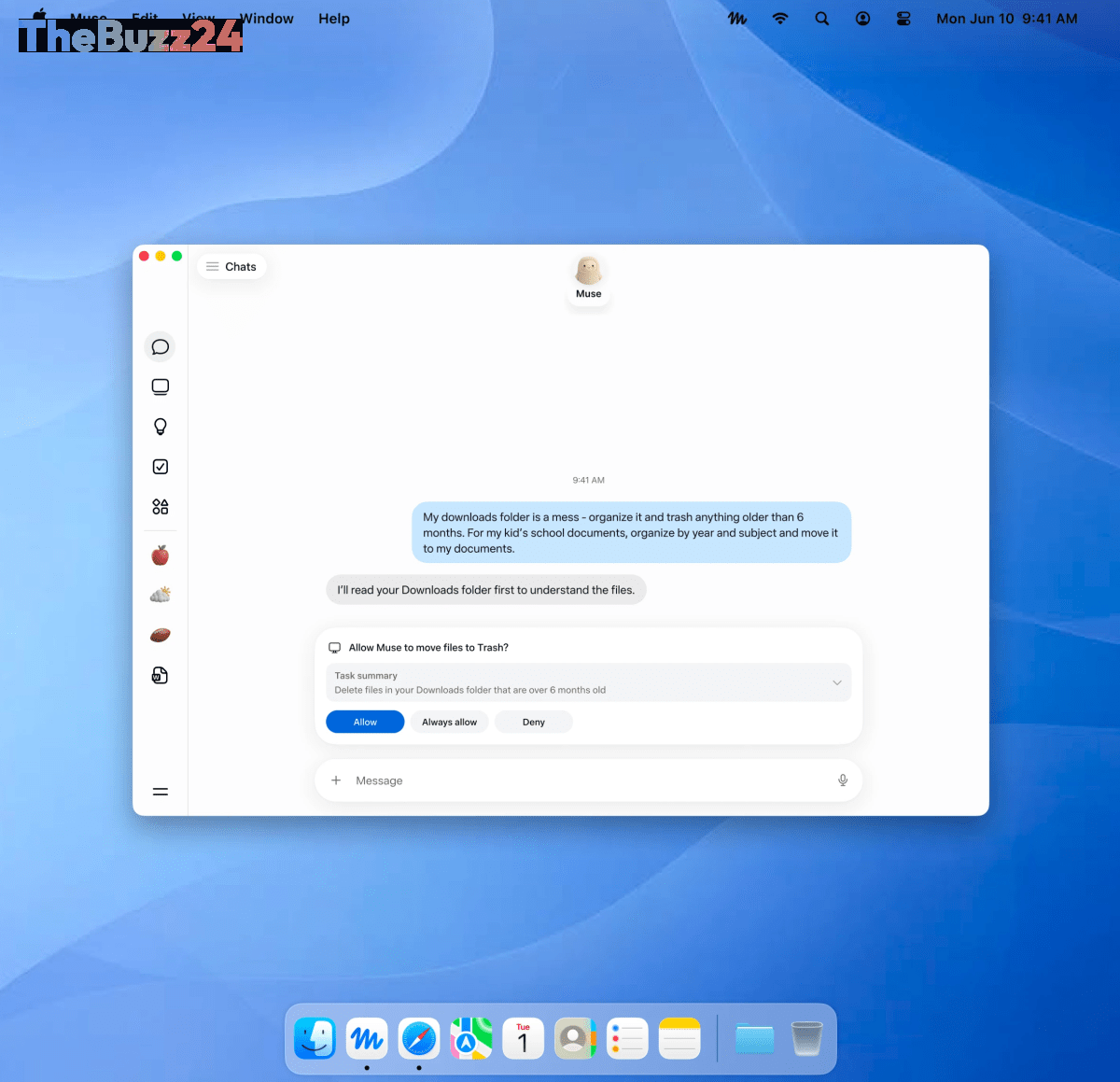
Meta has launched its AI assistant, Muse, on macOS, marking a significant expansion for the burgeoning field of agentic artificial intelligence. The new desktop application allows Muse to interact directly with users’ files, messages, calendar, notes, and email, all within their native applications on the Mac. This move follows the recent introduction of Muse on mobile and web platforms, where it rapidly gained traction, reaching the top of the U.S. App Store charts.
Users maintain granular control over Muse’s access to their data on the Mac, operating on an opt-in basis. Meta emphasizes that the AI will always seek explicit user approval before undertaking any sensitive actions, ensuring a secure and user-controlled experience. This launch arrives amidst a highly competitive landscape for consumer-facing AI agents, a sector many industry observers believe represents the future of computing and is poised to reshape the app industry, software-as-a-service models, and potentially even hardware.
The expansion of Muse to desktop platforms underscores the rapid innovation and intense competition among major tech players in the AI assistant space. Companies are racing to capture market share, with new features like voice calling being rolled out by both Muse and rival AI assistant Instinct in quick succession. This rapid development cycle highlights the urgency for these platforms to establish dominance in what is expected to be a transformative shift in how users interact with their digital devices.
Key Takeaways
- Meta's AI assistant, Muse, is now available on macOS, enabling it to interact with native applications and user files.
- User control and explicit consent for sensitive actions are key features of Muse's Mac integration.
- The launch intensifies competition in the rapidly growing market for consumer-facing AI agents, which is expected to disrupt various sectors of the tech industry.
Editor’s Analysis & Impact
The arrival of Muse on macOS signifies a critical step in the evolution of AI assistants from simple tools to proactive agents capable of performing complex tasks. This expansion into desktop environments is a strategic move by Meta to embed its AI deeper into users’ daily workflows, potentially challenging established operating system functionalities and third-party applications. The emphasis on user control and security is paramount in building trust, a crucial factor for widespread adoption. As the AI agent market matures, the ability to seamlessly integrate with existing digital ecosystems while offering tangible productivity gains will be the key differentiator for platforms like Muse, Instinct, and others vying for dominance.
Frequently Asked Questions
Q: What can Meta's Muse AI assistant do on a Mac?
A: On a Mac, Muse can interact with your files, messages, calendar, notes, and email directly within their native applications. It can perform actions based on your instructions, with user control over data access and requiring approval for sensitive tasks.
Q: How does Muse ensure user privacy and security on macOS?
A: Muse operates on an opt-in basis for accessing user data on the Mac. Meta states that the AI will always ask for explicit user approval before performing any sensitive actions, prioritizing user control and security.
Q: Why is Meta launching Muse on desktop now?
A: The launch coincides with intensifying competition in the consumer-facing AI agent market. Meta, like other major tech players, is rapidly developing and deploying AI assistants, recognizing their potential to become the future of computing and disrupt existing software and hardware industries.
AI Disclosure: This article is based on verified data and official reports. Our Team and AI have cross-referenced every financial detail with primary sources to ensure total accuracy.
More from this Category