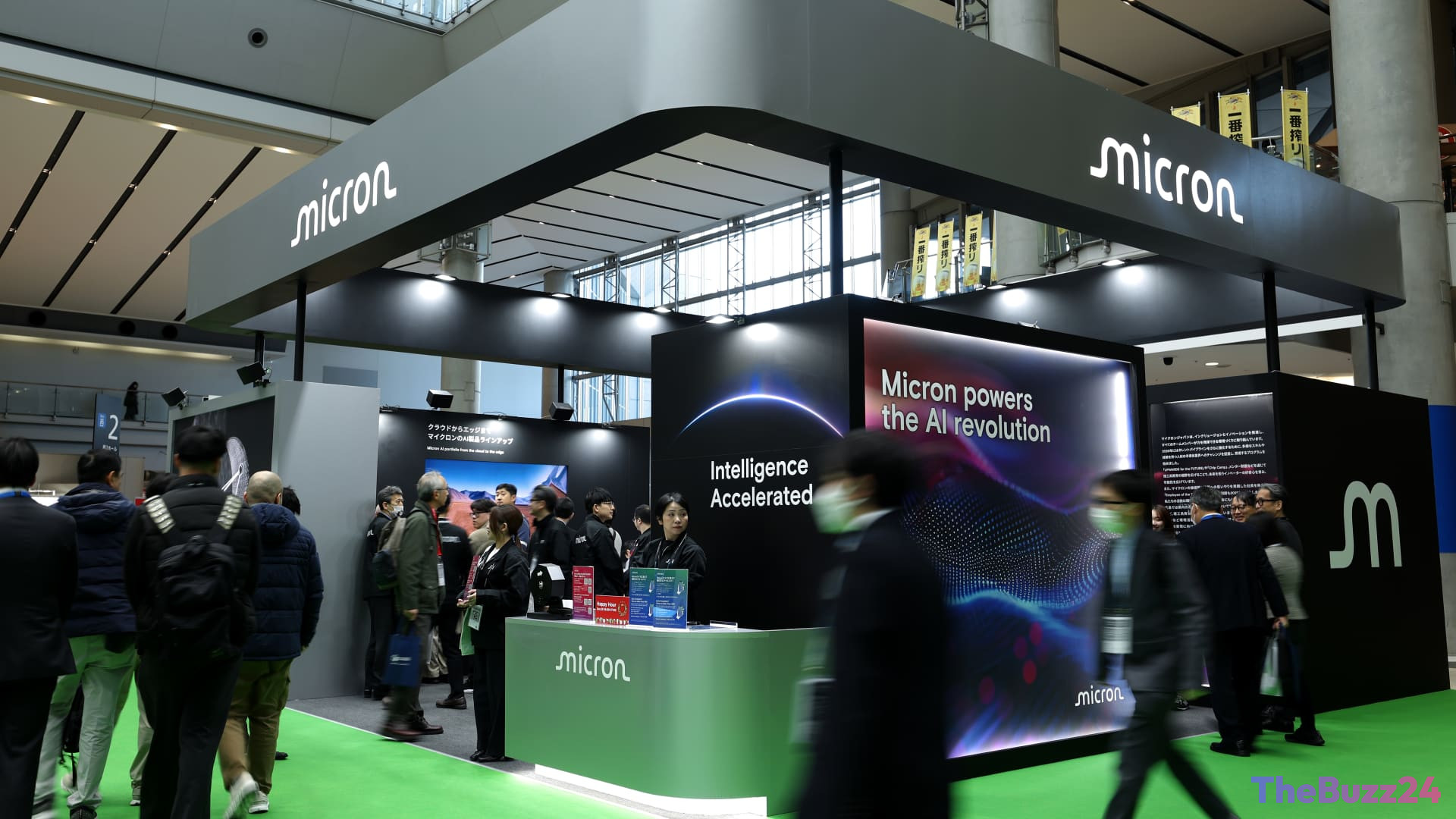
Memory Chip Giants Surge as AI Demand Fuels Long-Term Growth
Shares of major memory manufacturers Micron and Sandisk have experienced significant gains, continuing a prolonged market rally driven by sustained demand for high-performance memory components. This surge is largely attributed to the global artificial intelligence boom, which requires advanced hardware to power data centers and complex computing tasks. As the industry enters what many experts describe as the early stages of the AI cycle, the necessity for specialized memory solutions has reached unprecedented levels.
At the heart of this growth is High Bandwidth Memory (HBM), a critical component bonded to advanced graphics processing units used by industry leaders like Nvidia and Advanced Micro Devices. The concentration of DRAM supply toward HBM production has created a broader shortage in general-purpose memory, leading to a sharp increase in prices across the sector. Consequently, manufacturers are seeing robust earnings revisions and are increasingly securing long-term supply contracts with major hyperscalers, some extending as far as 2028.
To meet this insatiable demand, companies are investing heavily in infrastructure. Micron is currently committing $24 billion to expand its manufacturing capabilities in Singapore and the United States, while other key players like SK Hynix are breaking ground on new packaging and production facilities globally. These capital-intensive projects reflect a strategic shift toward long-term capacity building, as the industry prepares for a future where memory remains a primary bottleneck and a key driver of technological advancement.
Key Takeaways
- The AI boom is driving a massive, sustained demand for High Bandwidth Memory (HBM), causing a global shortage and rising prices for general-purpose DRAM.
- Major memory manufacturers are securing long-term supply contracts, with some agreements extending through 2028 to ensure stability against competition.
- Significant capital investments are underway, including multi-billion dollar factory expansions in the U.S. and abroad, to address the supply-demand imbalance.
Editor’s Analysis & Impact
The memory chip sector is currently undergoing a structural transformation, shifting from a cyclical commodity market to a strategic pillar of the AI economy. The reliance on HBM for AI infrastructure has created a ‘super-cycle’ where demand is decoupled from traditional consumer electronics fluctuations. The move toward long-term supply contracts is a significant development, as it provides manufacturers with the revenue visibility needed to justify the massive capital expenditures required for new fabrication plants. Looking ahead, the primary risk remains the long lead time for building new capacity; if demand continues to outpace supply, we can expect further price volatility in consumer electronics and enterprise hardware. However, the current trend suggests that memory providers have successfully positioned themselves as indispensable gatekeepers of the AI revolution, likely maintaining strong margins for the foreseeable future.
Frequently Asked Questions
Q: Why are memory chip prices rising?
A: Prices are rising primarily because manufacturers are dedicating a large portion of their DRAM supply to produce High Bandwidth Memory (HBM) for AI processors, creating a scarcity of general-purpose memory.
Q: What is the significance of long-term supply contracts in the memory industry?
A: Long-term contracts allow both buyers and manufacturers to mitigate risk. Buyers secure necessary components for future projects, while manufacturers gain the financial predictability required to invest billions in new factory construction.
AI Disclosure: This article is based on verified data and official reports. Our Team and AI have cross-referenced every financial detail with primary sources to ensure total accuracy.
More from this Category