Milan Bull Mosaic Restoration Sparks Public Confusion Over Missing Details
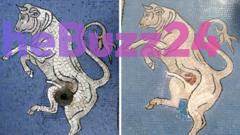
A restoration project on a historic bull mosaic in Milan’s Galleria Vittorio Emanuele II has triggered a wave of public confusion and online mockery. The artwork, which features a prancing bull representing the city of Turin, is a popular tourist attraction where visitors traditionally spin their heels on the animal’s testicles in hopes of securing good luck and a return trip to the city. Years of this repetitive friction had worn a small crater into the mosaic, prompting the city to commission professional repairs.
When local councillor Marco Granelli announced that the restoration was ‘completely restored’ over the weekend, social media users were quick to point out that the bull’s anatomy appeared to have been altered or erased. Critics jokingly suggested the bull had been ‘castrated,’ leading to widespread debate regarding the aesthetic changes made to the 19th-century landmark. The beige and blue mosaic, a staple of the historic arcade, appeared significantly different to observers, sparking concerns that the cultural icon had been permanently sanitized.
In response to the backlash, Milan’s city council clarified that the project is still ongoing and not yet finalized. Officials explained that the mosaic remains partially covered to allow the new tiles to settle properly. The council defended the choice of materials, noting that the pink marble used in the current restoration is a closer match to the original design than the darker marble used during a previous repair in 2017. Master restorer Gianluca Galli, who has been working on the site, confirmed that the process is incomplete and that he has received no formal objections to his craftsmanship.
Key Takeaways
- A historic bull mosaic in Milan is undergoing restoration after years of tourist wear created a crater in the artwork.
- Public outcry erupted online after initial photos suggested the bull's testicles had been removed, leading to jokes about the animal being castrated.
- City officials confirmed the project is incomplete and that the new materials were chosen to better match the original 19th-century design.
Editor’s Analysis & Impact
The incident highlights the delicate balance between preserving historical artifacts and managing the impact of modern tourism. The ‘lucky bull’ mosaic serves as a prime example of how physical interaction with public art can lead to degradation, necessitating frequent and costly interventions. From a cultural management perspective, the backlash underscores the public’s deep emotional connection to local traditions, even those that are somewhat unconventional. The city’s struggle to communicate the restoration process effectively demonstrates the challenges of managing public perception in the age of social media, where incomplete information can quickly spiral into viral criticism. Moving forward, the city may need to consider protective measures or clearer signage to balance the preservation of the mosaic with the continued tourist tradition.
Frequently Asked Questions
Q: Why is the bull mosaic in Milan considered a lucky charm?
A: According to local legend, spinning one's heel clockwise on the bull's testicles three times brings good fortune and ensures a return visit to the city.
Q: Why was the mosaic being restored?
A: The mosaic had developed a small crater due to the constant friction caused by thousands of tourists performing the traditional 'good luck' heel spin over many years.
AI Disclosure: This article is based on verified data and official reports. Our Team and AI have cross-referenced every financial detail with primary sources to ensure total accuracy.
More from this Category