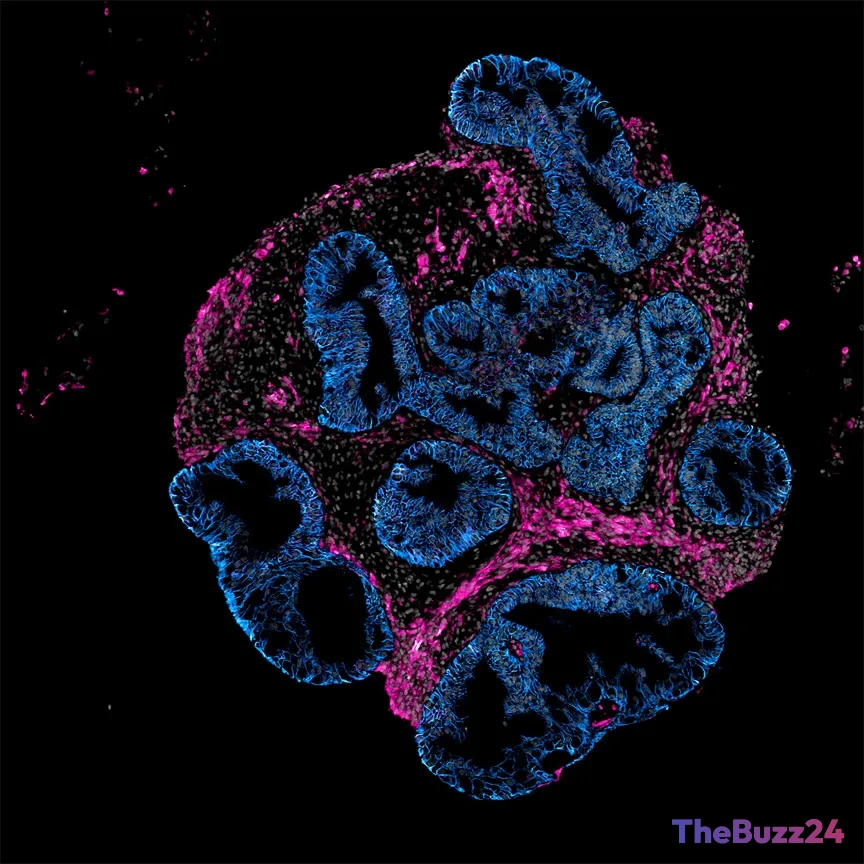
Miniature Human Intestines Grown in Lab Offer New Hope for Drug Testing
A burgeoning biotech startup is pioneering a novel approach to drug development, aiming to replace traditional animal testing with sophisticated, lab-grown human intestinal models. Intero Biosystems, based in Denver, is developing “intestinal organoids” – miniature, lab-cultivated tissues that closely replicate the human gut’s complex structure and function. This innovation seeks to provide a more accurate preclinical assessment of how drugs and other compounds will affect the human body, addressing a critical gap where many promising drugs fail during human trials due to a lack of translatability from animal models.
The company’s flagship product, GastroScreen, offers pharmaceutical, biotech, food, and chemical industries a powerful tool for evaluating drug safety and efficacy. These organoids, approximately 1 millimeter in size, are shipped to clients who can utilize them as healthy intestinal models or induce disease-like conditions to observe tissue responses to various substances. Intero Biosystems emphasizes that their organoids are distinct from simpler models, incorporating multiple cell and tissue types found in the human intestine, thus offering a more human-relevant testing environment. This advancement is particularly timely as regulatory bodies like the U.S. Food and Drug Administration (FDA) actively encourage the reduction of animal testing and the adoption of New Approach Methodologies (NAMs).
Intero Biosystems, which originated from research at the University of Michigan, is positioning itself as a leader in this evolving field. Unlike some competitors, their organoids are derived from induced pluripotent stem cells, offering the potential for personalization and easier scalability. While the company is still accumulating validation data, initial tests with well-known drugs have shown promising results consistent with human responses. Intero plans to scale up production significantly, with long-term ambitions including personalized medicine applications and the ultimate goal of developing a fully artificial intestine.
Key Takeaways
- Intero Biosystems has developed lab-grown human intestinal organoids as an alternative to animal testing for drug development.
- The GastroScreen product aims to provide more accurate predictions of drug effects on the human body compared to traditional animal models.
- Regulatory shifts and technological advancements are driving increased interest and adoption of non-animal testing methods like organoids.
Editor’s Analysis & Impact
The development of human intestinal organoids by Intero Biosystems represents a significant stride towards more predictive and ethical drug development. By offering a model that more closely mimics human biology, the company addresses a long-standing challenge in pharmaceutical research where animal models often fail to accurately forecast human responses, leading to costly late-stage trial failures. This innovation aligns with global regulatory trends favoring reduced animal testing and the adoption of advanced methodologies. The potential for personalized organoid models could revolutionize patient-specific treatment strategies. As Intero scales its production and completes validation, its technology could become a cornerstone in preclinical drug assessment, enhancing safety and efficiency in bringing new therapies to market.
Frequently Asked Questions
Q: What are intestinal organoids?
A: Intestinal organoids are miniature, three-dimensional tissue cultures grown in a lab that mimic the structure and function of the human intestine. They are derived from stem cells and contain various cell types found in the natural gut, allowing researchers to study biological processes and test compounds in a human-relevant system.
Q: How do Intero Biosystems' organoids differ from animal testing?
A: Animal testing relies on models from different species, which often don't accurately predict how drugs will behave in humans. Intero's organoids are human-derived, offering a more direct and potentially more accurate representation of human biological responses, thereby reducing the risk of late-stage drug failures due to species differences.
Q: What is the regulatory landscape for organoid technology in drug development?
A: Regulatory bodies like the FDA are increasingly supportive of New Approach Methodologies (NAMs), which include organoids, as alternatives to animal testing. While specific validation frameworks are still evolving, the FDA has issued guidance encouraging the use of these methods to support regulatory submissions, signaling a shift towards embracing such advanced technologies.
AI Disclosure: This article is based on verified data and official reports. Our Team and AI have cross-referenced every financial detail with primary sources to ensure total accuracy.
More from this Category