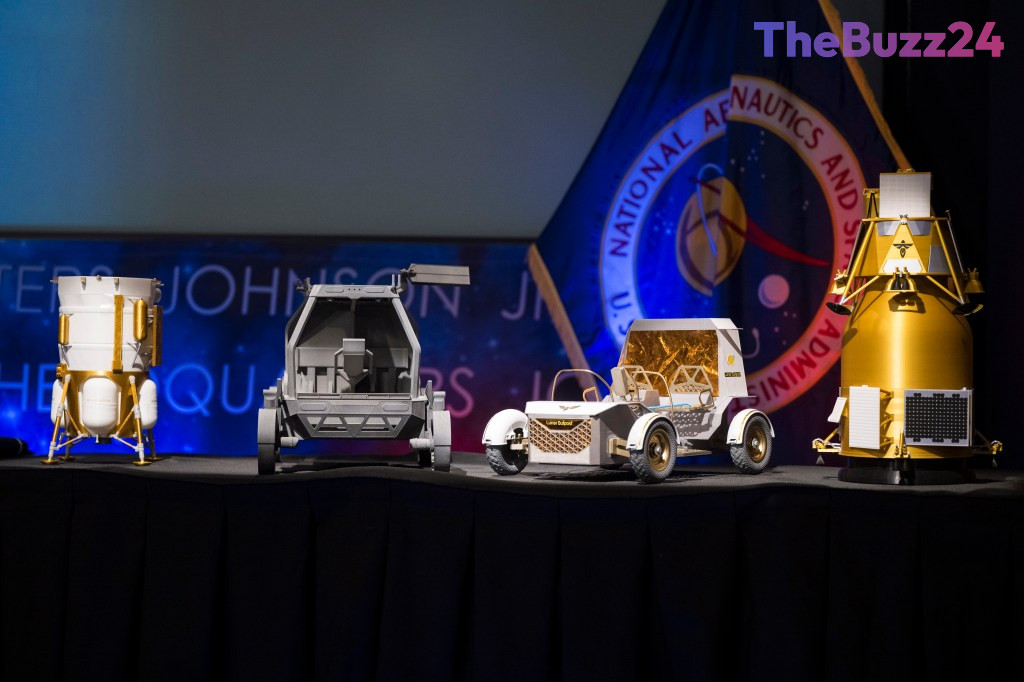
NASA Ramps Up Lunar Infrastructure Strategy for Permanent Moon Base
NASA is accelerating its efforts to establish a permanent human presence on the Moon through its comprehensive ‘Lunar Base’ initiative. This strategic program is designed to build the necessary infrastructure and scientific framework required to support long-term operations at the lunar South Pole. By leveraging a mix of commercial partnerships and advanced robotic missions, the agency is laying the groundwork for the upcoming Artemis astronaut landings.
The initiative kicks off with three primary missions aimed at testing lunar mobility and scientific instrumentation. The first mission, Base Lunar I, is slated for late 2026 and will utilize Blue Origin’s Blue Moon Mark 1 Endurance lander to transport specialized equipment to the Shackleton crater. Subsequent missions, Base Lunar II and III, will follow later this year, featuring Astrobotic’s Griffin lander—carrying the Astrolab FLIP rover—and Intuitive Machines’ Nova-C Trinity, which is tasked with studying the evolution of the lunar surface.
To facilitate movement across the lunar landscape, NASA has awarded substantial contracts to industry leaders like Astrolab and Lunar Outpost for the development of Lunar Terrain Vehicles (LTV). These vehicles, including the crew-capable Astrolab CLV and the autonomous Pegasus rover from Lunar Outpost, are essential for the transport of personnel and supplies. Blue Origin has also been tapped to manage the delivery of these critical payloads, further solidifying the commercial ecosystem supporting lunar exploration.
Looking further ahead, the 2028 MoonFall mission will integrate Firefly Aerospace technology to deploy autonomous drones for detailed landing site inspections. These coordinated efforts mark a major shift in space logistics, effectively transforming the Moon into a functional outpost that will serve as a critical testing ground for future human exploration of Mars.
Key Takeaways
- NASA is utilizing commercial partnerships with companies like Blue Origin, Astrobotic, and Intuitive Machines to build lunar infrastructure.
- The 'Lunar Base' initiative focuses on the South Pole, with missions starting in late 2026 to test mobility and scientific tools.
- New Lunar Terrain Vehicles (LTVs) are being developed to support both autonomous and crewed transport, serving as a precursor to Mars missions.
Editor’s Analysis & Impact
The shift toward a commercial-led lunar infrastructure model represents a fundamental change in how space agencies approach deep-space exploration. By outsourcing the development of landers and rovers to private entities, NASA is not only reducing its own operational burden but also fostering a competitive ‘lunar economy.’ This strategy is critical for sustainability; by creating a reliable supply chain and transport network, the agency can focus on high-level scientific objectives while private firms handle the logistics. The long-term implication is clear: the Moon is being positioned as a staging ground for Mars. If these commercial partnerships prove successful, it will likely accelerate the timeline for human interplanetary travel, turning the Moon into a permanent industrial and research hub rather than just a destination for short-term exploration.
Frequently Asked Questions
Q: What is the primary goal of NASA's 'Lunar Base' initiative?
A: The initiative aims to establish a permanent human presence on the Moon by developing the infrastructure and scientific capabilities needed for sustained activity at the lunar South Pole.
Q: Which companies are involved in the development of lunar rovers?
A: Astrolab and Lunar Outpost have been awarded contracts to develop specialized rovers, such as the Astrolab CLV and the autonomous Pegasus, to assist with surface mobility.
AI Disclosure: This article is based on verified data and official reports. Our Team and AI have cross-referenced every financial detail with primary sources to ensure total accuracy.
More from this Category