NASA and Boeing Advance Sustainable Aviation with Innovative Wing Design
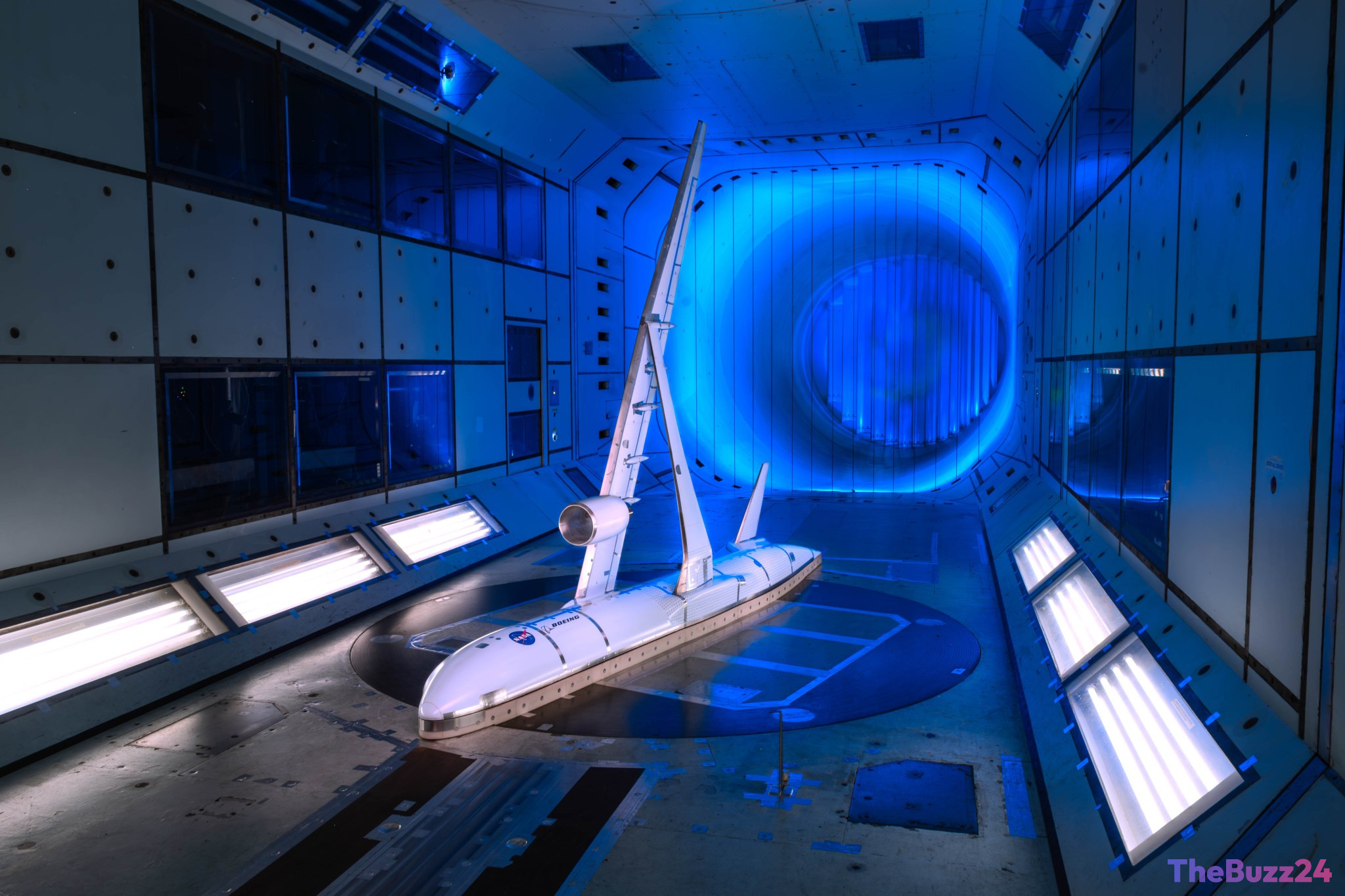
NASA and Boeing have reached a significant milestone in the evolution of commercial aviation by successfully concluding a rigorous series of wind tunnel tests for the Transonic Truss-Braced Wing (TTBW) concept. This cutting-edge design utilizes an ultra-thin, high-aspect-ratio wing supported by aerodynamic struts, a configuration specifically engineered to drastically improve fuel efficiency and lower operational costs compared to the standard aircraft architectures currently in service.
The recent testing phase took place at a specialized pressurized wind tunnel facility in Farnborough, England, where engineers evaluated a high-fidelity semispan model. The primary focus of these trials was to analyze complex aerodynamic behaviors during low-speed flight, particularly the critical phases of takeoff and landing. By fine-tuning the model’s control surfaces, including flaps and slats, the research team successfully captured vital data regarding structural integrity and airflow dynamics, confirming the design’s viability for real-world flight environments.
This project is a cornerstone of the Subsonic Ultra Green Aircraft Research (SUGAR) initiative, which aims to integrate sustainable engineering practices into the future of global air travel. The data gathered from these experiments is currently being used to refine the TTBW architecture, transitioning it from a theoretical model to a flight-ready application. This progress serves as a foundational step for the upcoming Subsonic Flight Demonstrator, signaling a shift toward more environmentally conscious and economically efficient aviation solutions.
Key Takeaways
- NASA and Boeing successfully tested the Transonic Truss-Braced Wing (TTBW) design in a pressurized wind tunnel.
- The TTBW configuration is designed to significantly reduce fuel consumption and operational costs for future commercial aircraft.
- The project is part of the Subsonic Ultra Green Aircraft Research (SUGAR) initiative, moving toward a flight-ready demonstrator.
Editor’s Analysis & Impact
The successful testing of the Transonic Truss-Braced Wing represents a pivotal shift in aerospace engineering, moving away from traditional cantilever wing designs toward more aerodynamically efficient structures. As the aviation industry faces mounting pressure to meet aggressive net-zero carbon targets, innovations that prioritize fuel efficiency are no longer just experimental—they are essential for long-term economic and environmental viability. By reducing drag and optimizing lift, this technology could fundamentally alter the cost structure of commercial flight. If the upcoming flight demonstrator proves successful, it will likely force a redesign of narrow-body aircraft fleets globally, potentially setting a new industry standard for the next generation of sustainable air travel and influencing how manufacturers approach future aircraft development.
Frequently Asked Questions
Q: What is the main benefit of the Transonic Truss-Braced Wing design?
A: The primary benefit is a significant reduction in fuel consumption and operational costs due to the design's ultra-thin, high-aspect-ratio wing and aerodynamic struts.
Q: What is the goal of the SUGAR initiative?
A: The Subsonic Ultra Green Aircraft Research (SUGAR) initiative is a collaborative effort focused on integrating sustainable engineering and green technology into modern commercial aviation.
AI Disclosure: This article is based on verified data and official reports. Our Team and AI have cross-referenced every financial detail with primary sources to ensure total accuracy.
More from this Category