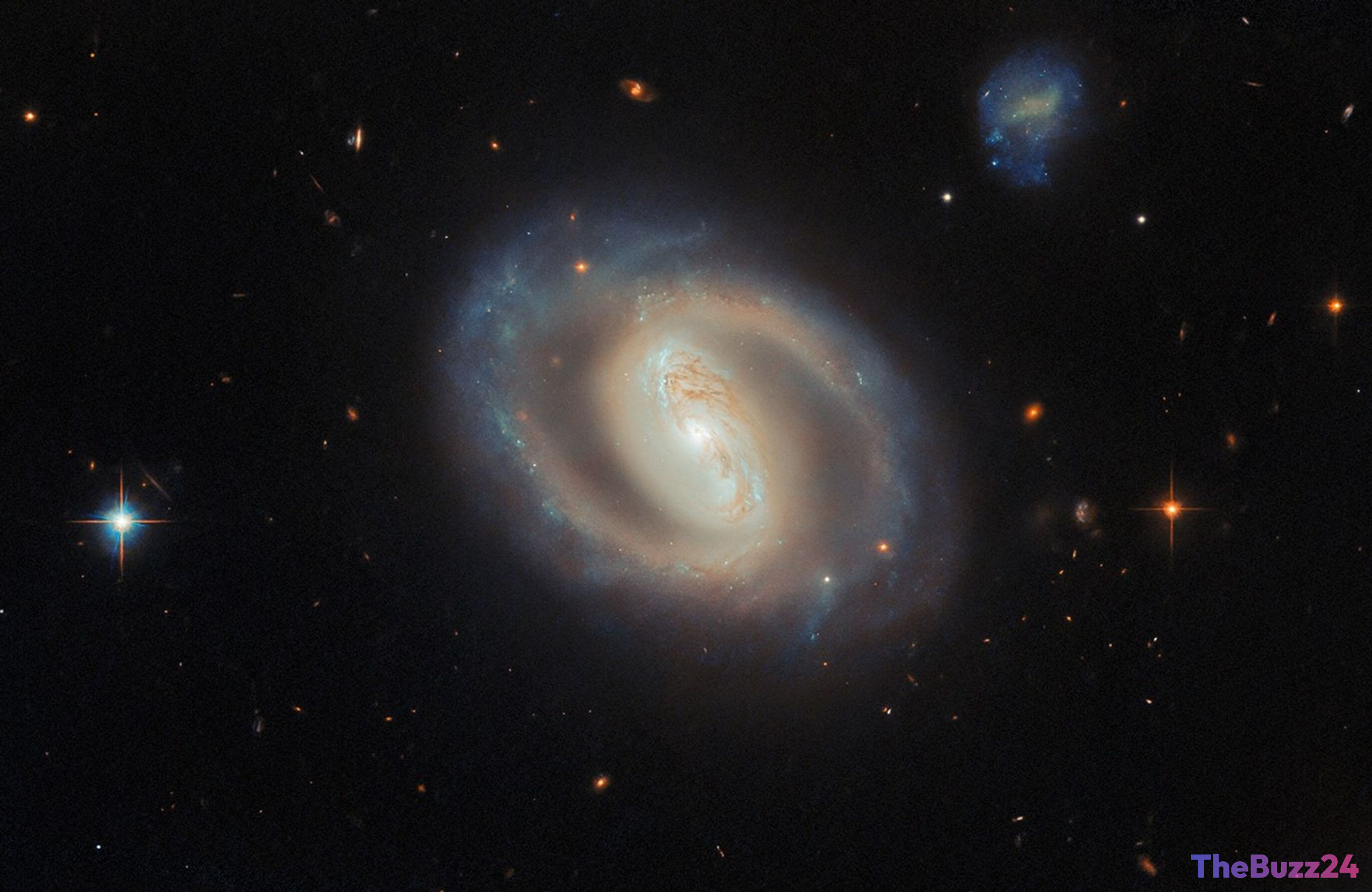
Hubble Telescope Reveals Intricate Structure of Distant Galaxy IC 486
The Hubble Space Telescope has provided a breathtaking new look at IC 486, a barred spiral galaxy that offers astronomers a rare, high-resolution glimpse into the complex mechanics of the deep universe. The captured imagery highlights the galaxy’s luminous, delicate arms as they stretch across the void, showcasing the intricate interplay between celestial matter and light that defines its unique structure.
Situated roughly 380 million light-years from Earth in the direction of the Gemini constellation, IC 486 has become a focal point for researchers studying galactic morphology. The galaxy is defined by a prominent, bright central bar that acts as a structural anchor, with spiral arms winding around the core in a distinct, ring-like formation. This specific configuration serves as a vital case study for understanding the dynamics that govern how galaxies evolve and maintain their shape over vast cosmic timescales.
This latest observation underscores the enduring scientific utility of the Hubble Space Telescope in modern astrophysics. By documenting the physical characteristics of distant star systems with such precision, researchers are gaining significant insights into the life cycles and behaviors of galaxies far beyond our own Milky Way. These findings not only demonstrate the telescope’s continued technical relevance but also broaden the scientific community’s comprehension of the vast, evolving cosmic landscape.
Key Takeaways
- The Hubble Space Telescope captured a high-resolution image of the barred spiral galaxy IC 486.
- IC 486 is located 380 million light-years away and features a unique central bar with ring-like spiral arms.
- Data from this observation helps scientists refine models regarding galactic evolution and structural dynamics.
Editor’s Analysis & Impact
The sustained performance of the Hubble Space Telescope remains vital to modern astronomy, serving as a bridge between raw data collection and the advancement of theoretical astrophysics. By focusing on specific galactic morphologies like IC 486, scientists can rigorously test existing models of galactic formation and the distribution of matter within these systems. This research provides a foundational baseline for newer observatories, such as the James Webb Space Telescope, to conduct follow-up studies. The broader implications of these findings are significant, as they contribute to a more nuanced understanding of how galaxies grow, interact, and stabilize over billions of years. Ultimately, these observations help map the history and future trajectory of the universe, providing context for the development of our own cosmic neighborhood.
Frequently Asked Questions
Q: What defines a barred spiral galaxy?
A: A barred spiral galaxy is characterized by a central, bar-shaped structure composed of stars, from which the galaxy's spiral arms extend outward.
Q: Where is IC 486 located in relation to Earth?
A: IC 486 is located approximately 380 million light-years away from Earth, positioned near the edge of the Gemini constellation.
AI Disclosure: This article is based on verified data and official reports. Our Team and AI have cross-referenced every financial detail with primary sources to ensure total accuracy.
More from this Category