NASA Finalizes Autonomous Seismometer Station for Upcoming Artemis Lunar Surface Missions
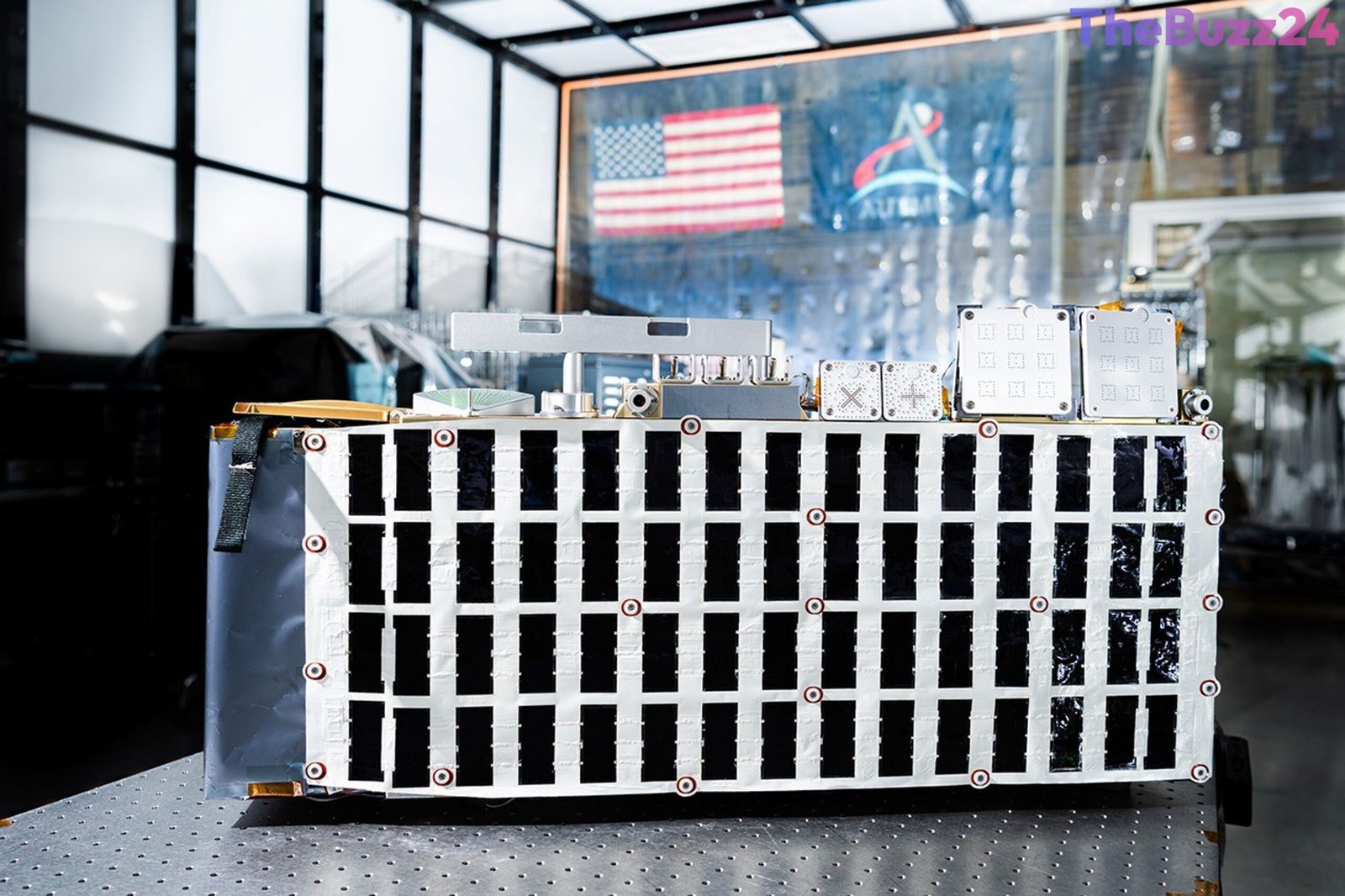
Engineers have officially finished hardware development and environmental testing on the Lunar Environment Monitoring Station (LEMS), a self-sustaining payload designed for deployment on the Moon by future Artemis astronauts. Small enough to match the dimensions of a compact suitcase, the instrument package has been certified ready for flight and will remain in cleanroom storage until it is assigned to a specific lunar landing mission. Designed for long-term operations in the harsh South Pole region of the Moon, LEMS will continuously record seismic vibrations caused by moonquakes and meteorite strikes.
The payload houses two of the most sensitive, compact, and energy-efficient seismometers ever constructed for space exploration. By measuring subtle ground motions, LEMS will help scientists map the Moon’s deep interior structure while identifying potential seismic hazards for future astronaut habitats. Unlike legacy lunar surface instruments that depended on radioisotope units for heating during the two-week lunar night, LEMS employs advanced thermal insulation, low-conductivity wiring, and automated heat regulation. This enables the device to withstand ambient temperatures dropping as low as minus 400 degrees Fahrenheit using only its internal thermal architecture and lightweight solar arrays.
Once positioned on the lunar soil by crew members, LEMS is designed to operate completely independently. A flexible, body-conforming solar array generates power during the lunar day, while an onboard management system coordinates continuous data collection and transmits monthly science reports back to terrestrial receiving stations. Prior to its flight readiness declaration, the station underwent five months of intensive environmental testing—including thermal vacuum, acoustic, and vibration trials—to verify that its mechanical and electrical systems can endure the stresses of launch, transit, and manual handling by astronauts in suit prototypes.
Conceived as an off-world equivalent to an oceanographic buoy, the platform features a modular design that can be expanded or modified to support additional scientific instruments on future missions. The development effort is managed out of NASA’s Goddard Space Flight Center in collaboration with academic partners including the University of Maryland, the University of Arizona, Morehead State University, Washington University in St. Louis, and industry partner Silicon Audio, Inc.
Key Takeaways
- NASA completed construction and environmental testing on the Lunar Environment Monitoring Station (LEMS) for future Artemis lunar landings.
- The suitcase-sized, self-sustaining payload uses state-of-the-art seismometers to monitor moonquakes and meteorite impacts near the lunar South Pole.
- LEMS utilizes novel thermal insulation and solar power management to survive extreme lunar night temperatures without relying on radioisotope power sources.
Editor’s Analysis & Impact
The finalization of the LEMS payload marks a significant technical stride toward establishing a permanent human and robotic presence on the Moon. By eliminating the reliance on radioisotope heater units, the engineering team has dramatically reduced weight and regulatory friction, proving that passive thermal regulation and high-efficiency electronics can survive the two-week lunar night. Mapping seismic risks is an imperative precursor to constructing long-term lunar bases and heavy infrastructure. Furthermore, the modular, ‘scientific buoy’ architecture creates a versatile template for future autonomous monitoring platforms that could eventually be deployed across Mars and other airless bodies across the solar system.
Frequently Asked Questions
Q: What is the primary objective of the LEMS payload?
A: LEMS is built to continuously measure seismic activity, such as moonquakes and meteorite impacts, helping researchers understand the Moon's internal structure and evaluate surface stability for future human missions.
Q: How does LEMS survive the freezing temperatures of the lunar night?
A: The system utilizes cutting-edge insulation, low-thermal-conductivity cabling, and a specialized thermal regulator to retain heat during the two-week lunar night without needing nuclear heater sources.
Q: Does LEMS require continuous astronaut operation?
A: No. Artemis astronauts will deploy LEMS on the surface, after which the unit will operate completely autonomously, generating its own power, executing scheduled tasks, and broadcasting data to Earth monthly.
AI Disclosure: This article is based on verified data and official reports. Our Team and AI have cross-referenced every financial detail with primary sources to ensure total accuracy.
More from this Category