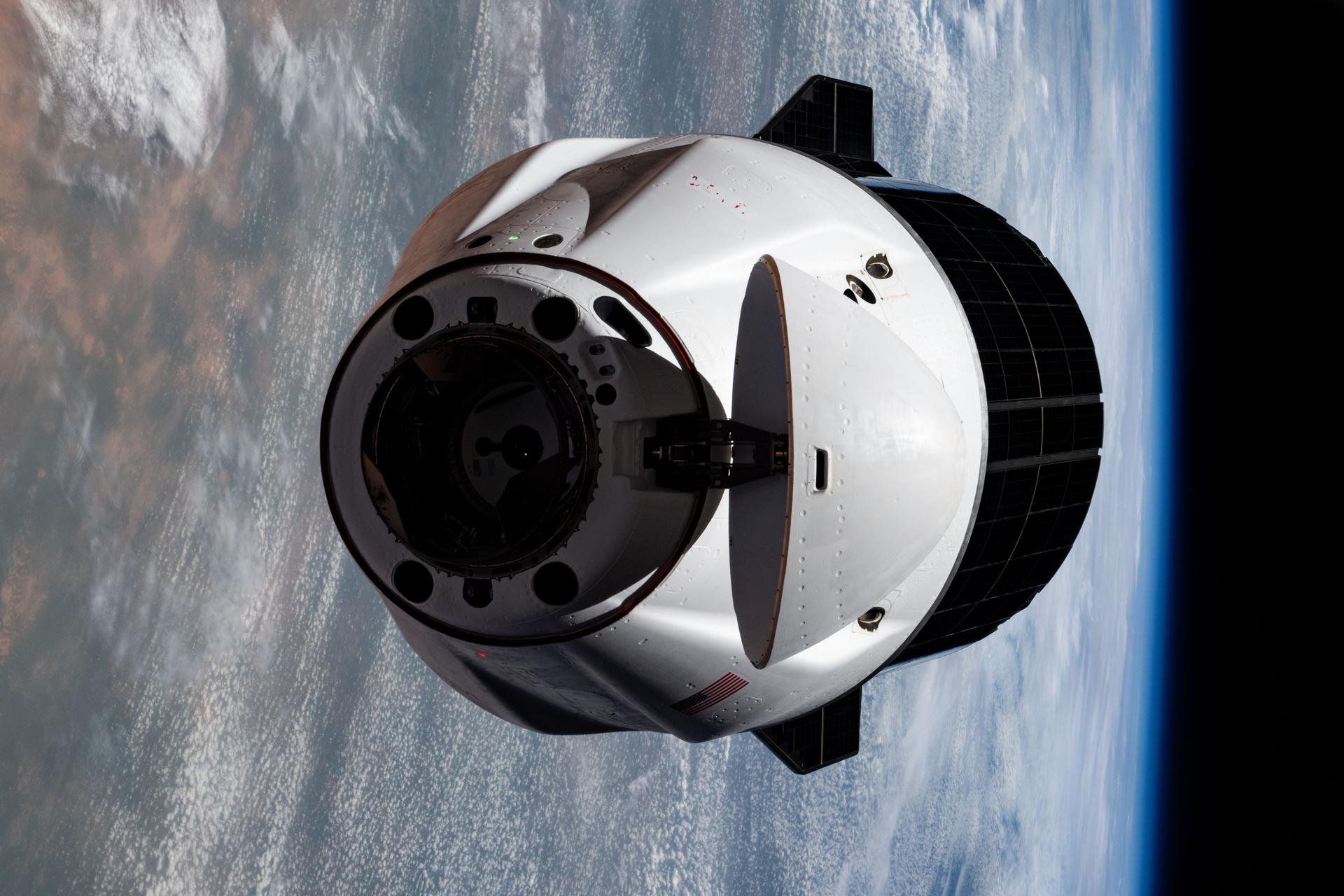
SpaceX Set for 34th Resupply Mission to International Space Station
SpaceX is finalizing preparations for its 34th Commercial Resupply Services mission, a critical operation designed to deliver essential equipment and scientific payloads to the International Space Station (ISS). The launch is currently slated for no earlier than May 12, departing from the Cape Canaveral Space Force Station in Florida. The mission will rely on the reliable Falcon 9 rocket to propel the Dragon cargo spacecraft into orbit.
This mission is tasked with transporting over 5,000 pounds of cargo, ranging from basic crew provisions and hardware to complex experimental apparatus. A significant portion of the payload is dedicated to biological research, including studies focused on the impact of microgravity on human red blood cells and spleen function. Additionally, the Dragon spacecraft will carry a pioneering wood-based bone scaffold, which researchers hope will lead to new therapeutic approaches for osteoporosis.
Beyond biological research, the mission includes instrumentation aimed at monitoring charged particles in space. This data is crucial for protecting satellite infrastructure and terrestrial power grids from potential interference. These recurring resupply flights remain the backbone of ISS operations, providing the necessary resources to sustain long-duration human spaceflight. The findings generated from these experiments are essential for refining the technologies and medical protocols required for future lunar missions and eventual human exploration of Mars.
Key Takeaways
- SpaceX's 34th resupply mission will deliver over 5,000 pounds of supplies and research equipment to the ISS.
- Key experiments include studies on microgravity's effect on human blood cells and the testing of a wood-based bone scaffold for osteoporosis treatment.
- The mission includes specialized instruments to monitor charged particles that could threaten satellite and power grid stability.
Editor’s Analysis & Impact
The 34th Commercial Resupply Services mission underscores the maturing logistics chain between private aerospace entities and orbital research facilities. By consistently delivering high-value scientific payloads, SpaceX is not merely acting as a transport provider but as a critical enabler of deep-space medical and material science. The focus on osteoporosis treatments and particle monitoring highlights a shift toward dual-purpose research that benefits both long-term space habitation and terrestrial infrastructure protection. As the industry looks toward the Artemis program and Mars, these routine missions serve as the essential ‘proving ground’ for life-support and diagnostic technologies. The reliability of the Falcon 9 and Dragon architecture continues to lower the barrier for orbital experimentation, suggesting a future where commercial space stations will rely on similar high-frequency, automated logistics to sustain a permanent human presence beyond Earth.
Frequently Asked Questions
Q: What is the primary goal of the 34th SpaceX resupply mission?
A: The mission aims to deliver over 5,000 pounds of essential supplies, hardware, and scientific research equipment to the International Space Station to support ongoing experiments and crew operations.
Q: Why is the wood-based bone scaffold experiment significant?
A: The wood-based bone scaffold is being tested to see if it can help develop new, effective treatments for osteoporosis, a condition that causes bones to become weak and brittle.
AI Disclosure: This article is based on verified data and official reports. Our Team and AI have cross-referenced every financial detail with primary sources to ensure total accuracy.
More from this Category