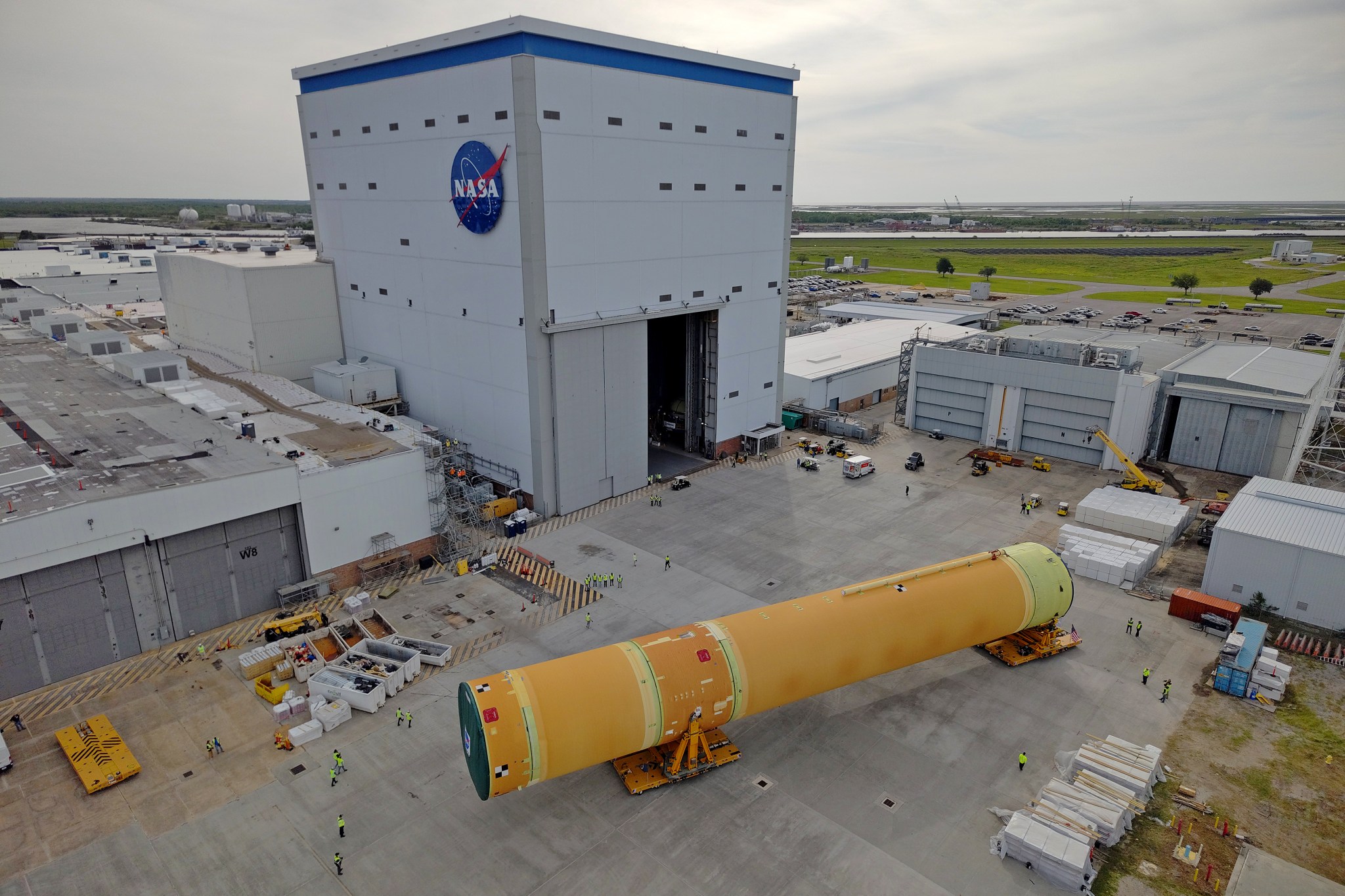
NASA Advances Artemis III Mission with Core Stage Transport to Kennedy Space Center
NASA has reached a critical milestone in its lunar exploration efforts as the core stage for the Space Launch System (SLS) rocket, intended for the Artemis III mission, has begun its transit to the Kennedy Space Center. The massive component departed from the Michoud Assembly Facility in New Orleans via the Pegasus barge on April 20, signaling a major step forward in the agency’s goal to return humans to the lunar surface by 2027.
The core stage, which measures 212 feet in height, serves as the primary engine section for the SLS rocket. It is designed to house over 733,000 gallons of liquid propellant, which will feed four RS-25 engines to produce over 2 million pounds of thrust during the initial launch phase. Upon arrival in Florida, the hardware will undergo final outfitting and vertical integration by the Exploration Ground Systems team, preparing it to carry the Orion spacecraft and its crew into orbit.
This mission represents a collaborative engineering feat, with Boeing managing the design and assembly of the core stage and L3Harris Technologies providing the propulsion systems. The Artemis III mission is not only focused on the lunar landing itself but also serves as a testing ground for rendezvous and docking maneuvers with commercial spacecraft. These capabilities are essential for the success of future missions, including the Artemis IV flight scheduled for 2028, and are viewed as foundational steps toward humanity’s eventual goal of crewed exploration of Mars.
Key Takeaways
- The core stage for the Artemis III SLS rocket has begun its transit from New Orleans to the Kennedy Space Center.
- The 212-foot-tall component is designed to generate over 2 million pounds of thrust to launch the Orion spacecraft.
- Artemis III is scheduled for 2027 and will serve as a critical test for docking capabilities needed for future lunar and Mars missions.
Editor’s Analysis & Impact
The successful transport of the Artemis III core stage underscores the transition from theoretical design to tangible hardware integration, a vital phase for the sustainability of the Artemis program. By streamlining production and logistics, NASA is attempting to mitigate the schedule risks that have historically plagued large-scale aerospace projects. The reliance on commercial partnerships, such as those with Boeing and L3Harris, highlights a shift toward a hybrid model of government-led exploration supported by private sector manufacturing. Looking ahead, the success of Artemis III will be a bellwether for the viability of the lunar economy and the long-term feasibility of deep-space exploration. If the rendezvous and docking tests prove successful, it will validate the architecture required for a permanent lunar presence, effectively setting the stage for the next decade of interplanetary transit.
Frequently Asked Questions
Q: What is the primary purpose of the Artemis III mission?
A: The primary purpose of Artemis III is to return humans to the lunar surface and test critical rendezvous and docking capabilities with commercial spacecraft.
Q: When is the Artemis III mission currently scheduled to launch?
A: The Artemis III mission is currently scheduled for launch in 2027.
AI Disclosure: This article is based on verified data and official reports. Our Team and AI have cross-referenced every financial detail with primary sources to ensure total accuracy.
More from this Category