NASA Prepares for Arrival of Next-Generation Roman Space Telescope at Kennedy Space Center
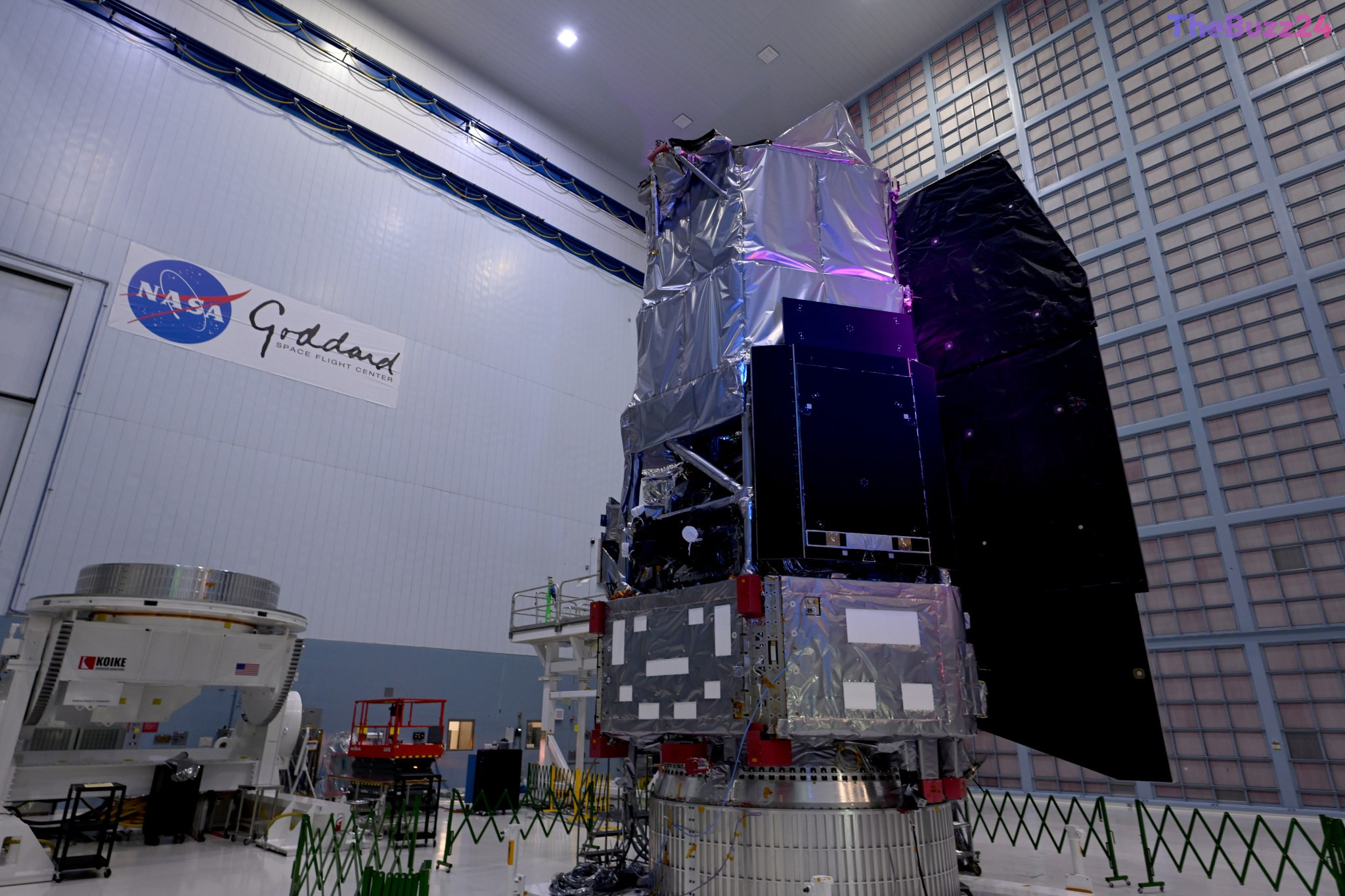
The Nancy Grace Roman Space Telescope, a groundbreaking observatory designed to unlock the deepest secrets of the cosmos, is nearing its final launch preparations. Having completed its rigorous construction and testing phase at the Goddard Space Flight Center in Maryland, the telescope is scheduled to be transported via the Pegasus barge to the Kennedy Space Center in Florida. This transition marks a critical milestone as the mission moves from assembly to final launch processing.
Upon arrival at the Kennedy Space Center, the telescope will be moved to the Payload Hazardous Servicing Facility. This facility will serve as the hub for final preparations before the observatory is integrated with its launch vehicle. The mission is currently slated for a liftoff as early as September, utilizing a SpaceX Falcon Heavy rocket from Launch Complex 39A. This launch will initiate a new era of space exploration, focusing on wide-field surveys that promise to capture unprecedented images of the universe.
Named in honor of NASA’s first chief astronomer, the Roman Space Telescope is engineered to investigate fundamental cosmic questions, including the nature of dark energy and the search for exoplanets. Beyond its survey capabilities, the telescope will test cutting-edge technology designed to directly image planets orbiting nearby stars. This capability represents a significant leap forward in the ongoing effort to identify potentially habitable worlds beyond our solar system.
The project is a massive collaborative effort involving multiple international space agencies, including the European Space Agency, the Japan Aerospace Exploration Agency, and the French space agency CNES. With primary industrial support from companies like BAE Systems and L3Harris Technologies, the mission represents a pinnacle of modern engineering and international scientific cooperation.
Key Takeaways
- The Nancy Grace Roman Space Telescope is moving to Kennedy Space Center for final launch processing after completing assembly in Maryland.
- The mission is scheduled to launch as early as September aboard a SpaceX Falcon Heavy rocket.
- The telescope aims to study dark energy and test advanced imaging technology to search for planets around nearby stars.
Editor’s Analysis & Impact
The deployment of the Nancy Grace Roman Space Telescope represents a significant shift in observational astronomy. By providing a panoramic view of the cosmos, the mission is expected to generate data volumes that dwarf previous observatories, necessitating advanced AI and machine learning tools for analysis. From a market perspective, the project highlights the increasing reliance on private sector partnerships, such as the use of SpaceX launch services and industrial contributions from BAE Systems and L3Harris. The success of this mission will likely influence future funding priorities for deep-space exploration and set a new standard for international scientific collaboration. As the telescope begins its survey, the resulting data will likely drive new research initiatives in astrophysics for decades, potentially reshaping our understanding of the universe’s expansion and the prevalence of life-sustaining environments in the galaxy.
Frequently Asked Questions
Q: What is the primary scientific goal of the Nancy Grace Roman Space Telescope?
A: The telescope is designed to explore fundamental questions about dark energy, conduct wide-field cosmic surveys, and test technology for directly imaging exoplanets.
Q: When and how will the Roman Space Telescope launch?
A: The telescope is scheduled to launch as early as September using a SpaceX Falcon Heavy rocket from Launch Complex 39A at the Kennedy Space Center.
AI Disclosure: This article is based on verified data and official reports. Our Team and AI have cross-referenced every financial detail with primary sources to ensure total accuracy.
More from this Category