NASA Prepares SkyFall Mission with Advanced Antenna Testing
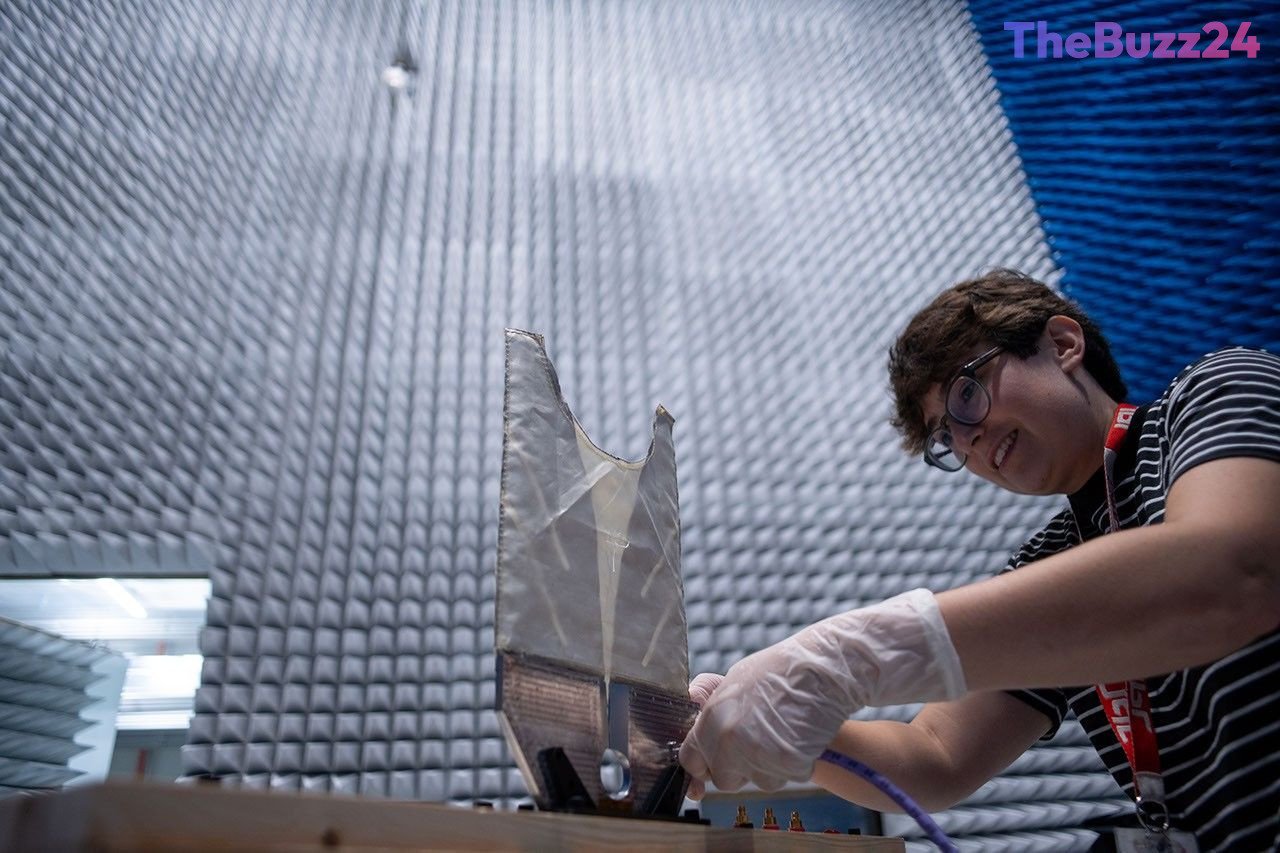
Engineers at NASA’s Jet Propulsion Laboratory have reached a critical milestone in the development of the upcoming SkyFall mission. Recent operations in the Environmental Test Lab involved rigorous electromagnetic interference testing, where engineer Maya Román successfully connected coaxial cables to the mission’s specialized test antennas. To ensure the highest accuracy in data collection, the antennas were positioned upward during the evaluation to mitigate signal reflections and environmental interference.
The SkyFall mission aims to build upon the historic success of the Ingenuity Mars Helicopter, which completed 72 flights over a three-year span. By proving that controlled, powered flight is viable in the thin Martian atmosphere, Ingenuity paved the way for future aerial exploration. SkyFall intends to leverage this legacy by deploying three distinct aircraft, each equipped with four sophisticated instruments designed to provide high-resolution aerial data.
This mission is expected to significantly enhance the operational capabilities of future planetary exploration. By providing an aerial perspective, the SkyFall aircraft will assist the Perseverance Mars rover team in identifying optimal science-gathering locations and navigating complex terrain more efficiently. The mission is currently scheduled for launch in late 2028, traveling aboard the Space Reactor-1 Freedom.
Key Takeaways
- NASA is conducting electromagnetic interference testing on antennas for the upcoming SkyFall mission at the Jet Propulsion Laboratory.
- The SkyFall mission will utilize three aircraft, each carrying four instruments, to provide aerial data for Mars exploration.
- SkyFall is scheduled to launch in late 2028 aboard the Space Reactor-1 Freedom, following the operational success of the Ingenuity Mars Helicopter.
Editor’s Analysis & Impact
The SkyFall mission represents a strategic evolution in NASA’s planetary exploration roadmap. By transitioning from the experimental phase of the Ingenuity helicopter to a multi-aircraft deployment, NASA is signaling a shift toward sustained aerial reconnaissance on Mars. The integration of four instruments per aircraft suggests a move toward more complex, multi-modal data collection that could drastically reduce the time required for the Perseverance rover to identify high-value geological targets. From an industry perspective, this mission highlights the growing importance of autonomous aerial systems in deep-space logistics. If successful, SkyFall will likely set a new standard for how robotic surface missions are supported, potentially influencing future mission architectures that rely on coordinated ground-to-air asset management to maximize scientific output and operational longevity.
Frequently Asked Questions
Q: What is the primary goal of the SkyFall mission?
A: The SkyFall mission aims to use three aircraft to provide aerial perspectives that help the Perseverance Mars rover navigate terrain and identify optimal locations for scientific research.
Q: When is the SkyFall mission scheduled to launch?
A: The mission is currently slated for launch in late 2028 aboard the Space Reactor-1 Freedom.
AI Disclosure: This article is based on verified data and official reports. Our Team and AI have cross-referenced every financial detail with primary sources to ensure total accuracy.
More from this Category