NASA Moves Up Launch Date for Nancy Grace Roman Space Telescope to 2026
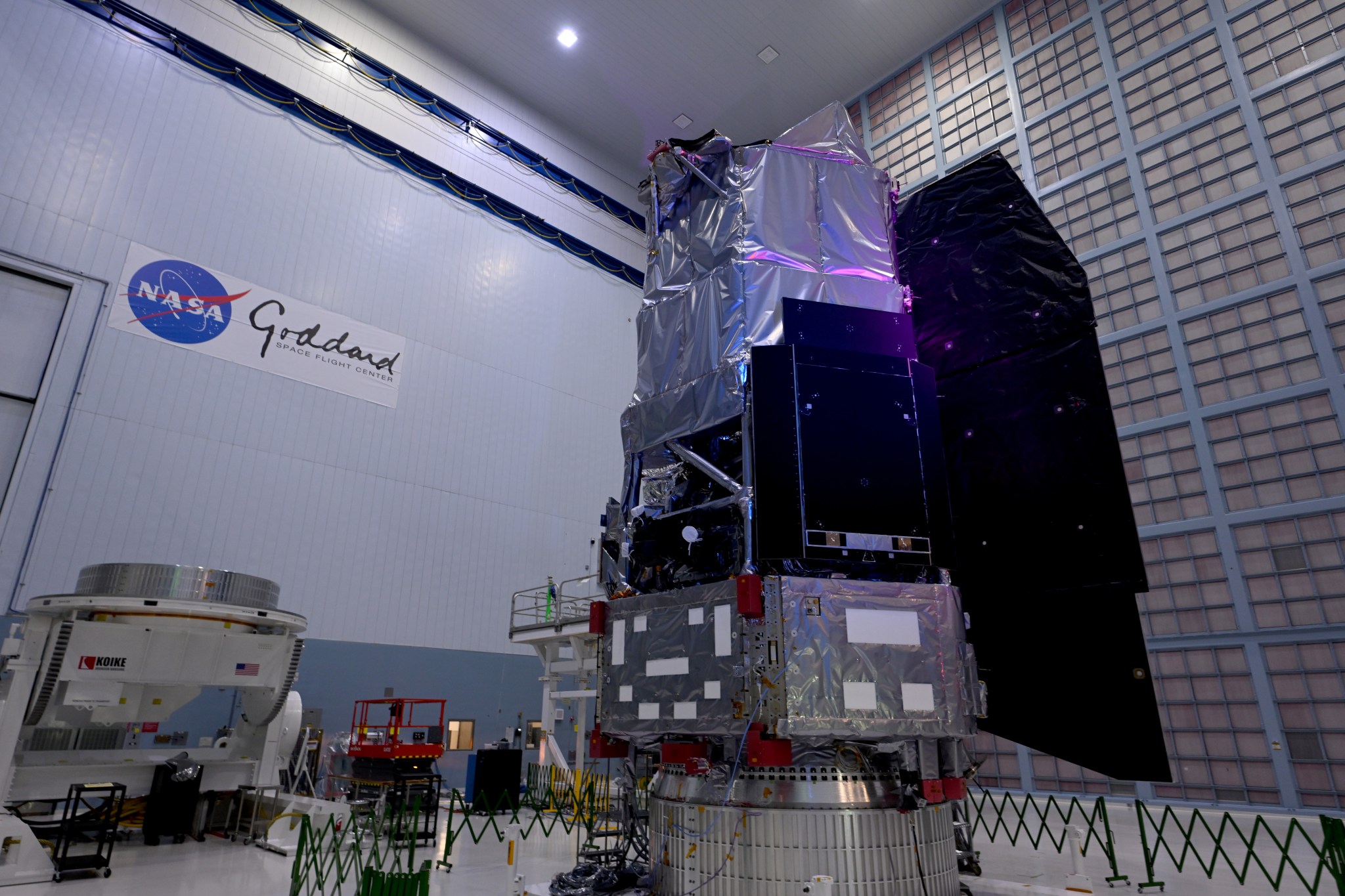
NASA has officially accelerated the timeline for the Nancy Grace Roman Space Telescope, shifting its launch target to early September 2026. This move significantly advances the mission schedule, placing the launch well ahead of the previously established May 2027 deadline. The observatory is scheduled to arrive at the Kennedy Space Center this June, where it will be prepared for deployment aboard a SpaceX Falcon Heavy rocket from Launch Complex 39A.
This expedited schedule is the result of highly efficient coordination between NASA’s engineering teams, public funding initiatives, and private sector partners. By streamlining development and testing phases, the agency aims to begin its scientific observations sooner than anticipated. Once operational, the telescope will utilize a combination of a wide field of view and high-resolution infrared imaging to conduct a five-year primary mission, which is projected to produce a massive 20,000-terabyte archive of cosmic data.
The scientific objectives for the Roman telescope are ambitious, focusing on some of the most profound mysteries in modern astrophysics. The mission is designed to investigate the fundamental nature of dark energy and dark matter, while simultaneously conducting comprehensive surveys of exoplanets. Researchers expect the telescope to identify up to 100,000 exoplanets and catalog hundreds of millions of galaxies, providing an unprecedented look at the structure and evolution of the universe.
Management of the mission is being handled by NASA’s Goddard Space Flight Center, with critical support from the Jet Propulsion Laboratory, the Infrared Processing and Analysis Center at Caltech, and the Space Telescope Science Institute. This collaborative effort involves a vast network of research institutions dedicated to ensuring the telescope is ready for its critical role in expanding human knowledge of the cosmos.
Key Takeaways
- The Nancy Grace Roman Space Telescope launch has been moved forward to September 2026, beating the original 2027 deadline.
- The mission will utilize a SpaceX Falcon Heavy rocket to launch from Kennedy Space Center.
- Scientific goals include the discovery of up to 100,000 exoplanets and the study of dark energy and dark matter.
Editor’s Analysis & Impact
The decision to accelerate the Nancy Grace Roman Space Telescope launch reflects a broader trend in aerospace where public-private partnerships are increasingly driving efficiency in complex scientific missions. By moving the launch date up by several months, NASA is not only maximizing the utility of its current budget but also ensuring that the scientific community gains access to high-resolution infrared data sooner. This mission is poised to be a cornerstone of 21st-century astronomy, potentially rivaling the impact of the James Webb Space Telescope. The sheer volume of data expected—20,000 terabytes—will likely spur significant advancements in data processing, machine learning, and cloud storage technologies within the research sector. As the telescope begins its survey, we can expect a paradigm shift in our understanding of galactic formation and the prevalence of planetary systems throughout the universe.
Frequently Asked Questions
Q: What is the primary purpose of the Nancy Grace Roman Space Telescope?
A: The telescope is designed to study dark energy and dark matter, survey exoplanets, and provide high-resolution infrared imaging of galaxies and stars.
Q: How much data is the telescope expected to generate?
A: The five-year primary mission is expected to generate approximately 20,000 terabytes of cosmic data.
AI Disclosure: This article is based on verified data and official reports. Our Team and AI have cross-referenced every financial detail with primary sources to ensure total accuracy.
More from this Category