NASA Unveils DAPHNE Mission: Twin Satellites to Revolutionize Space Weather Prediction
NASA has greenlit a groundbreaking mission concept, the Dynamic Atmosphere-Ionosphere Explorer (DAPHNE), designed to significantly enhance our understanding of how space weather and Earth’s atmospheric dynamics interact. This ambitious endeavor aims to improve prediction capabilities for the impacts on vital technologies, such as GPS and low Earth orbit satellites, and to safeguard astronauts operating in space.
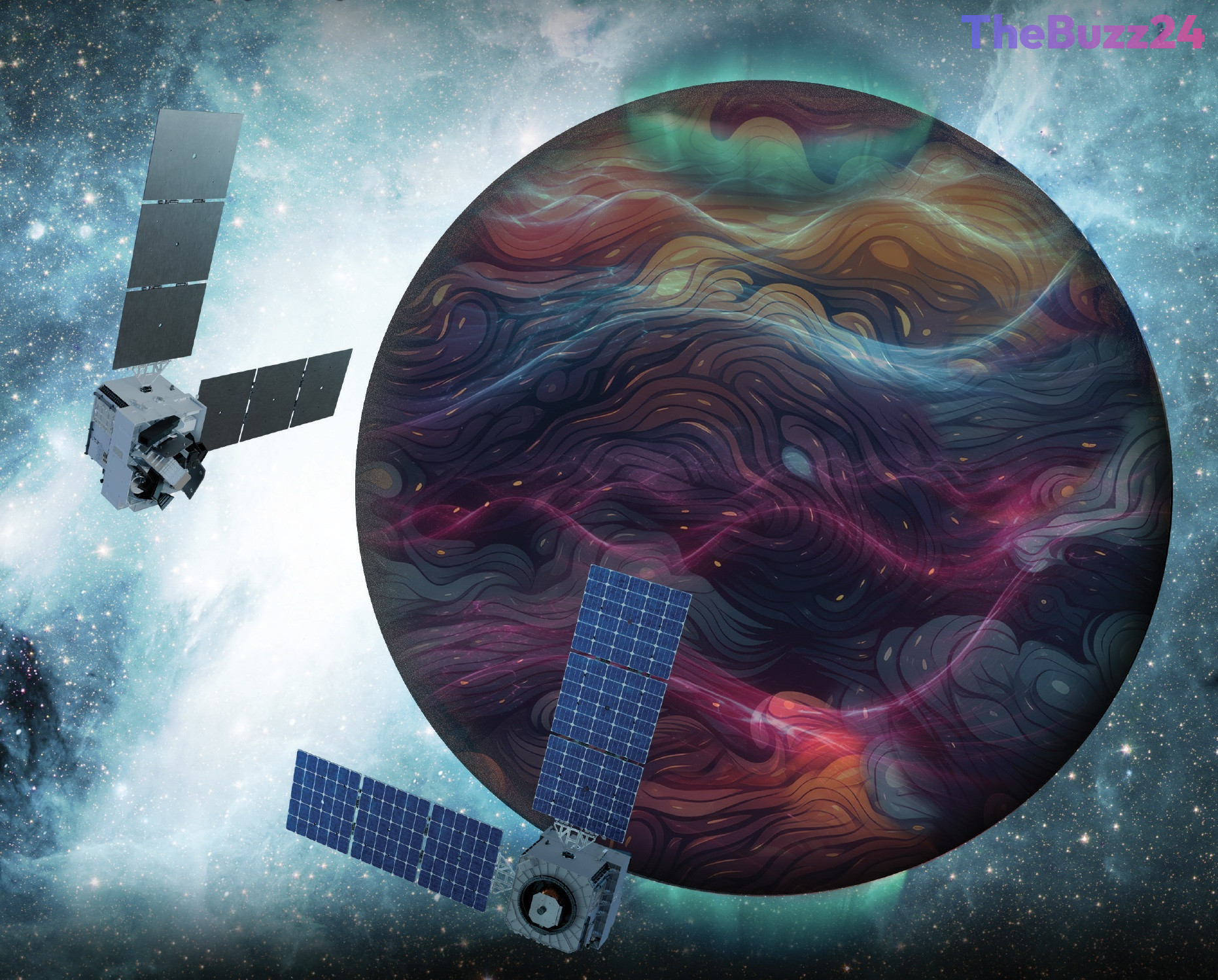
The DAPHNE mission is now advancing into Phase B of its development, a critical stage that encompasses detailed planning and design for both flight and mission operations. The mission will deploy a pair of identical twin satellites, strategically positioned to observe and analyze how changes originating in Earth’s lower atmosphere propagate and influence the planet’s upper atmosphere – the very region where space weather phenomena manifest. This dual-satellite approach promises unprecedented coordinated measurements.
This initiative underscores the nation’s commitment to becoming a ‘space weather-ready’ entity, providing crucial insights that will help predict and prepare for space weather impacts on daily life on Earth and for future human exploration. As NASA prepares to send astronauts further into the solar system, beyond Earth’s protective magnetic field to the Moon, Mars, and beyond, DAPHNE will join a growing fleet of scientific instruments providing essential data to mission planners, enabling them to foresee and mitigate the effects of space weather.
The DAPHNE mission’s concept is characterized by its low risk and high potential return, focusing on delivering coordinated, multi-point measurements of neutral winds, temperature, and atmospheric composition within the thermosphere. This region, alongside the ionosphere, represents the critical transition zone where Earth’s neutral atmosphere gradually gives way to the ionized plasma of space. In this dynamic shell surrounding our planet, the atmosphere is in perpetual motion, constantly shaped by solar activity and atmospheric changes originating from below. Led by Aimee Merkel from the Laboratory for Atmospheric and Space Physics at the University of Colorado, Boulder, the mission’s fundamental observations are expected to significantly advance space weather predictive models.
The mission is slated for a confirmation review in 2027, which will assess its progress and funding availability. If confirmed, the total estimated cost of the mission, excluding launch expenses, is projected not to exceed $250 million in fiscal year 2023 dollars, with a potential launch date set for no earlier than 2029.
Key Takeaways
- NASA has selected the DAPHNE mission concept to study space weather and Earth's atmospheric dynamics, aiming to improve prediction capabilities.
- The mission will utilize identical twin satellites to gather coordinated, multi-point measurements in the thermosphere and ionosphere, critical for protecting technology and astronauts.
- DAPHNE is currently in Phase B development, with a confirmation review in 2027, an estimated cost of $250 million (excluding launch), and a projected launch date no earlier than 2029.
Editor’s Analysis & Impact
The DAPHNE mission represents a significant leap forward in space weather forecasting, an area of increasing importance for global infrastructure and future space endeavors. For the satellite industry, enhanced prediction capabilities mean reduced operational risks, fewer service disruptions, and potentially lower costs associated with mitigating space weather impacts on critical assets like communication and navigation satellites. This mission’s focus on the thermosphere and ionosphere, where Earth’s atmosphere meets space, is crucial for understanding the fundamental processes driving space weather. Its success will not only bolster national security and economic stability by safeguarding essential technologies but also pave the way for safer, more reliable deep-space missions, including human exploration of the Moon and Mars. It underscores a strategic investment in foundational science with broad practical implications.
Frequently Asked Questions
Q: What is the primary objective of the DAPHNE mission?
A: The DAPHNE mission's main goal is to investigate how space weather and the dynamics within Earth's atmosphere influence the space environment. This research aims to improve our ability to predict impacts on crucial technologies like GPS and low Earth orbit satellites, as well as to ensure the safety of astronauts in space.
Q: How will the DAPHNE mission gather its data?
A: DAPHNE will employ identical twin satellites to conduct coordinated, multi-point measurements. These satellites will study neutral winds, temperature, and composition in the thermosphere and ionosphere, observing how changes in Earth's lower atmosphere affect these upper regions where space weather phenomena occur.
Q: When is the DAPHNE mission expected to launch and what is its estimated cost?
A: If confirmed after a review in 2027, the DAPHNE mission is projected to launch no earlier than 2029. The total estimated cost of the mission, excluding launch expenses, is not expected to exceed $250 million in fiscal year 2023 dollars.
AI Disclosure: This article is based on verified data and official reports. Our Team and AI have cross-referenced every financial detail with primary sources to ensure total accuracy.
More from this Category