NASA’s Nancy Grace Roman Space Telescope Begins Critical Commissioning Phase
The Nancy Grace Roman Space Telescope has officially entered its critical commissioning phase as it embarks on a three-month journey toward the Sun-Earth Lagrange Point 2 (L2). This vital period involves a series of complex maneuvers, including the activation, calibration, and rigorous testing of the observatory’s onboard systems to ensure they meet performance standards before the commencement of scientific operations.
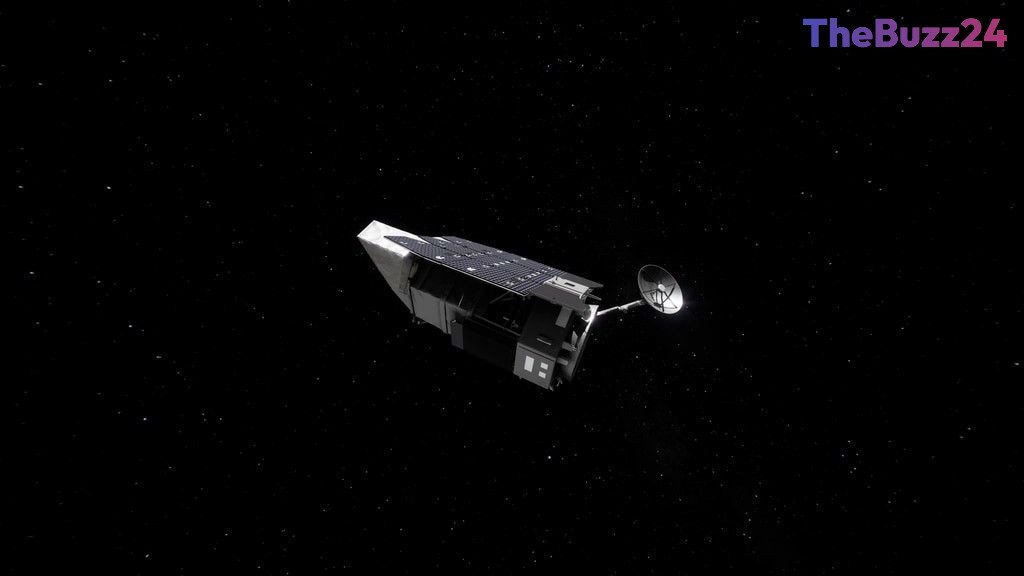
Shortly after launch, the telescope successfully initiated its deployment sequence, transitioning from its compact launch configuration to its operational state. Key components, including solar panels and the sunshade, have already been deployed to provide essential power and thermal protection. In the coming days, engineers will oversee the extension of the high-gain antenna and the positioning of the aperture cover, which will permanently shield the primary mirror from stray light.
Once it reaches its destination at L2, the Roman Space Telescope will settle into a stable halo orbit. This strategic location allows the observatory to maintain a constant, unobstructed view of the cosmos while minimizing fuel consumption. By positioning itself far from the thermal interference of Earth, the Moon, and the Sun, the telescope is uniquely equipped to conduct high-precision infrared observations, providing astronomers with unprecedented clarity into the wide reaches of the universe.
Key Takeaways
- The Roman Space Telescope is currently undergoing a three-month commissioning phase to calibrate systems for scientific research.
- The spacecraft is traveling to the Sun-Earth Lagrange Point 2 (L2), a stable orbit that offers an ideal environment for infrared astronomy.
- Critical hardware deployments, including solar arrays and the aperture cover, are essential to protecting the telescope and ensuring operational power.
Editor’s Analysis & Impact
The commissioning of the Nancy Grace Roman Space Telescope represents a significant milestone in modern astrophysics. By utilizing the L2 Lagrange point, the mission minimizes thermal noise, which is crucial for the telescope’s infrared capabilities. This mission is poised to revolutionize our understanding of dark energy, exoplanets, and infrared cosmology. The success of this commissioning phase is vital, as the telescope’s wide-field view will provide a massive dataset that complements the high-resolution, narrow-field observations of the James Webb Space Telescope. The industry impact is substantial, as the mission will likely drive new advancements in data processing and deep-space communication technologies, setting the stage for future large-scale space observatories.
Frequently Asked Questions
Q: What is the purpose of the commissioning phase for the Roman Space Telescope?
A: Commissioning is a three-month period where engineers and scientists turn on, calibrate, and test all onboard systems to ensure the telescope is performing as expected before it begins its primary scientific mission.
Q: Why is the L2 Lagrange point an ideal location for this telescope?
A: L2 provides a stable gravitational environment that requires minimal fuel to maintain. Additionally, it offers an unobstructed view of the sky and keeps the telescope far from the heat of the Earth, Moon, and Sun, which is essential for sensitive infrared observations.
AI Disclosure: This article is based on verified data and official reports. Our Team and AI have cross-referenced every financial detail with primary sources to ensure total accuracy.
More from this Category