NASA’s Psyche Probe Captures Rare Martian Views During Deep Space Transit
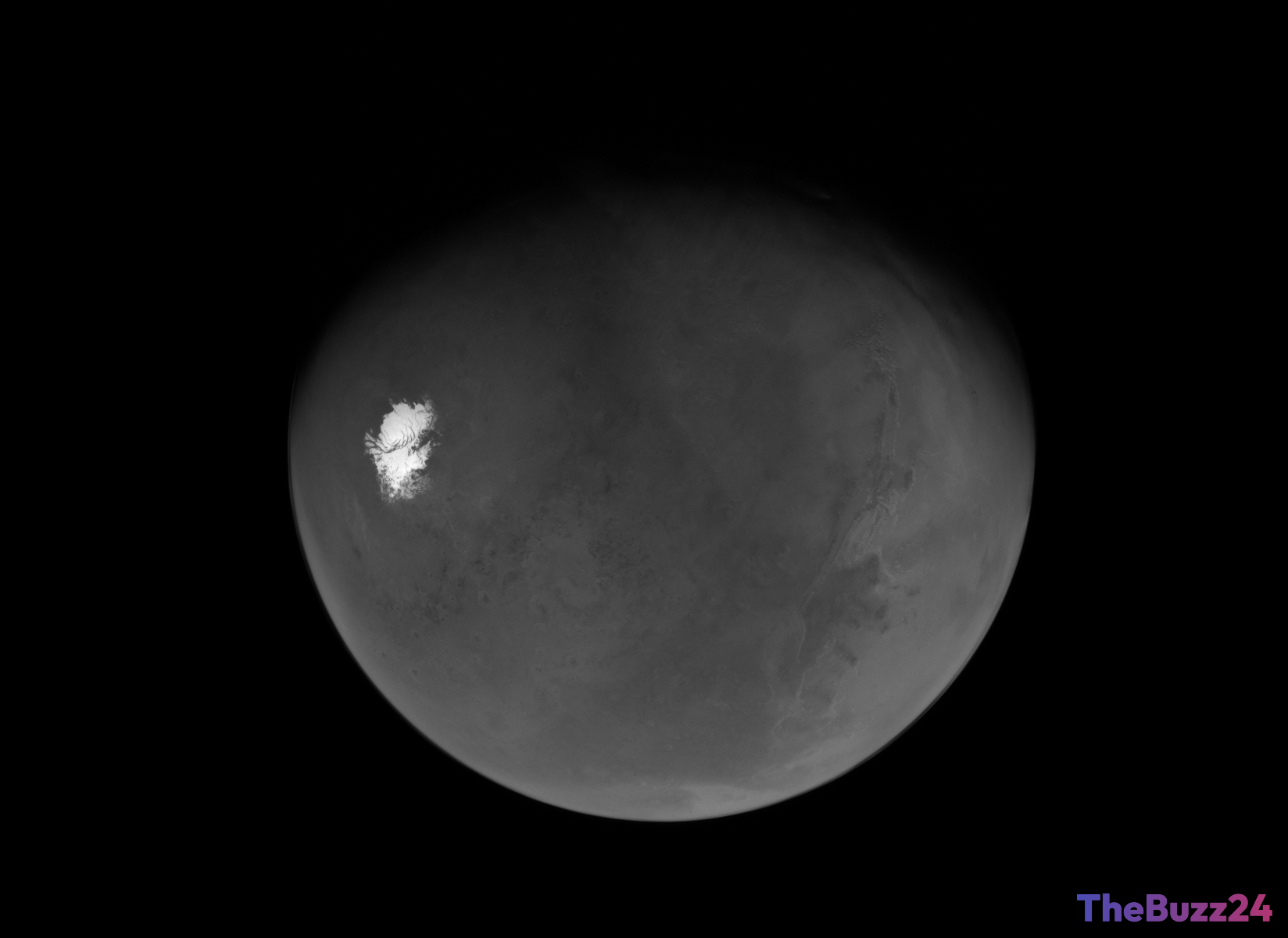
The Psyche spacecraft has successfully completed a significant flyby of Mars, marking a major milestone in its multi-year journey toward the asteroid belt. During the encounter on May 15, 2026, the probe utilized its onboard imaging systems to capture high-resolution photographs of the Martian surface. These images provide researchers with a detailed look at the planet’s southern polar ice caps and the expansive Valles Marineris canyon system, offering fresh data for ongoing geological studies.
Beyond the immediate scientific value of the Martian imagery, the flyby served as a critical operational test for the spacecraft. The maneuver allowed mission controllers to calibrate sensitive instruments and refine observation strategies, ensuring the probe remains in peak condition for the remainder of its voyage. By leveraging the gravitational and visual opportunities presented by the Red Planet, the mission team has successfully validated the spacecraft’s performance in deep space conditions.
With the Martian rendezvous now behind it, the probe is utilizing its advanced solar-electric propulsion system to navigate toward its primary destination: the metallic asteroid Psyche. The spacecraft is currently on track to reach the asteroid, located between Mars and Jupiter, by August 2029. Once it arrives, the probe will enter orbit to conduct a comprehensive analysis of the celestial body, which is widely believed to be the exposed core of an ancient protoplanet. This investigation is expected to provide unprecedented insights into the fundamental processes that shaped the early solar system.
Key Takeaways
- The Psyche probe successfully captured high-resolution images of Mars' south pole and Valles Marineris during a May 2026 flyby.
- The flyby served as a vital calibration exercise for the spacecraft's instruments before it continues its journey to the asteroid belt.
- The mission is scheduled to reach the metallic asteroid Psyche in August 2029 to study the remnants of an ancient protoplanet.
Editor’s Analysis & Impact
The successful Mars flyby of the Psyche probe highlights the increasing sophistication of deep-space navigation and instrument calibration. By utilizing a secondary target like Mars to test systems, the mission minimizes risk while maximizing scientific output. The broader implications of this mission are profound; by studying the metallic core of a protoplanet, researchers are essentially looking back in time at the building blocks of planetary formation. This data will likely refine existing models of how terrestrial planets evolve. Furthermore, as interest in asteroid mining and space-based resource extraction grows, the technical success of this mission serves as a blueprint for future long-duration autonomous space exploration, signaling a shift toward more complex, multi-objective missions in the coming decade.
Frequently Asked Questions
Q: What is the primary goal of the Psyche mission?
A: The mission aims to study the metallic asteroid Psyche, which scientists believe is the exposed nickel-iron core of an ancient protoplanet, to better understand early planetary formation.
Q: When will the spacecraft arrive at its final destination?
A: The Psyche spacecraft is projected to reach the asteroid Psyche in August 2029.
Q: Why was the Mars flyby important for the mission?
A: The flyby allowed the team to capture high-resolution images of Mars and provided a necessary opportunity to calibrate the spacecraft's instruments for the remainder of its journey.
AI Disclosure: This article is based on verified data and official reports. Our Team and AI have cross-referenced every financial detail with primary sources to ensure total accuracy.
More from this Category