NASA Crew Hits 200-Day Milestone in Simulated Mars Habitat
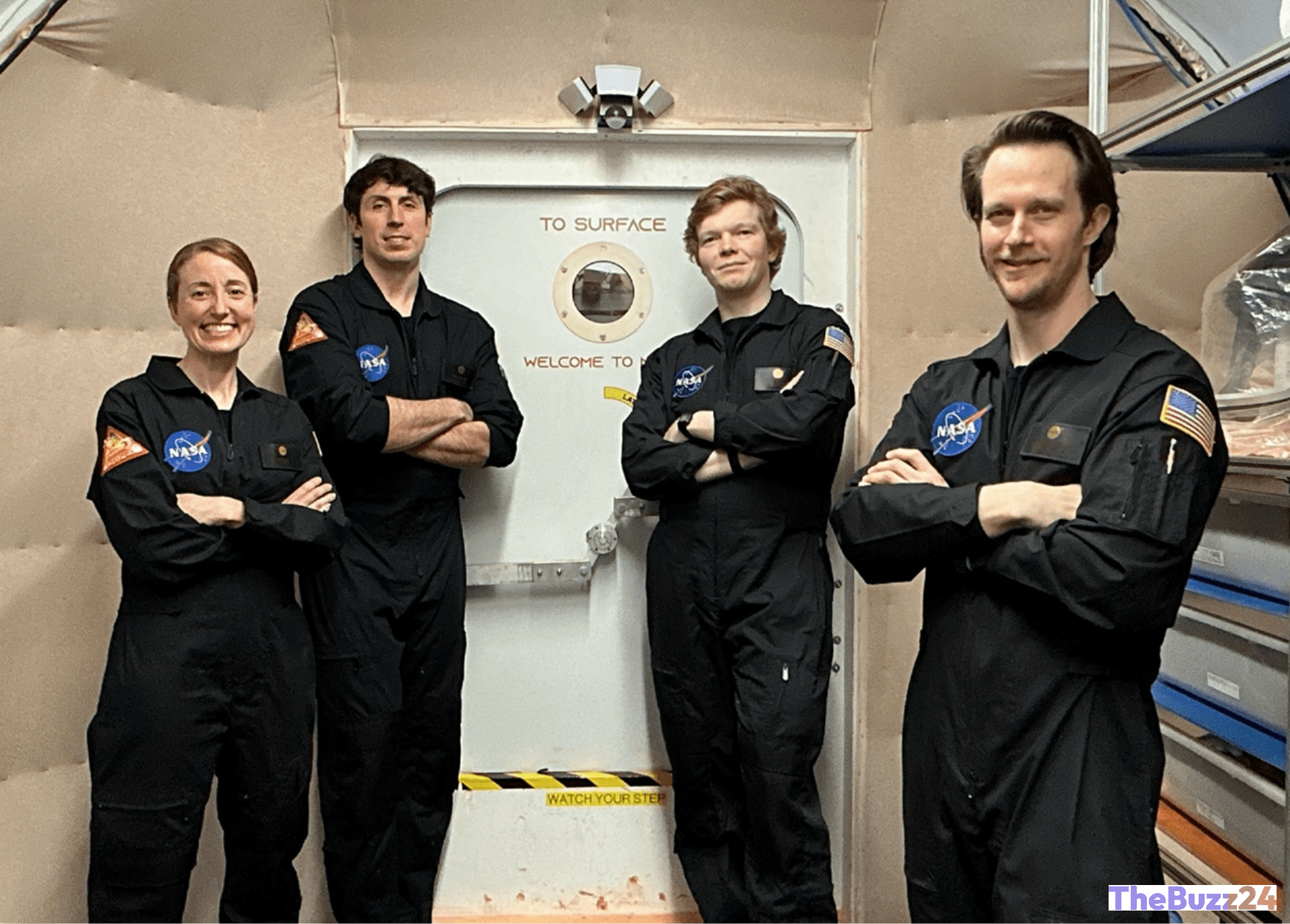
The four-person crew participating in the second Crew Health and Performance Exploration Analog (CHAPEA) mission has officially surpassed the 200-day mark of their 378-day journey. Residing within a 1,700-square-foot 3D-printed habitat at the Johnson Space Center in Houston, the team is currently navigating a simulated two-week communications blackout. This phase is designed to replicate the signal delays and signal loss that occur when Mars passes behind the Sun, forcing the crew to operate entirely on preplanned procedures without real-time guidance from mission control.
Led by commander Ross Elder, the team—which includes medical officer Ellen Ellis, science officer Matthew Montgomery, and flight engineer James Spicer—entered the facility on October 19 of last year. Throughout their stay, they have been tasked with a rigorous schedule that includes robotic operations, habitat maintenance, and agricultural experiments. These activities are performed under strict constraints, including limited supplies and simulated equipment failures, to provide researchers with high-fidelity data on human performance under extreme isolation.
As the mission progresses toward its October 31 conclusion, the data collected remains vital for the future of deep space exploration. By monitoring how the crew manages stress, adapts to resource limitations, and maintains productivity, researchers are gaining unprecedented insights into the psychological and physical requirements for long-duration space travel. These findings are expected to play a critical role in shaping the habitat designs, support systems, and mission protocols necessary for the eventual human exploration of the Moon and Mars.
Key Takeaways
- The CHAPEA 2 crew has completed 200 days of a 378-day simulated Mars mission, currently operating under a two-week communications blackout.
- The mission focuses on testing human adaptation to isolation, resource scarcity, and simulated equipment malfunctions in a 3D-printed habitat.
- Data gathered from this study is essential for refining mission planning and life-support systems for future crewed missions to the Moon and Mars.
Editor’s Analysis & Impact
The CHAPEA mission represents a critical shift in space exploration strategy, moving from short-term orbital flights to the psychological and operational realities of long-duration deep space travel. By isolating crews in high-fidelity analogs, researchers can identify potential failure points in human behavior and resource management that cannot be replicated in standard laboratory settings. The industry impact is significant; as the focus shifts toward the Artemis program and eventual Mars landings, the ability to sustain a healthy, autonomous crew becomes the primary bottleneck for success. Future implications include the development of more robust AI-driven support systems and psychological monitoring tools, which will likely become standard requirements for any mission beyond Earth’s orbit. This research is not merely academic; it is the foundational work required to turn the concept of a multi-planetary human presence into a viable reality.
Frequently Asked Questions
Q: What is the primary goal of the CHAPEA mission?
A: The primary goal is to gather data on how humans adapt to isolation, confinement, and resource limitations to help prepare for future long-duration missions to the Moon and Mars.
Q: Why is the crew currently in a communications blackout?
A: The crew is undergoing a simulated two-week loss-of-signal period to mimic the communication blackout that occurs when Mars moves behind the Sun, testing their ability to operate independently.
AI Disclosure: This article is based on verified data and official reports. Our Team and AI have cross-referenced every financial detail with primary sources to ensure total accuracy.
More from this Category