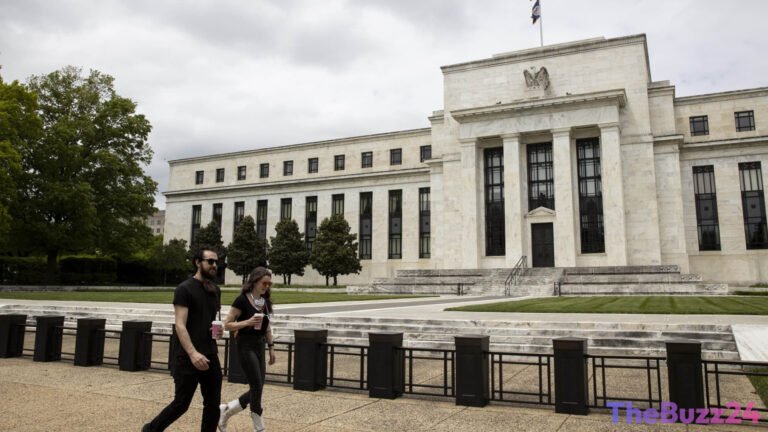
Navigating Rising Interest Rates: Your Guide to Maximizing Savings
As central banks continue to adjust benchmark interest rates, savers stand to be among the primary beneficiaries. Typically, when these rates climb, financial institutions like banks and credit unions respond by increasing the Annual Percentage Yield (APY) offered on various deposit accounts. This includes popular options such as high-yield savings accounts and Certificates of Deposit (CDs), presenting savers with enhanced opportunities to grow their cash reserves.
However, the optimal strategy for your savings extends beyond simply chasing the highest APY. The decision between a high-yield savings account and a CD hinges significantly on your immediate access needs versus your willingness to commit funds for a fixed period. High-yield savings accounts offer greater liquidity, allowing for easier withdrawal of funds, while CDs generally require funds to remain untouched for a predetermined duration in exchange for a locked-in, fixed interest rate.
For individuals prioritizing immediate access to their funds, a high-yield savings account emerges as the more suitable choice. These accounts are designed to provide flexibility, especially crucial for emergency funds. While traditional banks may impose withdrawal limits, many online institutions offer unlimited access. Institutions like SoFi Checking and Savings provide robust APYs and potential cash bonuses for direct deposit setups, alongside unlimited withdrawals. EverBank Performance Savings also offers a competitive rate with minimal restrictions, making it an attractive option for those seeking simplicity.
Conversely, Certificates of Deposit (CDs) become more appealing when you can afford to lock away funds for a set term. As interest rates rise, banks often enhance their CD offerings, allowing savers to secure a favorable fixed rate for the entire term, even if market rates later decline. CD terms can vary widely, from a few months to several years. While early withdrawal penalties typically apply, the security of a guaranteed rate for a defined period can be advantageous. Institutions like Nuvision Credit Union, Synchrony Bank, and Popular Direct are currently offering competitive rates across various terms, with options catering to different balance sizes and flexibility needs, including no-penalty CDs.
Key Takeaways
- Rising interest rates generally lead to higher APYs on savings accounts and CDs, benefiting savers.
- High-yield savings accounts offer flexibility and immediate access to funds, ideal for emergency savings.
- CDs provide fixed rates for a set term, offering security for funds that won't be needed in the short term.
Editor’s Analysis & Impact
The current environment of rising interest rates presents a significant opportunity for savers to increase their returns. The choice between high-yield savings accounts and CDs depends on individual liquidity needs and investment horizons. While high-yield savings accounts offer flexibility, CDs provide the security of a fixed rate, which can be particularly attractive if future rate decreases are anticipated. Financial institutions are actively competing with attractive APYs and bonus offers to attract deposits, underscoring the importance for consumers to research and compare options. This trend highlights a shift towards more favorable conditions for depositors, potentially rebalancing the traditional advantage held by borrowers in low-rate environments.
Frequently Asked Questions
Q: What is the main difference between a high-yield savings account and a CD?
A: A high-yield savings account offers higher interest rates than traditional savings accounts and provides easy access to your funds, allowing for frequent withdrawals. A Certificate of Deposit (CD) typically offers a fixed interest rate for a specific term, but your money is locked in and cannot be withdrawn without penalty until maturity.
Q: When should I choose a CD over a high-yield savings account?
A: You should consider a CD if you have funds you won't need for a specific period (the term of the CD) and want to lock in a potentially higher fixed interest rate. This is especially beneficial if you anticipate interest rates might fall in the future.
Q: Are there any risks associated with high-yield savings accounts or CDs?
A: The primary risk with high-yield savings accounts is that their variable rates can decrease if market interest rates fall. For CDs, the main risk is the early withdrawal penalty if you need access to your funds before the term ends. Both are generally considered low-risk, especially if FDIC-insured.
AI Disclosure: This article is based on verified data and official reports. Our Team and AI have cross-referenced every financial detail with primary sources to ensure total accuracy.
More from this Category