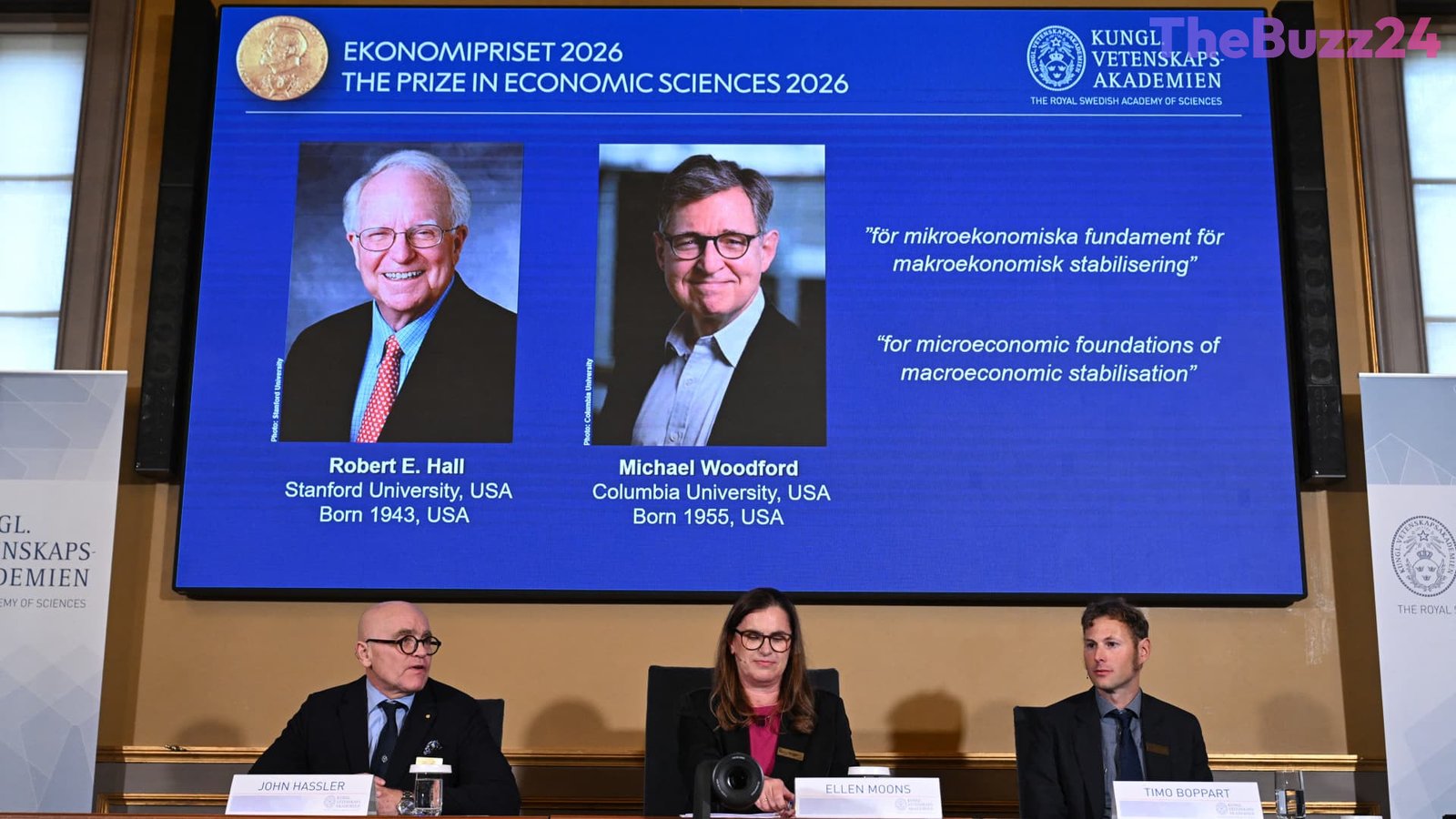
Nobel Prize in Economics Honors Pioneers of Macroeconomic Stability Models
Robert E. Hall and Michael Woodford have been jointly awarded the Nobel Prize in Economics for their groundbreaking research into the microeconomic foundations of macroeconomic stability. Their work has become a cornerstone for modern central banks and government institutions, providing the theoretical framework necessary to navigate and mitigate the volatile cycles of economic booms and busts.
Stanford University professor Robert E. Hall and Columbia University professor Michael Woodford were recognized for shifting the focus of economic analysis. Rather than relying solely on aggregate macroeconomic variables like inflation or production, their models incorporate the forward-looking decision-making processes of individual households and businesses. This approach allows policymakers to better understand how micro-level behaviors aggregate to influence the broader economy.
The Royal Swedish Academy of Sciences highlighted that these models are instrumental in helping authorities respond to external shocks, such as energy crises or shifts in consumer behavior. By effectively communicating policy intentions, central banks and governments can influence public expectations, thereby smoothing out economic fluctuations and fostering greater long-term stability.
The laureates will share a prize of 12 million Swedish kronor, approximately $1.2 million. This recognition marks the conclusion of this year’s Nobel announcements, cementing the pair’s legacy in shaping how modern nations manage fiscal and monetary policy to maintain economic equilibrium.
Key Takeaways
- Robert E. Hall and Michael Woodford were honored for developing models that link individual microeconomic behavior to macroeconomic stability.
- Their research provides central banks and governments with tools to better manage economic shocks and reduce the severity of business cycles.
- The Nobel laureates will split a prize of 12 million Swedish kronor for their significant contributions to economic science.
Editor’s Analysis & Impact
The recognition of Hall and Woodford underscores a pivotal shift in modern economic policy: the transition from reactive, aggregate-based management to a more nuanced, expectations-driven approach. By validating the importance of ‘forward-looking’ decision-making, the Nobel committee has highlighted why central bank communication—often referred to as ‘forward guidance’—has become such a powerful tool in the modern era. This research is not merely academic; it is the engine behind how the Federal Reserve and other global institutions attempt to anchor inflation expectations and stabilize markets during crises. Looking forward, as global economies face increasing complexity from digital transformation and climate-related shocks, the integration of these micro-foundations will remain essential for policymakers seeking to maintain stability without stifling growth.
Frequently Asked Questions
Q: Why is the work of Hall and Woodford considered significant for central banks?
A: Their work provides the theoretical foundation for understanding how individual household and business decisions affect the economy, allowing central banks to use communication and policy to influence expectations and stabilize the economy.
Q: What is the primary focus of the models developed by the laureates?
A: The models focus on 'microeconomic foundations,' which analyze how the combined, forward-looking decisions of individuals and firms impact macroeconomic outcomes like inflation and production.
AI Disclosure: This article is based on verified data and official reports. Our Team and AI have cross-referenced every financial detail with primary sources to ensure total accuracy.
More from this Category