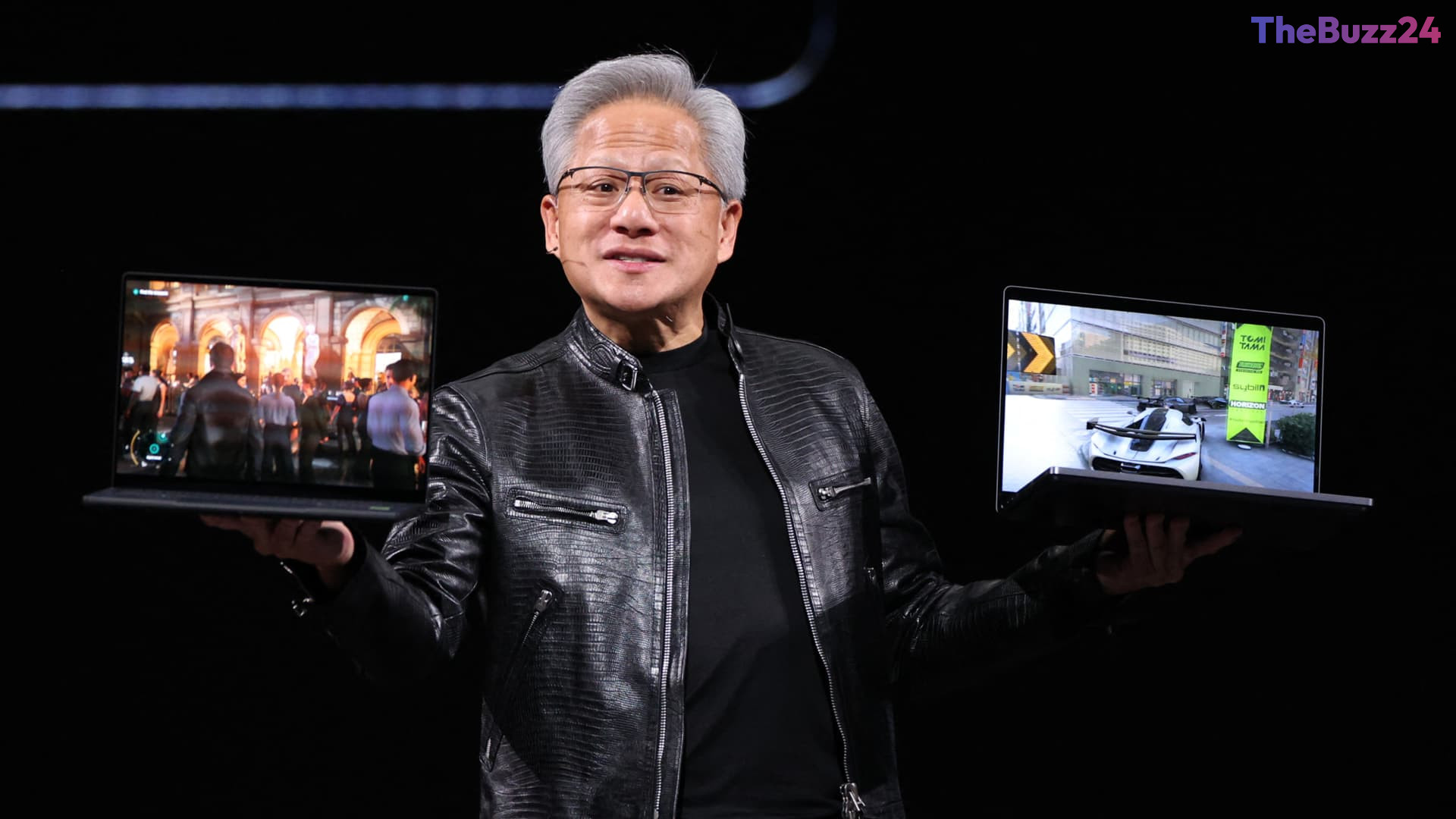
Nvidia Challenges PC Market Dominance with New Arm-Based Processor
Nvidia is making a significant move into the personal computing sector, leveraging its dominance in artificial intelligence to introduce a new Arm-based processor, the N1X. This chip, which serves as the core of the newly unveiled RTX Spark superchip, is set to power a fresh generation of laptops from major manufacturers including Microsoft, Dell, HP, ASUS, Lenovo, and MSI. By entering the PC space, Nvidia is directly challenging the long-standing market leadership of Intel and AMD, signaling a major shift in how consumer hardware is engineered for the AI era.
The RTX Spark represents a fusion of Nvidia’s Blackwell graphics technology with the custom N1X central processing unit, designed in collaboration with MediaTek. Built on 3-nanometer technology, the processor is designed to handle the intensive demands of agentic AI workflows, which Nvidia identifies as the next frontier for computing. The company plans to roll out over 30 laptop models and 10 desktop configurations, targeting creators, developers, and gamers who require high performance in thin, portable form factors.
Beyond consumer hardware, Nvidia is also scaling its enterprise capabilities with the full production of its Vera CPU. Designed for data centers, the Vera CPU is already seeing early adoption from major industry players like OpenAI, Anthropic, and SpaceX. According to company leadership, these CPUs are essential for maintaining the efficiency of modern AI factories, offering significantly faster token generation compared to traditional x86 alternatives. As the industry pivots toward power-efficient Arm architectures, Nvidia’s dual-pronged approach in both consumer PCs and data centers positions it to capture a substantial share of the projected $200 billion CPU market.
Key Takeaways
- Nvidia is entering the PC market with its new Arm-based N1X processor, featured in the RTX Spark superchip.
- The new chips will debut in laptops from major brands like Microsoft, Dell, and HP, aiming to compete with traditional x86 processors from Intel and AMD.
- Nvidia has also moved its Vera data center CPU into full production, with early adoption by major AI firms including OpenAI and SpaceX.
Editor’s Analysis & Impact
Nvidia’s expansion into the PC market is a strategic masterstroke that threatens the traditional x86 duopoly held by Intel and AMD. By integrating its high-performance GPU technology with custom Arm-based CPUs, Nvidia is effectively verticalizing the AI-PC experience. This move is not merely about hardware; it is about controlling the entire stack—from the data center to the end-user’s laptop. The industry is clearly shifting toward power-efficient, AI-optimized architectures, and Nvidia is positioning itself as the primary architect of this transition. If the RTX Spark succeeds in delivering on its performance promises, it could accelerate the obsolescence of legacy PC architectures, forcing competitors to pivot rapidly or risk losing significant market share in both the enterprise and consumer segments.
Frequently Asked Questions
Q: What is the RTX Spark superchip?
A: The RTX Spark is a new processor unit that combines Nvidia's Blackwell GPU with a custom Arm-based N1X CPU, designed to power high-performance, AI-capable laptops and compact desktops.
Q: How does Nvidia's Vera CPU differ from traditional processors?
A: The Vera CPU is designed specifically for data center AI workloads, focusing on energy efficiency and high-speed token generation, which Nvidia claims is 1.8 times faster than current x86 alternatives.
AI Disclosure: This article is based on verified data and official reports. Our Team and AI have cross-referenced every financial detail with primary sources to ensure total accuracy.
More from this Category