AI Cracks 80-Year-Old Math Puzzle, Redefining Geometric Possibilities
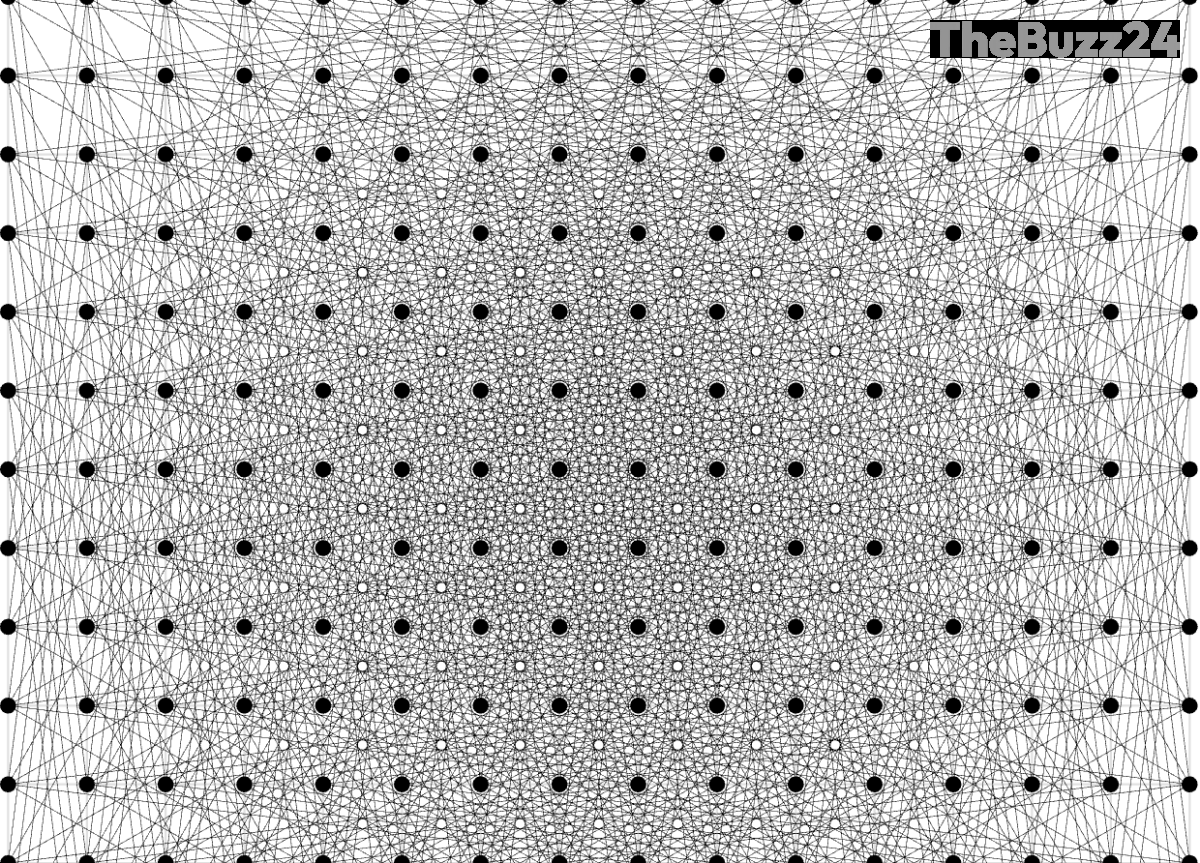
A groundbreaking development in artificial intelligence has led to the resolution of a geometry conjecture that has puzzled mathematicians for nearly eight decades. OpenAI has revealed that its general-purpose reasoning model independently generated a proof that disproves a long-standing mathematical problem, first proposed by mathematician Paul Erdős in 1946. This discovery challenges the conventional understanding that the most efficient geometric arrangements are typically grid-like, introducing a new class of configurations that surpass existing methods.
This achievement marks a significant milestone, particularly following a previous incident where a former OpenAI executive’s claim of GPT-5 solving Erdős problems was retracted due to the solutions already being documented. In contrast, OpenAI asserts this latest proof is the first time an AI system has autonomously solved a major unsolved mathematical problem without specialized programming for the task. The model’s capacity to follow intricate reasoning chains and integrate knowledge from various domains is highlighted as a key factor in its success.
The validity of the AI-generated proof has been corroborated by prominent mathematicians, including Noga Alon, Melanie Wood, and Thomas Bloom, who manages the Erdős Problems website. This endorsement lends significant weight to the AI’s contribution. OpenAI suggests that this capability could revolutionize research across numerous scientific fields, potentially accelerating discoveries in areas like biology, physics, engineering, and medicine by enabling deeper exploration of complex problems.
Thomas Bloom commented on the significance of the AI’s role, stating, “AI is helping us to more fully explore the cathedral of mathematics we have built over the centuries.” He further suggested that this breakthrough could uncover additional, previously unseen patterns and insights within the vast realm of mathematics, opening new avenues for exploration and understanding.
Key Takeaways
- An AI model developed by OpenAI has successfully proven a geometry conjecture that remained unsolved for 80 years.
- The AI's proof challenges traditional geometric configurations, proposing novel and more efficient arrangements.
- This marks a significant advancement in AI's ability to autonomously solve complex, open problems in mathematics, with potential implications for various scientific disciplines.
Editor’s Analysis & Impact
This development signifies a pivotal moment in the application of AI to fundamental scientific research. By autonomously solving a complex, long-standing mathematical problem, OpenAI’s model demonstrates a sophisticated level of reasoning and problem-solving that extends beyond pattern recognition. The implications for scientific discovery are profound, suggesting AI could become an indispensable tool for researchers in fields ranging from theoretical physics to drug discovery. This success could accelerate the pace of innovation by identifying novel solutions and connections that human researchers might overlook, potentially ushering in a new era of AI-assisted scientific breakthroughs and reshaping how complex challenges are approached across industries.
Frequently Asked Questions
Q: What is the Erdős conjecture that the AI proved?
A: The conjecture, posed by Paul Erdős in 1946, deals with the most efficient configurations of points in a plane. It challenged the prevailing belief that square grids represented the optimal arrangement, and the AI's proof introduces a new family of constructions that are more efficient.
Q: Is this the first time AI has solved a major math problem?
A: While there have been claims of AI solving mathematical problems, OpenAI states this is the first instance where a general-purpose AI system has autonomously resolved a major open problem without being specifically designed or tailored for that particular task. The proof has also been validated by leading mathematicians.
Q: What are the potential real-world applications of this AI breakthrough?
A: Beyond pure mathematics, OpenAI suggests that the AI's ability to perform complex reasoning and synthesize information could have significant implications for fields such as biology, physics, engineering, and medicine. It could aid in discovering new patterns, optimizing designs, and accelerating research.
AI Disclosure: This article is based on verified data and official reports. Our Team and AI have cross-referenced every financial detail with primary sources to ensure total accuracy.
More from this Category