OpenAI Enters Hardware Market with ‘Micro’ Keypad Amid Legal Tension and Mixed Reviews
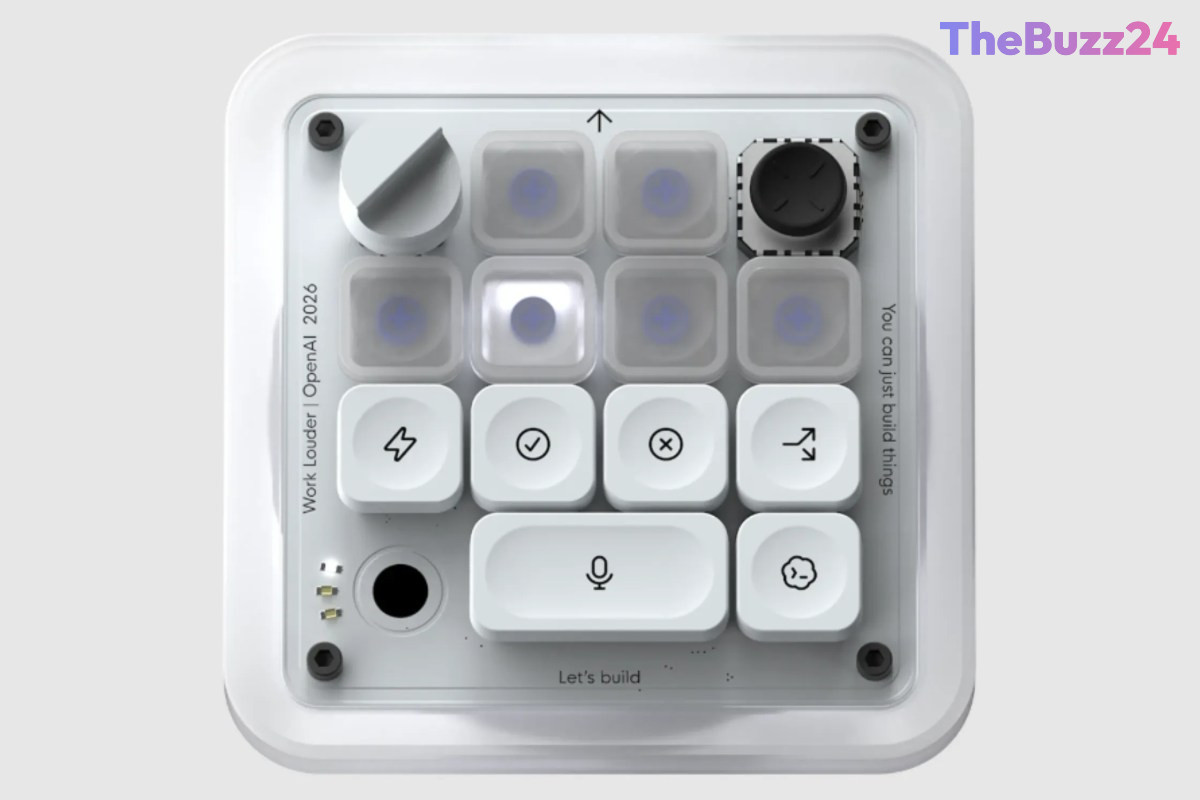
Artificial intelligence leader OpenAI has officially launched its first physical hardware product, a specialized macro keypad named Micro. Developed in partnership with specialty keyboard designer Work Louder, the $230 physical peripheral is engineered to pair directly with ChatGPT and its Codex programming platform. Featuring dedicated agent keys, custom command controls, and a dedicated voice dictation button, the device connects to computers via Bluetooth or USB to offer hands-on control over automated AI workflows.
The hardware launch comes at a turbulent time for OpenAI, which is currently facing trade secret litigation from Apple. Despite the ongoing legal disputes, OpenAI continues to expand its physical product footprint, with reports pointing to additional smart home devices currently in development by former Apple engineering talent. Micro itself arrives in minimalist white packaging, subtly signaling the company’s broader ambition to establish a footprint in consumer electronics alongside its core software offerings.
Functionally, Micro relies on customizable lighting and layout configurations mapped directly inside ChatGPT. Users can assign specific AI projects or tasks to six frosted macro keys, utilizing color-coded LED feedback—such as blue for processing and green for completion—to monitor task progress. A built-in dictation key allows users to speak commands directly to the software, bypassing traditional typing to execute complex prompts.
Initial reception within the developer community has been polarized. While dedicated AI power users appreciate the satisfying physical keys and project-toggling capabilities, critics point out that the steep price tag and initial learning curve make standard keyboard shortcuts and traditional navigation tools a more practical choice for everyday tasks.
Key Takeaways
- OpenAI launched Micro, a $230 physical keypad built in collaboration with Work Louder for direct control over ChatGPT.
- The device features customizable macro keys, status-indicating LED lights, and a dedicated button for voice dictation.
- The release marks OpenAI's first hardware entry amid ongoing legal friction with Apple and broader smart hardware development plans.
Editor’s Analysis & Impact
OpenAI’s entrance into physical hardware with the Micro keypad represents a strategic effort to establish dedicated physical real estate on users’ desks. By moving beyond browser tabs and mobile apps, OpenAI is attempting to create a more integrated, frictionless interface for agentic workflows. However, launching a niche $230 desktop accessory reveals the early hurdles of hardware commercialization: persuading users to adopt specialized peripherals over existing software keybindings is a tough sell. Furthermore, active legal disputes with Apple underscore the rising competitive stakes as AI developers expand into consumer devices. OpenAI’s hardware success will ultimately hinge on whether future products deliver essential utility rather than novel status symbols.
Frequently Asked Questions
Q: What is the OpenAI Micro keypad?
A: Micro is a customizable physical accessory created by OpenAI and Work Louder that provides dedicated physical keys and voice controls for navigating ChatGPT and Codex.
Q: How much does the Micro keypad cost and how does it connect?
A: The device retails for $230 and offers connectivity through either a USB cable or a Bluetooth wireless connection.
Q: What do the different LED colors on the Micro keypad mean?
A: The color-coded lights indicate the operational status of AI tasks: white means idle, blue signifies the AI is actively processing, green signals completion, and red alerts to an error.
AI Disclosure: This article is based on verified data and official reports. Our Team and AI have cross-referenced every financial detail with primary sources to ensure total accuracy.
More from this Category