Lula’s Victory in Brazil: A Setback for Trump’s Latin American Ambitions
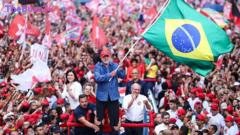
Brazil’s newly elected left-wing President Luiz Inácio Lula da Silva has signaled a clear departure from subservience to foreign powers, declaring in his victory speech that “Brazil will not accept being anyone’s backyard.” This assertive stance, while primarily a domestic political message, carries significant implications for international relations, particularly concerning the United States and its influence in Latin America.
Lula’s political brand, forged as a former union leader, emphasizes standing up to powerful figures. This approach, which included fiery speeches invoking Brazilian sovereignty and criticizing alleged U.S. interference in Brazil’s judicial processes, resonated with voters. His campaign’s use of patriotic slogans and symbols, such as a cap reading “Brazil belongs to Brazilians,” proved effective in rallying support and challenging the traditional patriotic narrative often claimed by the political right.
This victory potentially disrupts former U.S. President Donald Trump’s strategy to establish dominance in the Western Hemisphere, a policy he reportedly dubbed the “Donroe Doctrine.” Trump had sought to align with right-leaning leaders across Latin America, viewing Brazil as a crucial “10th and biggest prize” following the first-round performance of Lula’s rival, Flávio Bolsonaro. The election of Lula, who has previously clashed with the U.S. over trade tariffs and diplomatic disputes, signals a potential shift away from the alignment Trump had cultivated with several regional governments.
While the relationship between Lula and Trump has seen moments of both tension and pragmatic engagement, Lula’s presidency is likely to be characterized by a strong defense of Brazilian interests. Issues such as U.S. trade policies, particularly concerning Brazil’s instant payment system Pix, and differing views on regional security and foreign intervention could lead to renewed diplomatic friction. Furthermore, Lula’s campaign’s accusations against Meta regarding social media bias highlight the growing importance of digital platforms in political discourse and international relations.
Key Takeaways
- President Luiz Inácio Lula da Silva's victory in Brazil signals a more assertive foreign policy, prioritizing national sovereignty over alignment with foreign powers.
- Lula's win may hinder former U.S. President Donald Trump's strategic efforts to increase American influence across Latin America.
- Potential diplomatic tensions may arise between Brazil and the U.S. over trade, digital platforms, and regional security issues.
Editor’s Analysis & Impact
Lula da Silva’s return to power in Brazil represents a significant geopolitical shift, potentially altering the landscape of U.S. influence in Latin America. His emphasis on national sovereignty and his past clashes with U.S. trade policies suggest a more independent foreign policy, which could challenge the “Donroe Doctrine” Trump aimed to implement. The economic implications are also noteworthy, particularly concerning Brazil’s burgeoning digital payment system, Pix, and its potential competition with established U.S. financial services. This election underscores the growing assertiveness of major South American economies and their willingness to chart their own course, independent of traditional U.S. hegemony. The coming years will likely see a dynamic interplay between Brazil’s national interests and U.S. foreign policy objectives in the region.
Frequently Asked Questions
Q: What is the 'Donroe Doctrine'?
A: The 'Donroe Doctrine' is a term reportedly coined by former U.S. President Donald Trump, referring to his strategy to increase U.S. dominance and influence in the Western Hemisphere by forging alliances with right-leaning leaders in Latin America.
Q: What are some potential areas of tension between Lula's Brazil and the U.S.?
A: Potential areas of tension include trade policies, particularly concerning Brazil's instant payment system Pix and its impact on U.S. companies like Visa and Mastercard. Differences in views on regional security, foreign intervention, and the role of social media platforms in political discourse could also lead to friction.
Q: How might Lula's victory impact U.S. influence in Latin America?
A: Lula's victory, coupled with his assertive stance on national sovereignty, could undermine Trump's efforts to build a coalition of aligned nations in Latin America. It signals a potential shift towards greater independence from U.S. influence among key regional players.
AI Disclosure: This article is based on verified data and official reports. Our Team and AI have cross-referenced every financial detail with primary sources to ensure total accuracy.
More from this Category