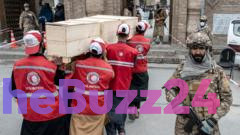
Tragedy in Kabul: Demands for Justice Grow After Devastating Airstrike on Drug Rehab Center Kills 269
A devastating airstrike on the Omid Drug Rehabilitation Hospital in Kabul has left at least 269 people dead, sparking international outrage and intense grief among Afghan families. The attack, which occurred on the evening of March 16, targeted a facility housing hundreds of patients recovering from drug addiction. A United Nations report has confirmed the staggering death toll, warning that the final number of casualties could be significantly higher due to the severity of the destruction and the difficulty of identifying victims from the debris.
The strike has ignited a fierce geopolitical dispute. Pakistani military officials defended the operation, claiming the facility was not a civilian hospital but rather a military infrastructure used by militant groups to train suicide bombers. However, this claim has been vehemently rejected by survivors, victims’ families, and international observers. The Omid facility, located in the former US and NATO base Camp Phoenix, has operated openly as a rehabilitation center since 2016 and is situated just a kilometer from major UN offices.
Human rights organizations, including Human Rights Watch, have flagged the incident as an unlawful attack and a potential war crime, calling for an independent international investigation. Families of the victims, many of whom were impoverished citizens struggling with addiction to synthetic drugs like “Tablet-K,” are demanding answers. The tragedy has further strained the already volatile relations between the Taliban-led Afghan government and Pakistan, with both nations trading accusations over cross-border militancy and civilian safety.
Key Takeaways
- At least 269 people, primarily recovering drug addicts and hospital staff, were killed in a Pakistani airstrike on the Omid Drug Rehabilitation Hospital in Kabul.
- While Pakistan claims the facility was a militant training camp, the United Nations and human rights groups confirm it was a well-known civilian rehabilitation center.
- The attack has intensified diplomatic and military tensions between Afghanistan's Taliban government and Pakistan, amid calls for a war crimes investigation.
Editor’s Analysis & Impact
The airstrike on the Omid Drug Rehabilitation Hospital marks a dangerous escalation in the cross-border conflict between Pakistan and the Taliban-led Afghan government. Historically, Pakistan maintained close ties with the Taliban, but relations have deteriorated rapidly over mutual accusations of harboring militant groups like the Tehreek-e-Taliban Pakistan (TTP). This tragedy highlights the immense human cost of this geopolitical friction, particularly for vulnerable populations like recovering drug addicts in a country already devastated by decades of war. By targeting a highly visible, UN-supported civilian facility, Pakistan faces severe international backlash and potential legal scrutiny under international humanitarian law. Moving forward, this incident is likely to harden the Taliban’s stance, diminish prospects for bilateral security cooperation, and increase regional instability, potentially drawing in international mediators to prevent a full-scale border conflict.
Frequently Asked Questions
Q: What was the Omid Drug Rehabilitation Hospital?
A: It was a prominent rehabilitation facility in Kabul, established in 2016 at the former US and NATO military base Camp Phoenix, dedicated to treating Afghans struggling with drug addiction.
Q: Why did Pakistan target the facility?
A: The Pakistani military claimed the site was a terrorist infrastructure used to train suicide bombers. However, the UN, local staff, and victims' families have strongly disputed this, stating it was strictly a civilian medical facility.
Q: What are the international reactions to the airstrike?
A: The United Nations and Human Rights Watch have condemned the attack, with some officials calling for it to be investigated as a potential war crime due to the high number of civilian casualties.
AI Disclosure: This article is based on verified data and official reports. Our Team and AI have cross-referenced every financial detail with primary sources to ensure total accuracy.
More from this Category