Physical Meets Digital: Disrupt 2026 Debuts ‘Real World AI’ Stage to Explore Robotics, Edge Computing, and De-Extinction
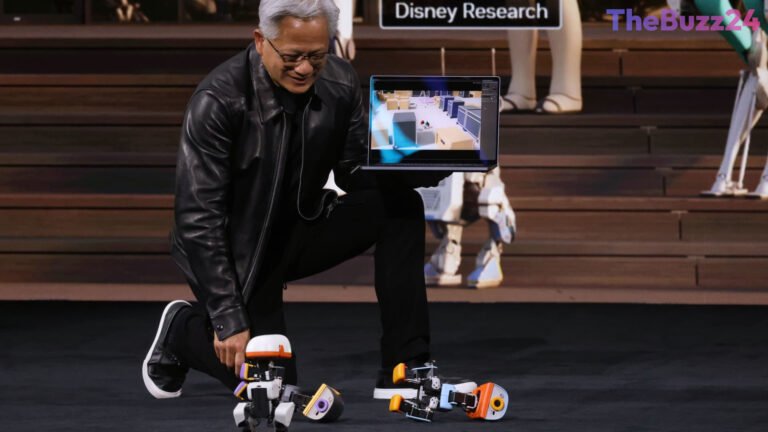
As artificial intelligence rapidly transitions from digital screens to physical environments, the upcoming Disrupt 2026 conference in San Francisco is set to debut a dedicated “Real World AI” stage. Scheduled for October 13 to 15 at Moscone West, this new programming track will explore the convergence of software and physical hardware. Discussions will span autonomous machinery, defense technologies, edge computing, and even the controversial application of AI in biological de-extinction.
A primary focus of the new stage is the quest to solve the “data gap” in robotics. Unlike large language models that train on vast internet text, physical robots lack standardized real-world data. Les Karpas, Nvidia’s Head of Physical AI, will address what is required to trigger a “ChatGPT moment” for physical machines. Additionally, safety in high-stakes environments will be a key theme, with Shield AI Chief Technology Officer Nate Michael leading a session on validating autonomous systems for defense and aerospace where failure is not an option.
The intersection of AI and biotechnology will also take center stage. Ben Lamm, CEO of Colossal Biosciences, is slated to discuss how genetic engineering and machine learning are being leveraged to revive extinct species, addressing the ethical debates surrounding ecological conservation. Furthermore, industry experts from FieldAI, Medra, and Eclipse Ventures will examine the challenges of deploying AI at the “edge”—environments like deep space or remote battlefields where cloud connectivity is unavailable and latency is critical.
Transitioning from laboratory prototypes to commercial production remains a notorious hurdle for deep tech startups. A panel featuring executives from MBRYONICS, Bedrock Robotics, and Foxglove will share practical insights on navigating supply chains, manufacturing realities, and scaling hardware. Beyond the physical AI track, the broader Disrupt 2026 event will host specialized stages covering fintech, energy grid strain, SaaS business models, and startup scaling strategies, drawing over 10,000 global tech and venture capital leaders.
Key Takeaways
- Disrupt 2026 is introducing a 'Real World AI Stage' to address the integration of artificial intelligence with physical hardware, robotics, and biology.
- Industry leaders from Nvidia, Shield AI, and Colossal Biosciences will discuss critical challenges, including the robotics data gap, high-stakes safety validation, and genetic de-extinction.
- The programming will highlight edge computing solutions for environments lacking cloud connectivity and offer strategies for scaling deep tech prototypes into mass production.
Editor’s Analysis & Impact
The launch of a dedicated physical AI track highlights a critical macroeconomic shift: the AI revolution is moving beyond generative chatbots and SaaS applications into heavy industry, defense, and biotechnology. For years, the primary bottleneck for physical AI has been the ‘data gap’—the lack of real-world physical interaction data compared to the abundance of text and images online. By bringing together pioneers from Nvidia, Shield AI, and Colossal Biosciences, the industry is signaling a coordinated push to build the simulation environments and edge-computing infrastructure necessary to bridge this gap. This transition will likely catalyze massive venture capital flows toward ‘hard tech’ and robotics. However, as AI enters safety-critical domains like defense and aviation, regulatory scrutiny and ethical debates—particularly around autonomous weapons and genetic engineering—will intensify, forcing startups to prioritize robust safety frameworks alongside rapid scaling.
Frequently Asked Questions
Q: What is the 'Real World AI' stage at Disrupt 2026?
A: It is a newly introduced programming track at the Disrupt 2026 conference focusing on the intersection of digital artificial intelligence and physical hardware, covering topics like robotics, autonomous defense, edge computing, and biotechnology.
Q: Why is there a 'data gap' in physical robotics?
A: Unlike virtual AI models that train on massive datasets from the internet, physical robots require real-world physical interaction and spatial data, which is much harder and more expensive to collect and standardize.
Q: Who are some of the key speakers featured on this stage?
A: Featured speakers include Les Karpas (Head of Physical AI at Nvidia), Nate Michael (CTO of Shield AI), and Ben Lamm (CEO of Colossal Biosciences).
AI Disclosure: This article is based on verified data and official reports. Our Team and AI have cross-referenced every financial detail with primary sources to ensure total accuracy.
More from this Category