Pioneering Commercial Attempt to Re-Boost NASA’s Swift Observatory Yields Crucial In-Space Servicing Insights
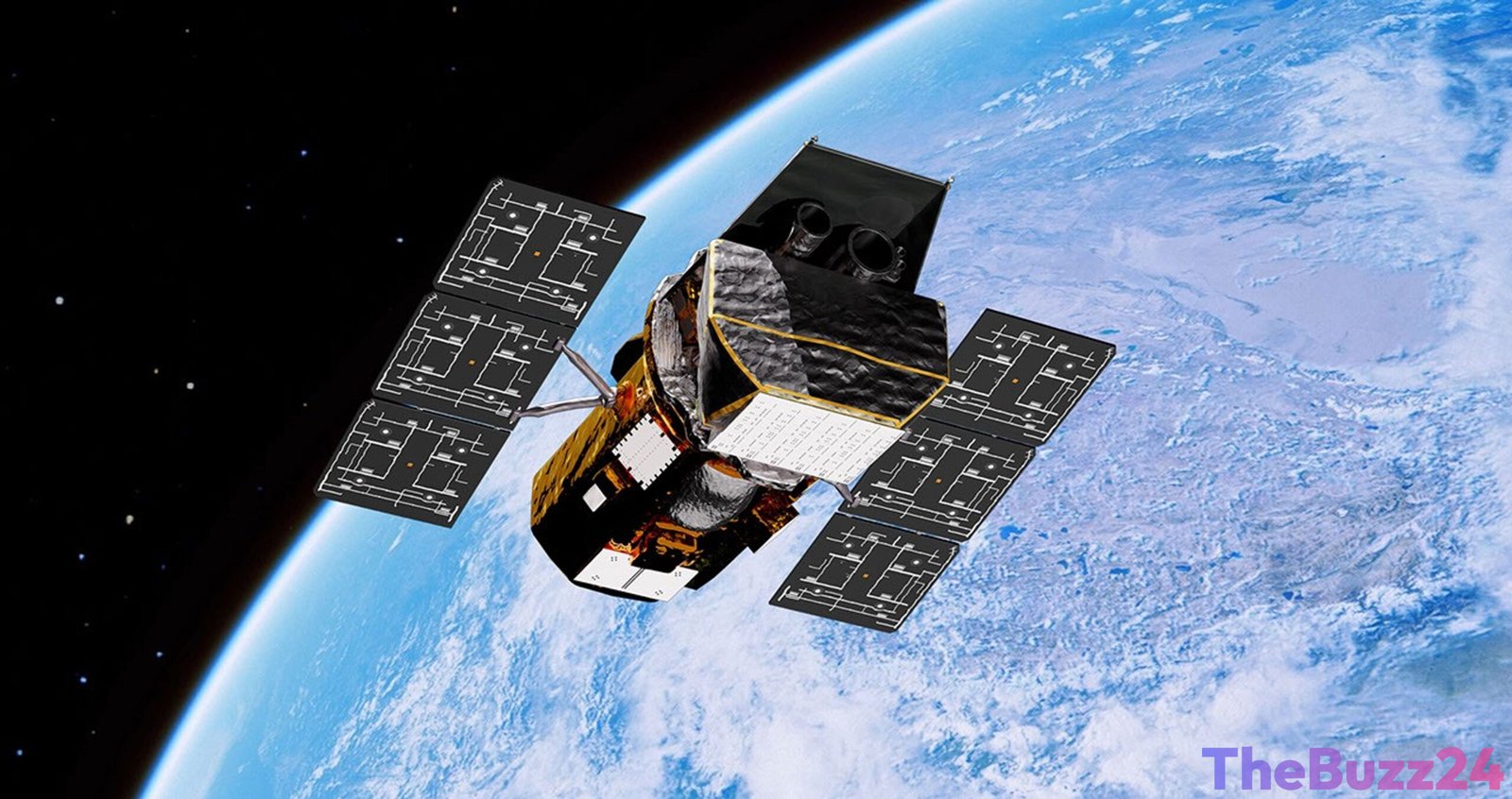
An ambitious commercial mission designed to elevate the orbit of NASA’s aging Neil Gehrels Swift Observatory has concluded without docking or lifting the spacecraft. Despite failing to achieve its primary objective, the emergency salvage effort conducted alongside Arizona-based commercial partner Katalyst Space yielded valuable operational data and proved key engineering concepts that will directly inform the future of orbital servicing and satellite life-extension missions.
Originally launched in November 2004 to monitor gamma-ray bursts and extreme cosmic phenomena across the universe, the Swift spacecraft has spent over two decades operating without an onboard propulsion system. Increased solar activity in recent years magnified the atmospheric drag acting on the observatory, accelerating its orbital decay toward a critical threshold of roughly 185 miles (300 kilometers). In response to the looming atmospheric re-entry, an accelerated public-private initiative was established, tasking Katalyst Space with designing, constructing, and launching its robotic servicing spacecraft, dubbed LINK, on an unprecedented timeline of under twelve months.
LINK was launched into low Earth orbit aboard a Northrop Grumman Pegasus XL rocket from the Kwajalein Atoll. While the spacecraft successfully established initial operations, engineers soon confronted persistent communication interruptions and attitude control difficulties. In response, project teams adjusted their objectives, shifting away from a high-risk physical docking attempt to focus instead on operating LINK’s xenon-fueled propulsion system and its trio of robotic arms. These technical demonstrations provided vital real-world data before LINK ended its mission and re-entered the atmosphere in late September.
Concurrently, flight controllers at Pennsylvania State University’s Swift Mission Operations Center pioneered novel spacecraft-pointing techniques to extend the observatory’s time in orbit. By rotating Swift away from scientific targets to orientations that minimized drag, operators successfully slowed its descent for several months. While the Swift observatory is now poised to conclude its legendary observational career, engineers and mission managers emphasize that the rapid collaborative endeavor demonstrated unprecedented agility in responsive space operations and established a practical foundation for future in-orbit satellite intervention.
Key Takeaways
- Katalyst Space’s LINK robotic servicer was developed, built, and launched in under a year in a high-risk bid to boost NASA's Swift Observatory.
- Hardware and communication issues prevented LINK from physically docking with Swift, shifting the spacecraft's remaining mission to testing xenon thrusters and robotic arms.
- Flight controllers successfully developed novel drag-reduction maneuvers to prolong Swift’s orbital lifetime, providing actionable operational playbooks for future satellite rescue missions.
Editor’s Analysis & Impact
The Swift boost mission marks a turning point in how space agencies leverage commercial satellite servicing. Traditionally, orbital missions demand multi-year design cycles with low risk tolerance; attempting an unproven commercial docking within a 12-month window reflects an embrace of agile, private-sector capabilities. Although LINK was unable to raise Swift’s orbit, the mission validated active commercial in-space servicing technologies, including multi-arm robotic manipulation and xenon propulsion. As low Earth orbit grows increasingly congested and asset life-extension becomes critical for commercial and scientific orbital investments, public-private operational partnerships like this establish essential engineering baselines. Future commercial servicing ventures will benefit significantly from the hard-learned lessons in orientation control and mission pacing demonstrated during this high-stakes campaign.
Frequently Asked Questions
Q: Why did NASA attempt to boost the Swift Observatory?
A: Swift lacks onboard propulsion, and heightened atmospheric drag accelerated by solar activity caused its orbit to steadily decay. Without an intervention, the satellite faced atmospheric re-entry.
Q: What caused the LINK spacecraft to abort the docking attempt?
A: After launch, the LINK servicer suffered intermittent communication outages and orientation control issues, prompting ground teams to scale back the mission to remote robotic and thruster demonstrations rather than risk a physical docking attempt.
Q: What was the purpose of the Swift Observatory?
A: Launched in 2004, the Neil Gehrels Swift Observatory was engineered to observe high-energy cosmic events, primarily gamma-ray bursts, flares from distant black holes, and other explosive celestial phenomena.
AI Disclosure: This article is based on verified data and official reports. Our Team and AI have cross-referenced every financial detail with primary sources to ensure total accuracy.
More from this Category