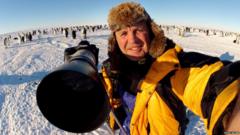
Renowned Wildlife Cinematographer Doug Allan Dies at 74
The world of natural history filmmaking is mourning the loss of Doug Allan, the legendary cinematographer whose lens captured the most remote corners of the Earth. Allan, who was 74, passed away while traveling in Nepal, reportedly surrounded by friends in the natural environment he dedicated his life to documenting.
Born in Dunfermline, Scotland, in 1951, Allan’s career was defined by his unique background in marine biology and his early work as a research diver for the British Antarctic Survey. This scientific foundation allowed him to approach wildlife cinematography with unparalleled expertise, particularly in polar regions. His work became a cornerstone of iconic series such as The Blue Planet, Blue Planet II, Planet Earth, and Frozen Planet, where he brought the beauty and fragility of the natural world to global audiences.
Throughout his career, Allan was recognized with numerous accolades, including eight Emmy Awards, five BAFTA awards, and two Polar Medals. In 2024, he was appointed an OBE for his contributions to broadcast media and environmental advocacy. Beyond his technical achievements, Allan was a passionate environmentalist who used his influence to push for stronger protections for the planet’s ecosystems, leaving behind a legacy that continues to inspire both filmmakers and conservationists alike.
Key Takeaways
- Doug Allan, a pioneer in wildlife cinematography, has passed away at the age of 74 while traveling in Nepal.
- His career included landmark contributions to series like The Blue Planet, Planet Earth, and Frozen Planet.
- Allan was a highly decorated filmmaker, holding eight Emmy Awards, five BAFTAs, and two Polar Medals for his work in extreme environments.
Editor’s Analysis & Impact
The passing of Doug Allan represents a significant loss for the natural history genre. His work did more than just capture stunning visuals; it bridged the gap between scientific research and public consciousness, effectively turning millions of viewers into environmental advocates. As the industry shifts toward more digital and CGI-heavy production, Allan’s legacy serves as a reminder of the irreplaceable value of on-the-ground, immersive field cinematography. His influence will likely continue to shape how future generations of filmmakers approach climate storytelling and wildlife documentation. In the broader context, his death highlights the aging of a generation of pioneers who defined the ‘Golden Age’ of nature documentaries, leaving a void that will be difficult to fill in terms of both technical skill and genuine, lived experience in the world’s most extreme habitats.
Frequently Asked Questions
Q: What was Doug Allan best known for?
A: Doug Allan was best known for his pioneering wildlife cinematography in extreme environments, particularly his work on major natural history series like The Blue Planet, Planet Earth, and Frozen Planet.
Q: What awards did Doug Allan receive during his career?
A: Allan was highly decorated, receiving eight Emmy Awards, five BAFTA awards, two Polar Medals, and an OBE for his contributions to broadcast media and environmental advocacy.
AI Disclosure: This article is based on verified data and official reports. Our Team and AI have cross-referenced every financial detail with primary sources to ensure total accuracy.
More from this Category