Trump and NATO Chief Clash Over Alliance Commitment and Iran Conflict
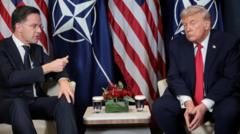
Former President Donald Trump has reignited his long-standing skepticism toward the North Atlantic Treaty Organization (NATO) following a high-stakes meeting with Secretary General Mark Rutte at the White House. While Rutte described the dialogue as ‘very frank’ and ‘open,’ the encounter highlighted deep-seated ideological divides regarding the alliance’s utility and its historical support for American military objectives.
At the heart of the friction is Trump’s vocal dissatisfaction with NATO’s perceived lack of support during the recent conflict involving Iran, which he referred to as ‘Operation Epic Fury.’ Trump publicly criticized the alliance, asserting that member nations failed to provide necessary assistance when the United States sought to secure the Strait of Hormuz to stabilize global oil markets. This sentiment was reinforced by White House Press Secretary Karoline Leavitt, who claimed that the alliance had been ‘tested and failed’ to stand by the American people despite the significant financial contributions the U.S. makes toward collective defense.
In defense of the alliance, Secretary General Rutte emphasized the logistical and strategic contributions provided by European members, including the provision of basing, overflight rights, and critical support infrastructure during the conflict. Rutte also acknowledged the effectiveness of Trump’s previous policies in curbing Iran’s nuclear ambitions. Despite these efforts to bridge the gap, the tension remains palpable. While U.S. legislative safeguards now require a two-thirds Senate majority to withdraw from the alliance, Trump’s persistent rhetoric continues to pose a significant challenge to the stability and future cohesion of the 32-member organization.
Key Takeaways
- Donald Trump expressed renewed frustration with NATO, citing a lack of support during the recent conflict with Iran.
- Secretary General Mark Rutte defended the alliance by highlighting European logistical support and the shared goal of neutralizing nuclear threats.
- Despite legislative barriers preventing unilateral U.S. withdrawal, the relationship between the former president and the alliance remains historically strained.
Editor’s Analysis & Impact
The ongoing friction between Donald Trump and NATO leadership signals a potential shift in the future of transatlantic security architecture. Trump’s ‘America First’ approach prioritizes transactional military alliances, creating uncertainty for European partners who rely on the U.S. security umbrella. The conflict over ‘Operation Epic Fury’ serves as a proxy for a broader debate: whether NATO should function as a global security partner for U.S. interests or strictly as a regional defense pact. If these tensions persist, the alliance faces a crisis of confidence that could lead to increased European strategic autonomy or, conversely, a weakening of the collective defense posture. The market impact is significant, as geopolitical instability often correlates with volatility in energy prices and defense sector stocks, reflecting the high stakes of these diplomatic negotiations.
Frequently Asked Questions
Q: Can the U.S. president unilaterally withdraw from NATO?
A: No. Legislation passed in late 2023 requires a two-thirds majority in the Senate or an act of Congress to authorize a withdrawal from the alliance.
Q: Why is Donald Trump critical of NATO?
A: Trump has frequently argued that NATO members do not contribute enough to their own defense and that the alliance has failed to provide adequate support for U.S. military operations, specifically regarding the conflict with Iran.
AI Disclosure: This article is based on verified data and official reports. Our Team and AI have cross-referenced every financial detail with primary sources to ensure total accuracy.
More from this Category