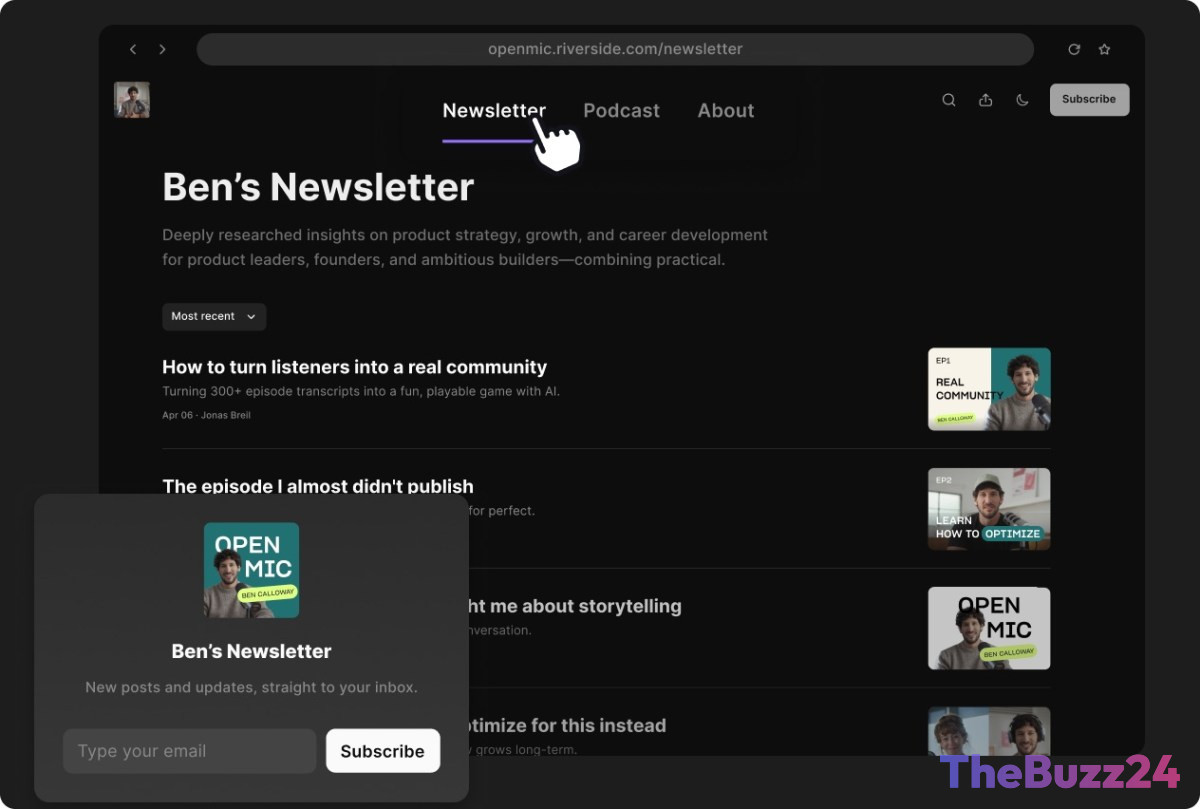
Podcasting Giant Riverside Integrates AI Newsletter Publishing to Help Creators Expand Their Reach
Riverside, the popular audio and video recording platform, is expanding its ecosystem by introducing a new newsletter publishing feature. Rather than positioning itself as a direct competitor to established newsletter giants like Substack or Mailchimp, Riverside is leveraging artificial intelligence to help its existing user base seamlessly convert spoken-word content—such as podcasts and video interviews—into written newsletters directly within its application. This allows creators to maximize the value of their existing recordings with minimal extra effort, though users still retain the option to write newsletters from scratch if they prefer.
According to Riverside’s co-founder and CEO Nadav Keyson, the tool addresses a common hurdle for creators: the dread of starting with a blank page. Since creators are already producing highly informative, conversational content on the platform, the new AI-driven system extracts these ideas and refines them into newsletter-ready drafts. By transforming spoken conversations into written text, the platform aims to streamline the multi-channel publishing process for busy creators and businesses alike.
Alongside the newsletter feature, Riverside is rolling out several major updates to its core recording suite. The platform now supports multi-camera setups and allows creators to easily bring in remote guests. Furthermore, new AI capabilities have been integrated to automatically draft initial video cuts immediately after recording, generate promotional hooks for social media, and enhance video quality—improving lighting, depth, and sharpness specifically for conversational video formats.
This strategic expansion comes as the lines between podcasting and newsletter platforms continue to blur. With over $60 million in funding raised to date, Riverside is entering a highly competitive cross-media landscape. Recently, newsletter platforms like Substack and Beehiiv have ventured into audio recording and podcasting, while social networks like Mastodon have also experimented with newsletter integration. Riverside’s latest move highlights a growing industry trend where content creation platforms strive to become all-in-one hubs for multimedia creators.
Key Takeaways
- Riverside has introduced an AI-powered newsletter publishing tool that converts audio and video recordings into written newsletters.
- The platform is also launching updates including multi-camera support, remote guest integration, and AI-driven video enhancement.
- This move reflects a broader industry trend of media platforms consolidating audio, video, and text-based content creation tools.
Editor’s Analysis & Impact
Riverside’s expansion into newsletter publishing represents a logical evolution in the creator economy, where audience retention relies heavily on multi-channel distribution. By lowering the friction of content repurposing through AI, Riverside is positioning itself as an indispensable hub for creators who want to maintain both an audio-visual and a written presence without doubling their workload. This move directly counters recent expansions by newsletter platforms like Substack and Beehiiv into the podcasting space, signaling a convergence of media formats. Ultimately, the platforms that offer the most seamless, automated workflows for cross-platform publishing will likely win the loyalty of modern creators.
Frequently Asked Questions
Q: How does Riverside's new newsletter feature work?
A: The feature uses artificial intelligence to transcribe and convert existing audio or video recordings into written newsletter drafts directly within the Riverside app. Users can also write newsletters from scratch.
Q: What other updates did Riverside announce?
A: Riverside introduced multi-camera recording support, remote guest capabilities, AI-generated social media hooks, and an AI video enhancement tool designed to improve lighting and sharpness.
Q: Is Riverside trying to replace platforms like Substack or Beehiiv?
A: Not directly. While it offers newsletter publishing, Riverside's primary focus is helping its existing recording users repurpose their spoken content into text, rather than competing as a standalone newsletter-first platform.
AI Disclosure: This article is based on verified data and official reports. Our Team and AI have cross-referenced every financial detail with primary sources to ensure total accuracy.
More from this Category