President Trump Signs $70 Billion Immigration Funding Package Following Congressional Standoff
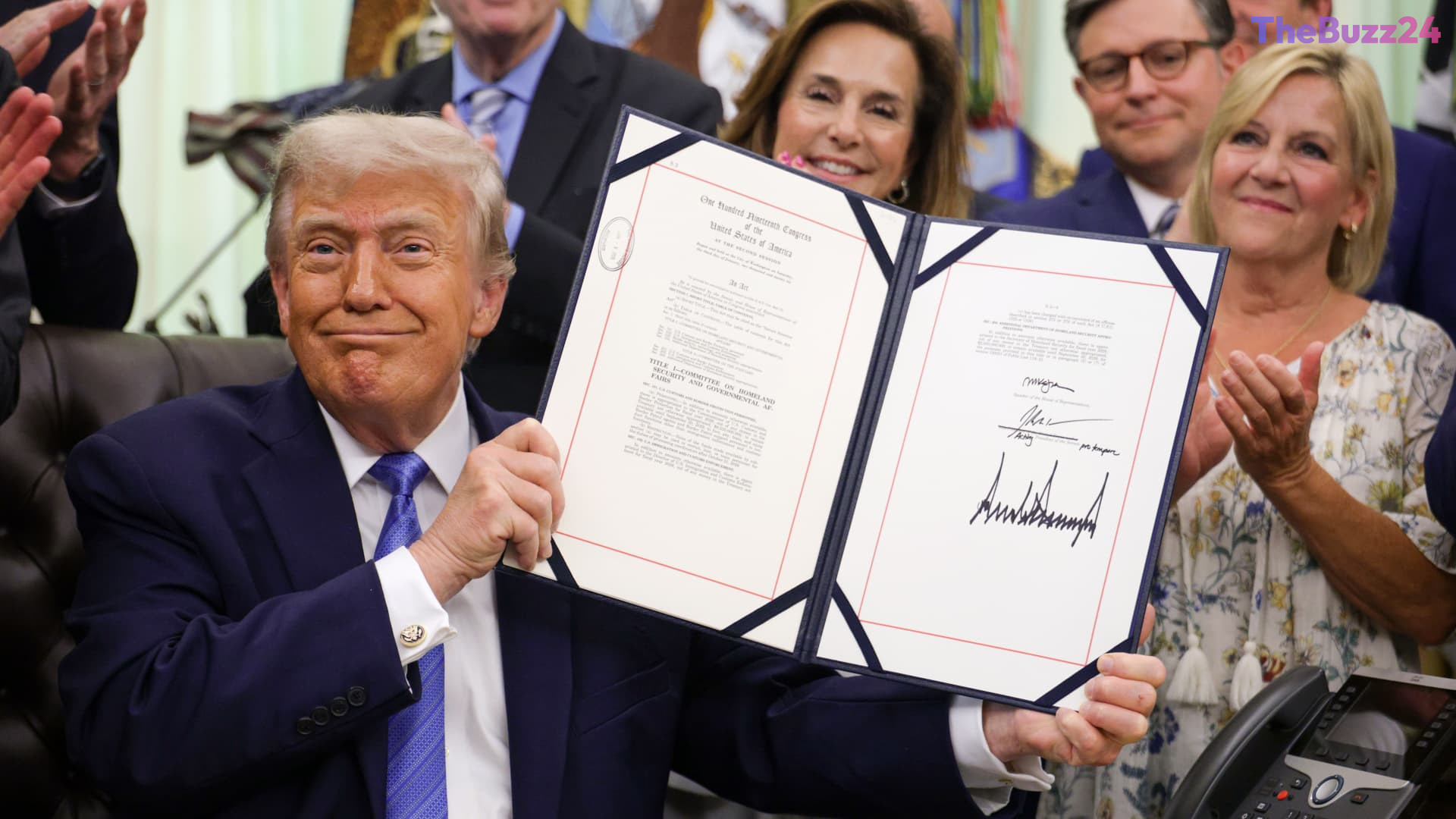
President Donald Trump has officially signed a $70 billion funding package aimed at bolstering Immigration and Customs Enforcement (ICE) and Customs and Border Protection (CBP). The legislation, which secures financial resources for these agencies through the remainder of the President’s term, marks the conclusion of a protracted legislative battle that had stalled federal immigration operations for months.
The bill’s passage was achieved through the budget reconciliation process, a strategic maneuver that allowed Republicans to bypass the traditional 60-vote filibuster threshold in the Senate. The final vote saw a strict party-line split, with the Senate approving the measure 52-47 and the House passing it 214-212. No Democratic lawmakers supported the package, citing deep-seated concerns regarding current immigration enforcement tactics and the potential for overreach.
Central to the controversy surrounding the bill was the inclusion of a $1.8 billion ‘anti-weaponization’ fund. Originally proposed by the administration to compensate individuals who claimed to have been wronged by federal agencies, the fund faced significant scrutiny from both sides of the aisle. Despite earlier indications that the initiative might be abandoned, the administration has signaled a continued interest in its implementation, further fueling the debate over executive spending priorities and the scope of federal authority.
Key Takeaways
- President Trump signed a $70 billion funding bill for ICE and CBP, securing resources through the end of his term.
- The legislation passed via budget reconciliation, allowing Republicans to bypass Democratic opposition and the standard 60-vote Senate threshold.
- A contentious $1.8 billion 'anti-weaponization' fund remains a point of friction despite initial signals that it might be scrapped.
Editor’s Analysis & Impact
The passage of this $70 billion funding package represents a significant victory for the administration’s border security agenda, effectively insulating ICE and CBP from future legislative budget threats for the remainder of the current term. By utilizing budget reconciliation, the administration has demonstrated a willingness to leverage procedural tools to bypass partisan gridlock, a strategy that will likely define future legislative efforts on controversial topics. However, the inclusion of the ‘anti-weaponization’ fund introduces a new layer of legal and political complexity. If implemented, this fund could set a precedent for how the federal government handles claims of misconduct, potentially leading to increased litigation and oversight. The long-term impact will likely be a more militarized and well-funded border enforcement apparatus, while simultaneously deepening the ideological divide in Congress regarding the role and accountability of federal law enforcement agencies.
Frequently Asked Questions
Q: What is the budget reconciliation process used in this bill?
A: Budget reconciliation is a legislative procedure that allows for the passage of spending and tax-related bills with a simple majority in the Senate, preventing the minority party from using a filibuster to block the legislation.
Q: What is the purpose of the $1.8 billion 'anti-weaponization' fund?
A: The fund was proposed by the administration to provide financial compensation to individuals who claim they have been unfairly targeted or wronged by federal government agencies.
AI Disclosure: This article is based on verified data and official reports. Our Team and AI have cross-referenced every financial detail with primary sources to ensure total accuracy.
More from this Category