Rare Impact: Whale-Sized Space Rock Blasts Massive Crater on the Moon
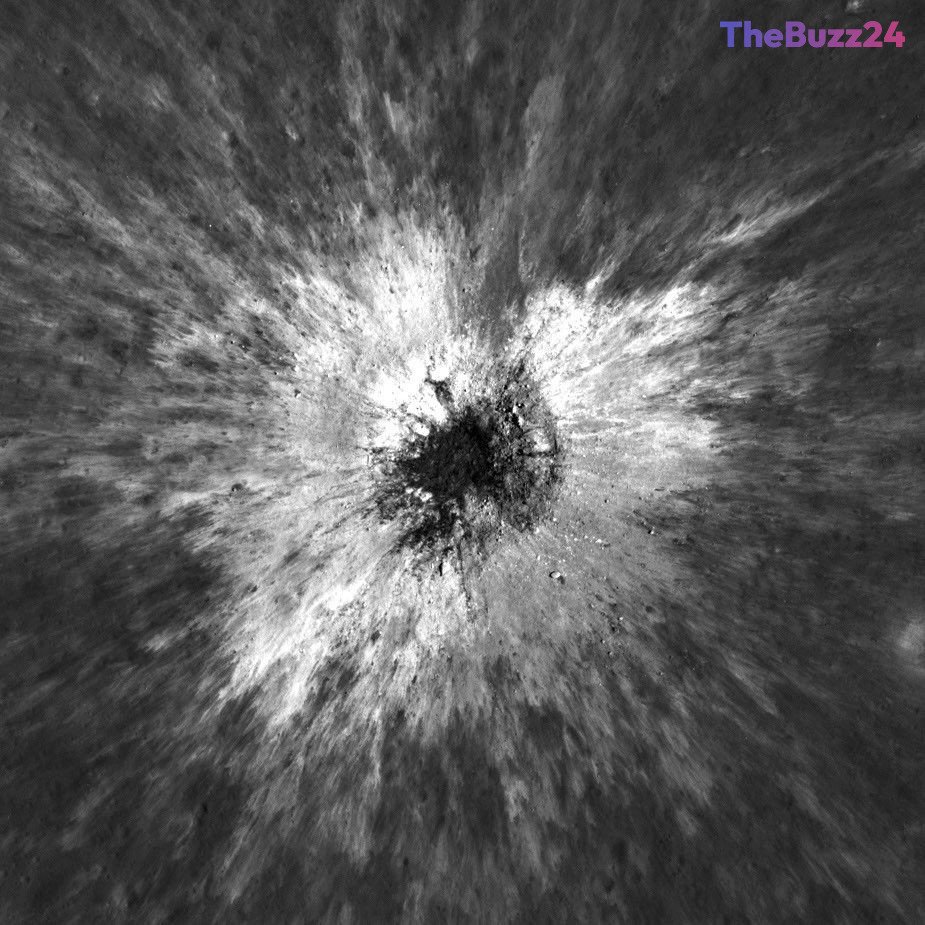
A rare celestial event has left a permanent mark on the lunar surface, as scientists confirm the formation of a massive new crater on the Moon. Between April and May of 2024, a comet or asteroid measuring roughly 10 to 20 meters—comparable to the size of a humpback whale—collided with the lunar landscape. The high-velocity impact generated a crater spanning the width of two soccer fields, an occurrence so statistically infrequent that researchers estimate impact scars of this magnitude materialize only once every 132 years.
The collision was documented by the Lunar Reconnaissance Orbiter (LRO), which routinely monitors the Moon’s changing terrain and successfully captured before-and-after imagery of the site. Named in honor of Apollo-era lunar scientist McGetchin, the newly formed crater offers scientists a rare window into the mechanics of planetary impacts. Subsequent thermal imaging of the surrounding region revealed a sprawling cold anomaly encompassing the warmer impact zone. Researchers explain that the violent force of the crash churned up loose lunar regolith, lowering its density and altering its thermal retention properties.
This discovery highlights the dynamic nature of our solar system and underscores the protective role played by Earth’s robust atmosphere against similar cosmic hazards. By analyzing the broader thermal and structural alterations caused by the McGetchin impact, planetary scientists hope to gain deeper insights into how the Moon’s surface has evolved over billions of years and how future lunar missions might navigate surface hazards.
Key Takeaways
- A comet or asteroid the size of a humpback whale struck the Moon between April and May of 2024.
- The resulting crater, named McGetchin, spans the length of two soccer fields and is an event expected roughly once every 132 years.
- Thermal imaging revealed a large cold spot surrounding the crater due to disrupted and lowered-density lunar regolith.
Editor’s Analysis & Impact
The unexpected formation and subsequent discovery of the McGetchin crater provide invaluable data for planetary geology and future lunar exploration initiatives. As international space agencies and private entities ramp up plans for sustained human presence on the Moon, understanding the frequency and structural consequences of surface impacts becomes paramount. Events of this scale, though rare, pose significant localized risks to infrastructure and habitats. Furthermore, the thermal and regolith data gathered from this event enhance our broader computational models of impact physics, improving how scientists assess planetary defense and surface evolution across the inner solar system.
Frequently Asked Questions
Q: What caused the McGetchin crater on the Moon?
A: The crater was created by an impact from a comet or asteroid roughly 10 to 20 meters in size, comparable to the dimensions of a humpback whale.
Q: How rare is an impact of this size on the Moon?
A: Impact craters of this magnitude are statistically expected to occur only about once every 132 years.
Q: How did scientists discover the new crater?
A: Scientists identified the crater by comparing orbital images captured before and after the event by the Lunar Reconnaissance Orbiter (LRO), alongside follow-up thermal imaging.
AI Disclosure: This article is based on verified data and official reports. Our Team and AI have cross-referenced every financial detail with primary sources to ensure total accuracy.
More from this Category