Ethereum Prepares for ‘Fusaka’ Upgrade to Revolutionize Scalability and User Access
Ethereum is set to undergo a major technical evolution with the scheduled ‘Fusaka’ hard fork, expected to go live on December 3, 2025. This upgrade represents a strategic combination of execution and consensus layer improvements, building upon the foundation laid by previous updates like Dencun and Pectra. By focusing on Layer-1 performance and expanded data capacity, the network aims to significantly lower costs and improve the overall efficiency of Layer-2 scaling solutions.
A primary focus of the Fusaka upgrade is the optimization of blob storage, which has become essential for Layer-2 rollups like Base and Arbitrum. As demand for these scaling solutions grows, the network is implementing Peer Data Availability Sampling (EIP-7594). This technology allows nodes to verify data availability by sampling small segments rather than downloading entire datasets, which is expected to drastically increase throughput without increasing hardware requirements. Additionally, the introduction of Blob Parameter Only (BPO) forks will allow for incremental capacity increases, potentially scaling from 6 to 128 blobs per block.
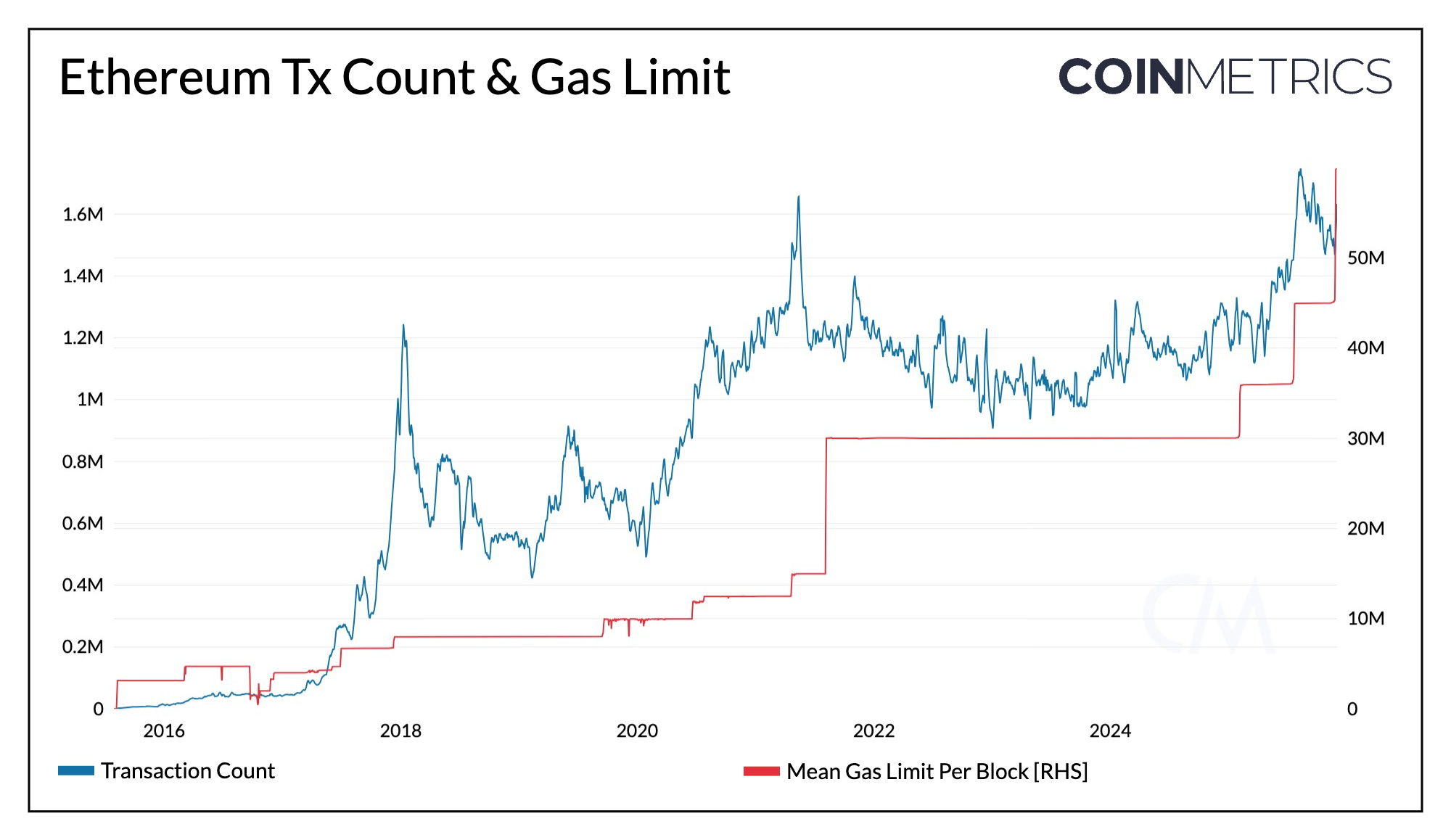
Beyond scaling, the upgrade addresses core execution capacity by raising the default gas limit to 60 million via EIP-7935. This change is designed to reduce network congestion and lower transaction costs for end-users. The update also includes technical refinements to gas usage caps and the removal of legacy pre-merge fields, which will streamline node synchronization and improve overall network performance.
Finally, Fusaka prioritizes user experience by integrating native support for the secp256r1 elliptic curve. This integration allows decentralized applications and wallets to utilize standard authentication methods like Face ID and Touch ID, mirroring the security features found in Apple and Android devices. By removing traditional barriers to entry, this upgrade aims to make the Ethereum ecosystem more accessible to mainstream users while maintaining high security standards.
Key Takeaways
- The Fusaka upgrade, launching December 3, 2025, aims to significantly boost Layer-1 throughput and Layer-2 blob capacity.
- New data sampling techniques and an increased gas limit of 60 million are set to reduce network congestion and transaction costs.
- Native support for secp256r1 will enable biometric authentication like Face ID, simplifying the onboarding process for new users.
Editor’s Analysis & Impact
The Fusaka upgrade marks a critical turning point in Ethereum’s roadmap, shifting the focus from experimental scaling to production-grade efficiency. By addressing the bottleneck in blob storage and increasing the gas limit, Ethereum is positioning itself to handle the massive transaction volume required for mass adoption. The integration of standard cryptographic curves like secp256r1 is perhaps the most significant move for long-term growth, as it bridges the gap between complex blockchain security and the intuitive user experience expected by mainstream consumers. If successful, these changes will likely solidify Ethereum’s dominance as the primary settlement layer for the digital economy, forcing competitors to accelerate their own usability and scaling roadmaps. The move toward more flexible, incremental capacity adjustments suggests a more mature, adaptive approach to network governance and technical evolution.
Frequently Asked Questions
Q: What is the main goal of the Fusaka upgrade?
A: The primary goal is to enhance Ethereum's scalability and user experience by increasing blob storage capacity, raising the gas limit, and enabling native support for biometric authentication.
Q: How will Fusaka affect Layer-2 rollups?
A: It will allow Layer-2 rollups to process more transactions at a lower cost by optimizing how they store data on the Ethereum mainnet through Peer Data Availability Sampling.
AI Disclosure: This article is based on verified data and official reports. Our Team and AI have cross-referenced every financial detail with primary sources to ensure total accuracy.
More from this Category