Red Planet Revealed: Reflecting on the Historic Viking 1 Mars Landing
On July 20, 1976, humanity achieved a monumental milestone in space exploration when the Viking 1 lander successfully touched down on the surface of Mars. At 5:12 a.m. PDT, mission controllers at the Jet Propulsion Laboratory confirmed the spacecraft had survived its perilous descent through the thin Martian atmosphere, marking the first time a human-made object had safely landed on another planet.
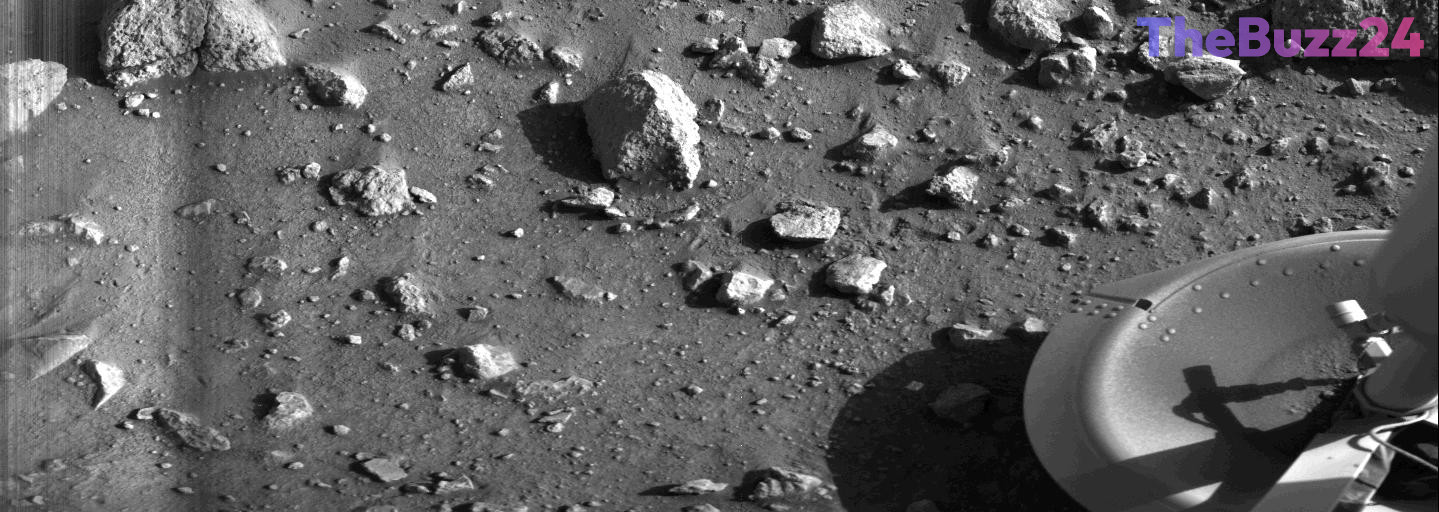
Approximately 40 minutes after the landing, the first images from the Martian surface began to transmit back to Earth. As the data slowly rendered on monitors, the world received its first direct look at the alien landscape. The grainy, black-and-white photographs revealed a desolate, rocky terrain covered in sand, with the lander’s own footpad visible in the frame—a stark reminder of the technological achievement that had bridged the gap between Earth and its neighbor.
Dr. Thomas Mutch, who led the imaging team, famously described the experience as a moment of “electronic magic.” The success of Viking 1, which was later joined by its twin, Viking 2, initiated a new era of planetary science. These missions were designed not only to capture imagery but to actively search for signs of life and analyze the Martian environment, setting the foundation for decades of subsequent robotic exploration on the Red Planet.
Key Takeaways
- Viking 1 achieved the first successful landing on Mars on July 20, 1976.
- The mission provided humanity with its first-ever ground-level view of the Martian surface.
- The Viking program established the framework for modern planetary exploration and the search for extraterrestrial life.
Editor’s Analysis & Impact
The Viking 1 mission remains a cornerstone of aerospace history, representing the transition from theoretical planetary science to active, surface-level exploration. By successfully navigating the Martian atmosphere and transmitting data back to Earth, NASA proved that long-term robotic presence on other planets was feasible. This mission fundamentally shifted the trajectory of space exploration, influencing the design of subsequent rovers like Curiosity and Perseverance. The legacy of Viking 1 is not just in the hardware, but in the paradigm shift it created; it transformed Mars from a distant, mysterious point of light into a tangible destination for scientific inquiry. As we look toward future crewed missions, the data and operational lessons learned from the Viking era continue to serve as the essential baseline for understanding the challenges of Martian terrain and atmospheric conditions.
Frequently Asked Questions
Q: When did the Viking 1 lander touch down on Mars?
A: Viking 1 touched down on the surface of Mars on July 20, 1976, at 5:12 a.m. PDT.
Q: What was the primary goal of the Viking missions?
A: The primary goals were to capture high-resolution images of the Martian surface and to conduct experiments to search for potential signs of life.
AI Disclosure: This article is based on verified data and official reports. Our Team and AI have cross-referenced every financial detail with primary sources to ensure total accuracy.
More from this Category