Reinventing the Wheel: Global Innovators Put Next-Gen Lunar Rover Designs to the Test
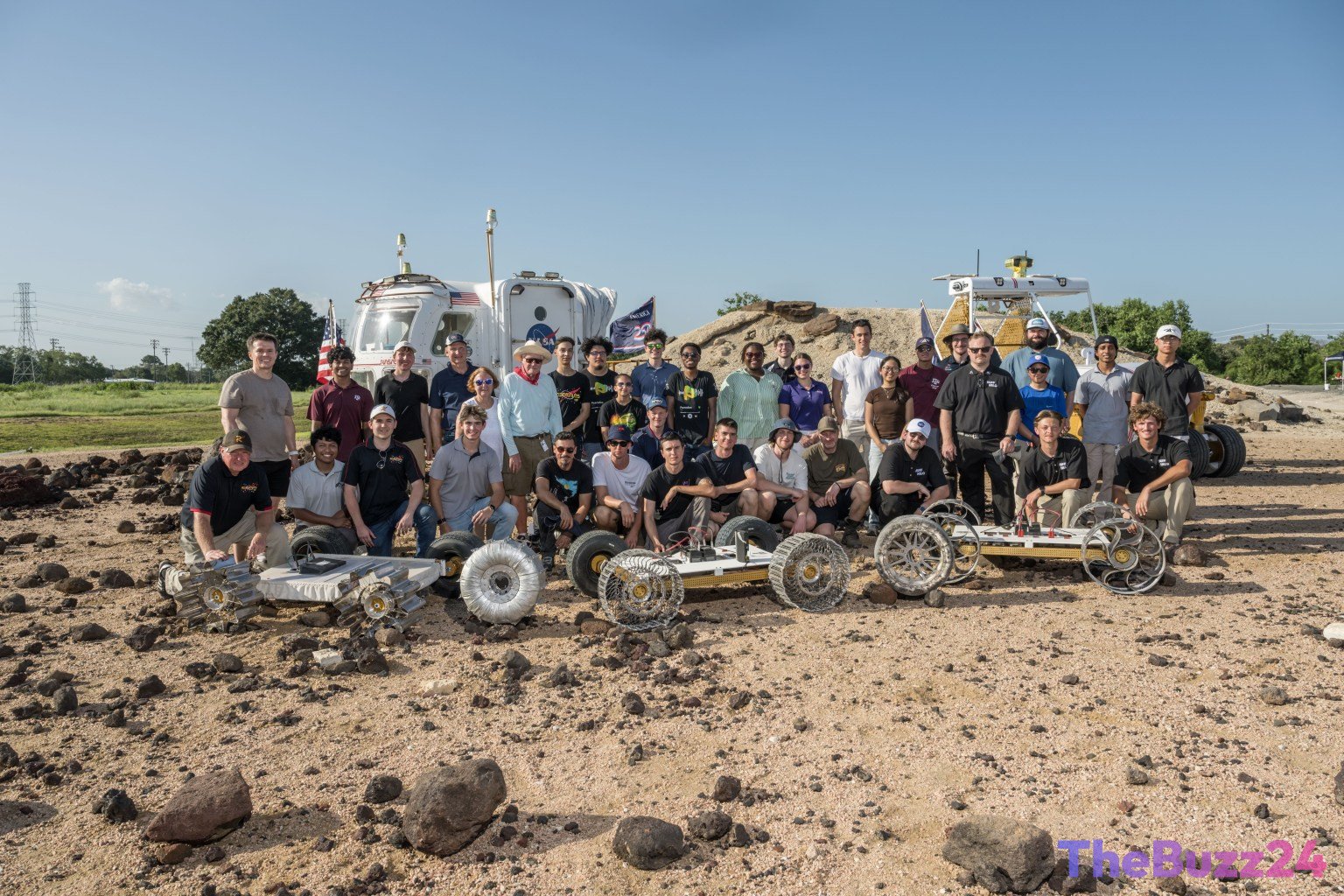
As plans for a permanent human presence on the Moon accelerate, establishing reliable surface mobility has become a top priority for space exploration. To address this challenge, the Rock and Roll with NASA Challenge recently brought together global innovators to design and build next-generation lunar rover wheels. Out of 128 submissions spanning 49 countries, five finalist teams advanced to the final phase of the competition, putting their physical prototypes to the test at the Johnson Space Center Rock Yard in Houston.
During the trials, the prototype wheels were fitted to the MicroChariot, a 45-kilogram test rover, and navigated through a series of demanding obstacle courses. The challenge aimed to identify lightweight, durable, and scalable wheel designs capable of absorbing heavy impacts, maintaining traction at higher speeds, and surviving the harsh, abrasive lunar environment. Engineers emphasize that expanding the distance a rover can reliably travel directly correlates to the scope of scientific discovery and infrastructure development possible on the lunar surface.
The five finalist designs showcased highly diverse engineering approaches. The winning concept, Scotch Pad Tyres, was developed by Australian mechanical engineer Daniel Bloomfield and his son Isaac. Their prototype utilized a flexible Nomex-based tire structure supported by an aluminum hub, allowing the wheel to deform around obstacles, while an outer coating of epoxy and corundum grit provided enhanced traction. Other notable entries included Hellenic Technology of Robotics’ variable-stiffness wheel, Hyperbola’s spoke-free cable design, Huff Helo’s rigid titanium sheet prototype, and an aviation-inspired pneumatic design by Deborah and Craige Payne.
With the initial terrain testing complete, the next phase of development will focus on environmental endurance. Future evaluations are expected to subject the most promising wheel designs to simulated lunar dust, extreme temperature fluctuations, and vacuum conditions inside specialized thermal vacuum chambers. These rigorous tests will help engineers determine which technologies are best suited to support long-duration operations on the Moon and eventually Mars.
Key Takeaways
- The Rock and Roll with NASA Challenge evaluated five finalist lunar wheel prototypes selected from 128 international submissions.
- The winning design, Scotch Pad Tyres, utilized a flexible Nomex-based structure and a specialized corundum grit coating to maximize traction on rugged terrain.
- Future testing phases will subject the prototype wheels to extreme lunar conditions, including vacuum environments, abrasive dust, and severe temperature swings.
Editor’s Analysis & Impact
The success of this challenge highlights a growing trend in the aerospace sector: leveraging global crowdsourcing to solve complex engineering bottlenecks. Historically, space agencies relied strictly on internal development or massive defense contractors. By opening the design of critical components like rover wheels to public innovators, space programs can access unconventional, cost-effective solutions. The diverse range of materials tested—from titanium sheets to Nomex structures—demonstrates that terrestrial automotive and aviation technologies can be successfully adapted for extraterrestrial use. As commercial lunar payloads and long-term habitats transition from concept to reality, establishing highly reliable surface mobility will be a primary driver of scientific discovery. This challenge proves that the future of space exploration will be built on collaborative, cross-disciplinary global innovation.
Frequently Asked Questions
Q: Why is wheel design so critical for lunar exploration?
A: The lunar surface is covered in highly abrasive dust (regolith) and littered with sharp rocks and steep slopes. Standard rubber tires cannot survive the extreme temperatures and vacuum of space, meaning rovers require specialized, durable, and flexible wheel designs to maintain traction and absorb impacts without failing.
Q: What made the winning 'Scotch Pad Tyres' design stand out?
A: Created by an Australian father-son duo, the Scotch Pad Tyres design used a flexible Nomex-based structure wrapped around an aluminum hub. This allowed the tire to deform naturally over obstacles, while an outer coating of epoxy and corundum grit provided superior traction on loose, simulated lunar soil.
Q: What are the next steps for these prototype wheels?
A: The next phase of development involves testing the wheel designs in specialized thermal vacuum chambers. This will evaluate how the materials and mechanical systems withstand the extreme temperature fluctuations, vacuum conditions, and fine, static-charged dust characteristic of the Moon's environment.
AI Disclosure: This article is based on verified data and official reports. Our Team and AI have cross-referenced every financial detail with primary sources to ensure total accuracy.
More from this Category