Russian Forces Retreat from Key Northern Mali City Amid Escalating Insurgency
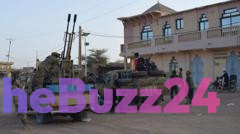
Russian forces, operating in Mali as the Africa Corps, have confirmed their withdrawal from the strategic northern city of Kidal. This move follows a weekend of intense, coordinated attacks across the West African nation by both separatist fighters and Islamist militants. The Azawad Liberation Front (FLA), a prominent separatist group, swiftly claimed control of Kidal, declaring the city “now free” after the Russian and Malian troops departed.
Mali has been grappling with a protracted insurgency for years, facing threats from northern separatists seeking a breakaway state for ethnic Tuareg-dominated areas, as well as jihadist groups affiliated with al-Qaeda and the Islamic State. The recent wave of violence on Saturday saw explosions and sustained gunfire reported in multiple locations, including the capital, Bamako, and central cities like Sevare and Mopti, alongside northern strongholds such as Gao and Kidal. A particularly grave incident occurred in Kati, near Bamako, where Malian Defence Minister Sadio Camara was reportedly killed in an apparent suicide truck bombing targeting his residence. While the FLA’s assaults primarily targeted northern cities, the jihadist group Jama’at Nusrat al-Islam wal-Muslimin (JNIM) launched simultaneous attacks across various other regions.
Fighting in Kidal resumed on Sunday, but an agreement was subsequently reached between the FLA and Russia’s Africa Corps to ensure a secure withdrawal of their personnel. Kidal had served as an unofficial headquarters for the separatist movement for over a decade before being recaptured by Mali’s army with Russian assistance in late 2023. While confirming their departure from Kidal, the Africa Corps indicated that operations would continue elsewhere in Mali, noting the evacuation of wounded personnel and heavy equipment from the northern city. They described the overall situation in the Republic of Mali as “complex,” acknowledging civilian injuries.
The Africa Corps largely comprises former members of the Russian mercenary Wagner group, which was active across the continent, often hired by local governments to combat insurgencies. Following the death of its leader, Yevgeni Prigozhin, in 2023, most of Wagner’s operations were absorbed by the Russian defense ministry, forming the backbone of the newly established Africa Corps. This entity is overseen by Russian Deputy Defence Minister Yunus-Bek Yevkurov, with its operations managed by Maj-Gen Andrey Averyanov. Russia’s engagement in supporting local governments in Africa has frequently been linked to securing access to valuable natural resources such as gold, diamonds, and uranium. Both the Wagner group and its successor, the Africa Corps, have faced accusations of committing atrocities against civilians, with Africa Corps members reportedly earning at least $3,000 per month.
Key Takeaways
- Russian forces (Africa Corps) have withdrawn from Kidal, northern Mali, following coordinated attacks by separatist and Islamist groups.
- The Azawad Liberation Front (FLA) has claimed control of Kidal, a city previously recaptured by Malian and Russian forces in late 2023.
- The withdrawal highlights the complex and escalating security challenges in Mali, where Russia's Africa Corps continues operations despite accusations of atrocities and links to resource extraction.
Editor’s Analysis & Impact
The withdrawal of Russian forces from Kidal marks a significant development in Mali’s ongoing security crisis, potentially altering the dynamics of the conflict in the northern regions. For the Malian military government, this retreat could be perceived as a setback, especially given Russia’s role in bolstering their position against insurgent groups. The Azawad Liberation Front’s swift claim of control over Kidal suggests a renewed assertion of separatist power, which could embolden other factions and lead to further territorial fragmentation. This event also casts a spotlight on the efficacy and long-term sustainability of Russia’s military engagement in Africa, particularly through the Africa Corps. While Russia seeks to expand its influence and secure access to resources, the Kidal withdrawal underscores the inherent complexities and risks of intervening in deeply entrenched local conflicts, potentially prompting a re-evaluation of its strategic approach in the Sahel region.
Frequently Asked Questions
Q: Who are the main groups involved in the conflict in Mali?
A: The conflict in Mali primarily involves the Malian military government, separatist groups like the Azawad Liberation Front (FLA) seeking autonomy for northern regions, and jihadist organizations such as Jama'at Nusrat al-Islam wal-Muslimin (JNIM), which are affiliated with al-Qaeda and the Islamic State.
Q: What is Russia's Africa Corps and its role in Mali?
A: Russia's Africa Corps is a military entity largely composed of former members of the Wagner mercenary group. It operates in Mali to support the military government against insurgencies, providing security and military training. Its presence is often linked to Russia's broader geopolitical interests and access to natural resources in the region.
Q: Why is Kidal a significant city in the Malian conflict?
A: Kidal holds strategic importance as it has historically served as an unofficial headquarters for separatist movements in northern Mali. Its control is symbolic of power in the region, and its capture and subsequent re-capture by various factions underscore the fluctuating control and persistent challenges in establishing stability in the country's north.
AI Disclosure: This article is based on verified data and official reports. Our Team and AI have cross-referenced every financial detail with primary sources to ensure total accuracy.
More from this Category