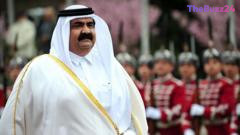
Sheikh Hamad bin Khalifa Al Thani, Former Emir Who Transformed Qatar into Global Powerhouse, Dies at 74
Qatar is entering a period of national mourning following the death of its former leader, Sheikh Hamad bin Khalifa Al Thani, who passed away at the age of 74. The Qatari government announced his passing on Sunday, prompting immediate tributes from global leaders. In honor of his legacy, flags across the nation will fly at half-mast, and public institutions will temporarily close. International figures, including Britain’s King Charles III and Indian Prime Minister Narendra Modi, expressed their condolences, praising his vision and dedication to his country.
Sheikh Hamad assumed leadership of Qatar in June 1995 through a bloodless coup, taking over from his father. At the time, the nation faced economic challenges due to dwindling oil reserves. However, under his guidance, Qatar underwent a massive economic metamorphosis. By capitalizing on its vast natural gas reserves and pioneering the production and export of liquefied natural gas (LNG), Sheikh Hamad turned the small Gulf nation into one of the wealthiest countries per capita in the world.
Beyond energy, the former Emir was instrumental in expanding Qatar’s global footprint. He oversaw the launch of the Al Jazeera broadcasting network in 1996, which became a major player in international media. He also established the Qatar Investment Authority, a sovereign wealth fund that acquired high-profile global assets, including the luxury department store Harrods and the French football club Paris Saint-Germain.
His ambitious vision culminated in Qatar securing the hosting rights for the 2022 FIFA World Cup, a historic first for the Middle East. While the bid brought immense global attention, it also drew intense scrutiny and controversy regarding labor practices and human rights. Sheikh Hamad voluntarily abdicated the throne in 2013, handing power to his son, the current Emir Sheikh Tamim bin Hamad Al Thani, leaving behind a legacy that permanently reshaped the geopolitical and economic landscape of the Middle East.
Key Takeaways
- Sheikh Hamad bin Khalifa Al Thani, the former Emir of Qatar who ruled from 1995 to 2013, has died at the age of 74.
- He is widely credited with transforming Qatar from a struggling economy into a global energy powerhouse through the development of its liquefied natural gas (LNG) industry.
- His legacy includes major global investments, the founding of Al Jazeera, and securing the historic 2022 FIFA World Cup.
Editor’s Analysis & Impact
Sheikh Hamad bin Khalifa Al Thani’s passing marks the end of an era for a leader who fundamentally redefined the geopolitical dynamics of the Middle East. By leveraging liquefied natural gas (LNG), he broke Qatar away from regional dependency and established it as an independent diplomatic and economic heavyweight. His strategy of ‘soft power’—utilizing media via Al Jazeera, massive sovereign wealth investments, and mega-sporting events like the World Cup—created a blueprint for small states seeking global influence. While his reign was not without controversy, particularly regarding labor rights and regional political alignments, his economic legacy remains rock-solid. Under his son, Emir Sheikh Tamim, Qatar continues to follow the trajectory set by Sheikh Hamad, maintaining its status as a critical energy supplier and mediator in global conflicts.
Frequently Asked Questions
Q: How did Sheikh Hamad bin Khalifa Al Thani come to power?
A: Sheikh Hamad took power in June 1995 through a bloodless coup, deposing his father, Sheikh Khalifa, while the latter was traveling abroad.
Q: What are some of the major global assets associated with his reign?
A: Under his leadership, the Qatar Investment Authority was founded, leading to high-profile acquisitions such as London's Harrods department store and the French football club Paris Saint-Germain.
Q: When did he step down as Emir?
A: Sheikh Hamad voluntarily abdicated the throne in June 2013, handing power over to his son, the current Emir Sheikh Tamim bin Hamad Al Thani.
AI Disclosure: This article is based on verified data and official reports. Our Team and AI have cross-referenced every financial detail with primary sources to ensure total accuracy.
More from this Category