Solana Gains Momentum: Technical Breakouts and Institutional Adoption Signal Potential Upside
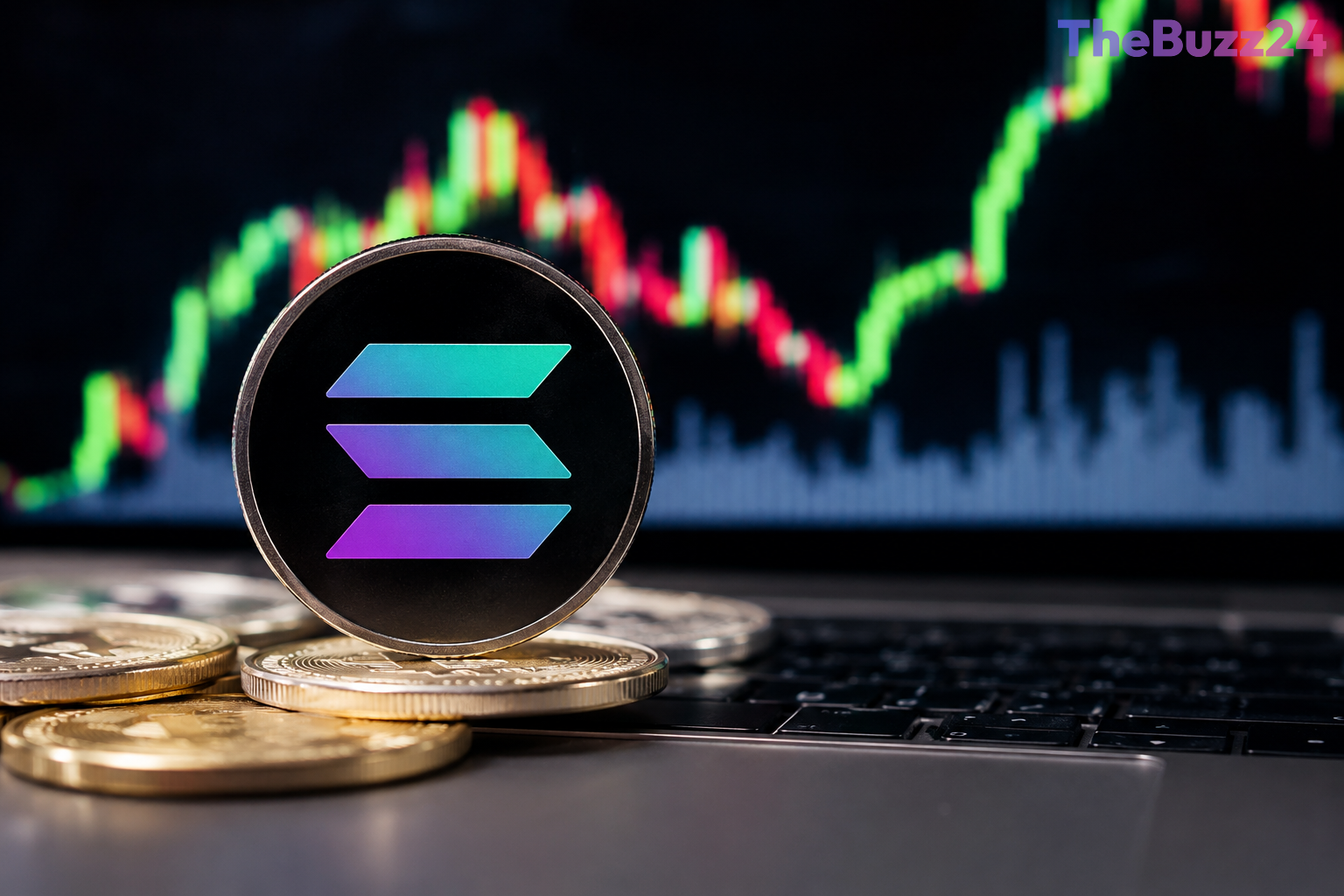
Solana (SOL) has demonstrated a robust recovery, climbing over 18% in the last month as the token stabilizes above the $77 mark. Following a challenging period earlier this year, the cryptocurrency has rebounded approximately 38% from its recent lows near $60. Market observers are now closely monitoring key resistance levels, specifically the $85 to $90 range, which represents a significant supply cluster that must be reclaimed to sustain the current bullish trend.
Technical analysts suggest that the $73 to $76 range has solidified into a critical support zone. Maintaining this level is viewed as essential for preserving the asset’s long-term structure. Furthermore, Solana’s relative strength against Bitcoin is showing signs of improvement. A potential breakout in the SOL/BTC trading pair could signal a shift in market sentiment, with some projections suggesting that a sustained move above current resistance could pave the way for a climb toward the $140 to $150 range, provided the market confirms these technical patterns.
Institutional interest is also providing a tailwind for the network. Brazil’s B3 stock exchange has expanded its regulated derivatives offerings to include Solana futures, allowing professional investors to gain exposure through a secure, dollar-settled environment. This move aligns Solana with established assets like Bitcoin and Ethereum, enhancing market efficiency and providing new hedging tools for institutional participants.
Technological advancements are further bolstering the network’s utility. The launch of FullSend, a transaction routing system developed through a partnership between Privy and Jito Labs, has significantly improved network performance. By routing transactions directly to validators, the system has achieved 99.999% landing reliability and reduced latency to approximately 50 milliseconds. These infrastructure upgrades are designed to support high-volume financial applications, making the Solana ecosystem increasingly attractive for developers building payment and trading platforms.
Key Takeaways
- Solana has recovered 18.5% over the past month, with analysts identifying the $85-$90 range as the next major resistance level to clear.
- Brazil's B3 stock exchange has introduced regulated Solana futures, signaling increased institutional integration and market maturity.
- The new FullSend transaction routing system has improved network reliability and reduced latency, enhancing Solana's appeal for high-frequency financial applications.
Editor’s Analysis & Impact
The recent price action and infrastructure improvements for Solana suggest a maturing ecosystem that is successfully transitioning from a retail-heavy asset to one with deeper institutional roots. The integration of Solana futures on a major exchange like B3 is a significant milestone, as it provides the regulatory framework necessary for large-scale capital allocation. Simultaneously, the technical focus on transaction latency via the FullSend integration addresses one of the primary criticisms of blockchain-based financial services: reliability during congestion. If Solana can maintain its current support levels and continue to improve its relative strength against Bitcoin, it is well-positioned to capture a larger share of the decentralized finance market. However, investors should remain cautious of the dense supply walls at the $85-$90 level, which will likely serve as a major test of the current rally’s sustainability.
Frequently Asked Questions
Q: What is the significance of the $85-$90 price range for Solana?
A: This range is considered a major 'supply wall' or resistance zone where a large volume of tokens was previously transacted. Reclaiming this area as support is necessary for the price to move toward the $100 psychological threshold.
Q: How does the new FullSend system improve Solana's performance?
A: FullSend routes transactions directly to the validator responsible for the next block, bypassing traditional, slower routing methods. This reduces transaction latency to 50 milliseconds and increases landing reliability to 99.999%.
AI Disclosure: This article is based on verified data and official reports. Our Team and AI have cross-referenced every financial detail with primary sources to ensure total accuracy.
More from this Category