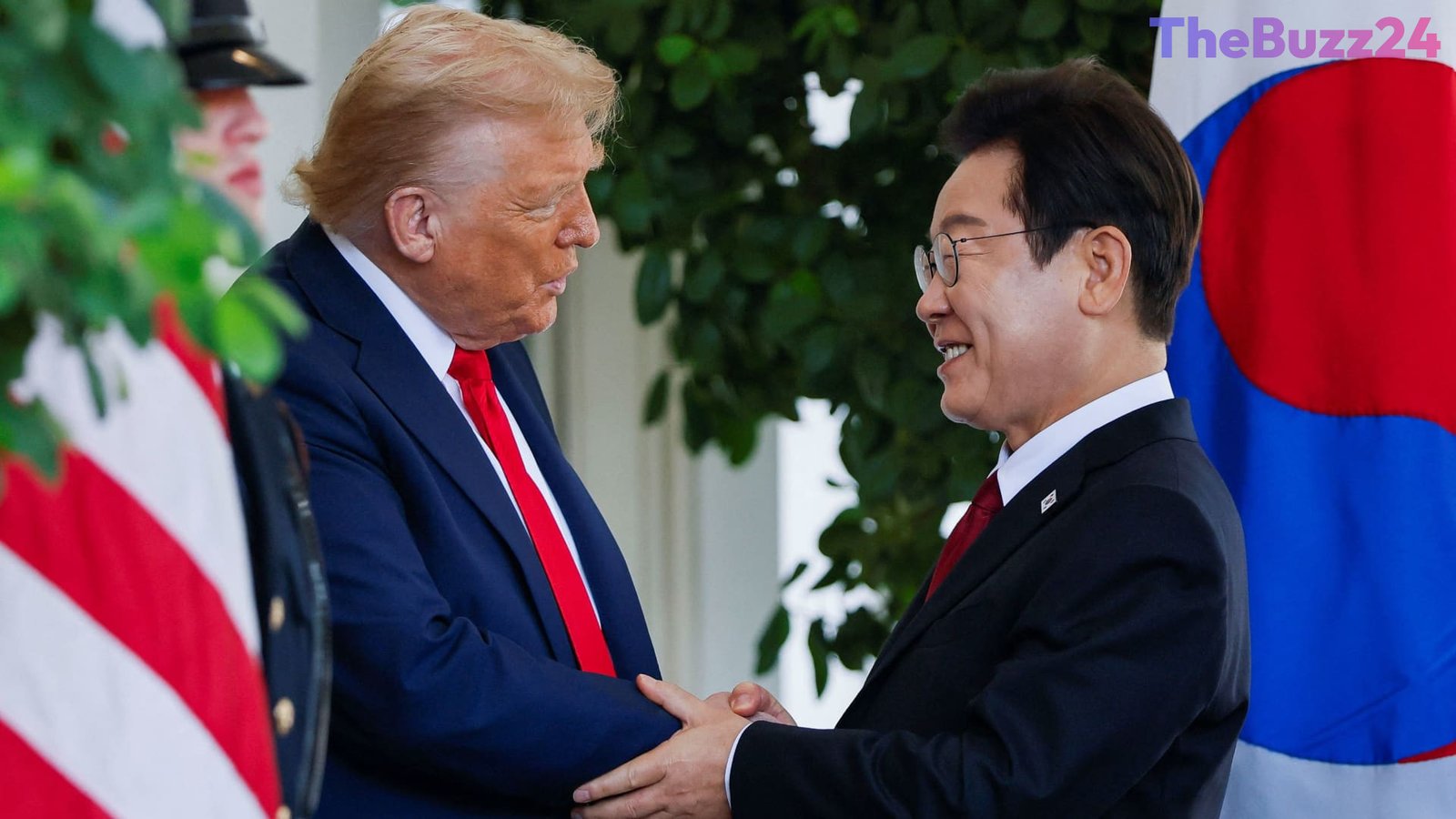
South Korea Advocates for Renewed U.S.-North Korea Diplomacy to Secure Peninsula Peace
South Korean President Lee Jae Myung is actively pushing for a renewed diplomatic summit between the United States and North Korea, framing the potential meeting as a critical opportunity to break the long-standing stalemate on the Korean Peninsula. During his address at the United Nations General Assembly in New York, Lee emphasized that President Donald Trump’s expressed willingness to engage with North Korean leader Kim Jong Un represents a vital opening for change. He expressed hope that this initiative could revive the stalled dialogue between Washington and Pyongyang, which has remained largely dormant for years.
Lee’s vision for the region involves a phased approach to security, beginning with an immediate halt to North Korea’s nuclear and missile development. This would ideally serve as a precursor to a medium-term reduction in military capabilities, ultimately leading to the long-term goal of a fully denuclearized Korean Peninsula. The South Korean leader underscored the necessity of transitioning from the current armistice—which has technically kept the two Koreas at war since 1953—to a formal, lasting peace regime.
Despite the optimism from Seoul, the path toward denuclearization remains fraught with uncertainty. While President Trump has indicated plans to meet with Kim later this year, officials in Pyongyang have offered conflicting signals. Kim Yo Jong, the sister of the North Korean leader, recently dismissed the possibility of denuclearization, labeling the country’s nuclear status as “absolute” and essential for deterrence. Furthermore, previous summits between the two nations have failed to yield concrete progress, leaving the international community cautious about the potential for a breakthrough.
Key Takeaways
- South Korean President Lee Jae Myung is advocating for a new U.S.-North Korea summit to restart denuclearization talks and establish a formal peace treaty.
- The proposed roadmap includes a freeze on North Korean nuclear and missile testing, followed by a gradual reduction of weapons capabilities.
- North Korean leadership has publicly cast doubt on the feasibility of denuclearization, maintaining that their nuclear arsenal is a non-negotiable deterrent.
Editor’s Analysis & Impact
The push for a new summit highlights the persistent geopolitical tension surrounding the Korean Peninsula. While South Korea views diplomatic engagement as the only viable path to stability, the fundamental disconnect between Seoul’s denuclearization goals and Pyongyang’s insistence on maintaining its nuclear status suggests that any future summit faces significant hurdles. The market and regional stability implications are profound; a failure to reach a diplomatic consensus could lead to increased military posturing, while a successful breakthrough would significantly de-escalate regional risks. However, given the historical lack of progress in previous summits, the international community remains skeptical. The future outlook depends heavily on whether the U.S. and North Korea can find common ground on security guarantees, a task that has proven elusive for decades.
Frequently Asked Questions
Q: Why is there still a risk of war between North and South Korea?
A: The Korean War ended in 1953 with an armistice agreement rather than a formal peace treaty, meaning the two nations remain technically at war.
Q: What is North Korea's current stance on denuclearization?
A: North Korean officials, including Kim Yo Jong, have recently stated that their nuclear status is 'absolute' and serves as a necessary deterrent against international threats, casting doubt on their willingness to disarm.
AI Disclosure: This article is based on verified data and official reports. Our Team and AI have cross-referenced every financial detail with primary sources to ensure total accuracy.
More from this Category