South Korean Defense Stocks Face Reckoning Amid Shifting Battlefield Demands
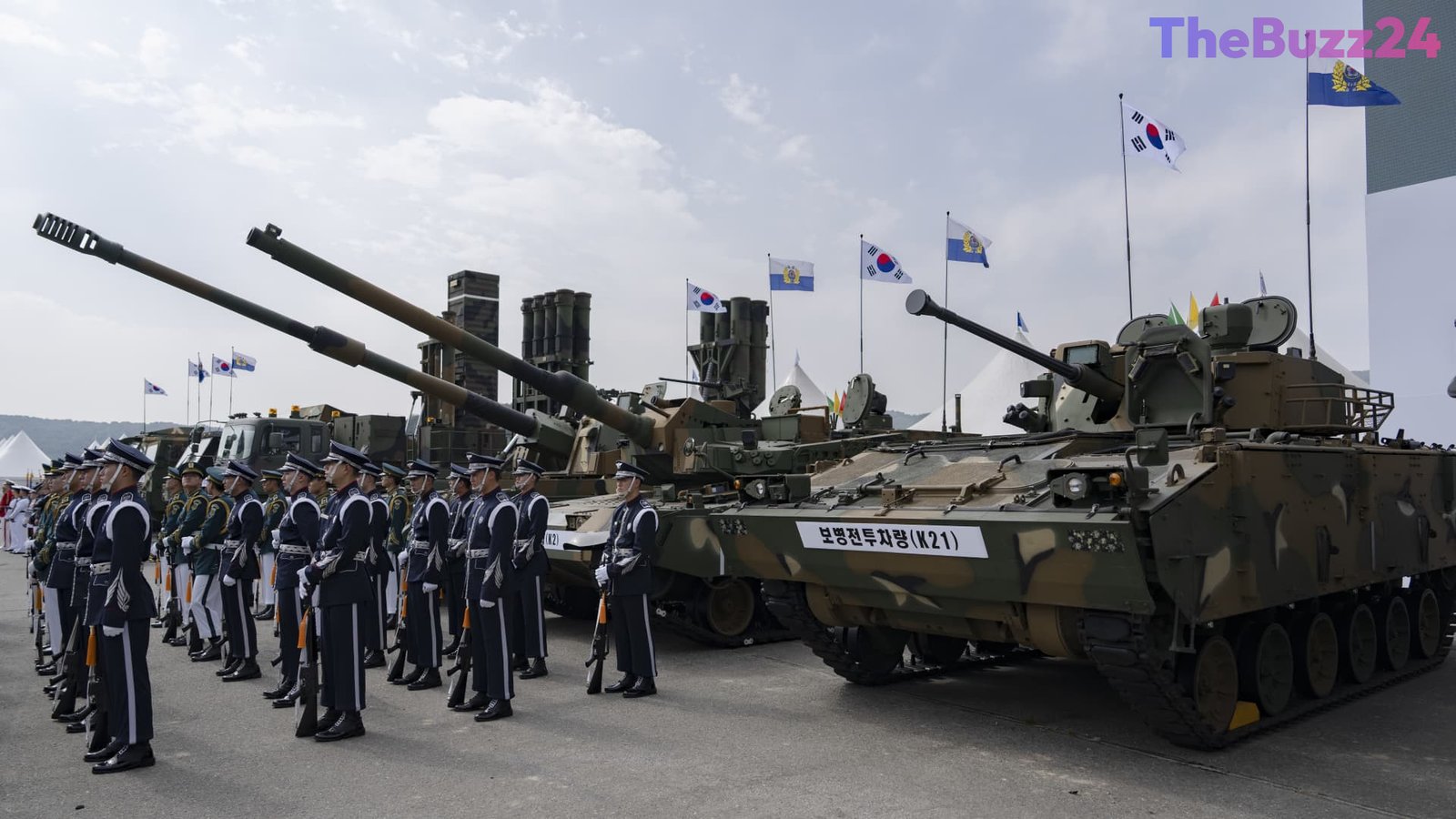
South Korea’s premier defense manufacturers are experiencing a sharp market correction following a historic multi-year rally fueled by global rearmament. After capturing international attention with competitively priced hardware such as tanks, self-propelled artillery, and advanced missile systems delivered on expedited schedules, the nation’s leading military contractors have seen their collective market valuation contract significantly from previous peak levels.
The downturn reflects a broader reassessment by investors, who are weighing several compounding pressures including disappointing quarterly earnings reports, currency fluctuations involving a stronger won, and slower-than-anticipated conversion of governmental defense spending pledges into finalized, binding procurement orders. Major industry players like Hanwha Aerospace and Hyundai Rotem have reported notable profit contractions driven by delivery schedule adjustments and one-off operational costs, triggering steep declines in their respective share prices over the course of the year.
Beyond near-term financial headwinds, the defense sector is grappling with a profound evolution in modern warfare dynamics. Conflicts in Ukraine and the Middle East have highlighted the tactical proliferation of inexpensive unmanned aerial vehicles and counter-drone systems, challenging the historical supremacy of traditional heavy armor and conventional artillery. Analysts note that while global military procurement priorities increasingly favor agile tech, AI integration, and air defense capabilities, conventional platforms remain fundamentally indispensable for holding terrain and ensuring reliable deterrence.
Despite current market volatility, industry experts maintain a resilient long-term outlook for South Korean defense exports. Companies continue to secure substantial international contracts—ranging from European orders for K9 howitzers and rocket systems to naval air defense agreements in Southeast Asia. Furthermore, domestic firms are proactively investing in next-generation autonomous systems and drones, positioning themselves to capture future market share as global defense budgets adapt to the realities of twenty-first-century combat.
Key Takeaways
- South Korean defense stocks have experienced a steep sell-off following a massive two-year rally driven by global rearmament.
- The market downturn is attributed to delayed export orders, disappointing quarterly earnings, and shifting investor focus toward the semiconductor sector.
- Despite the rise of drones and modern warfare tech, traditional hardware like tanks and artillery remain vital, keeping long-term demand stable.
Editor’s Analysis & Impact
The recent contraction in South Korean defense equities highlights a classic market transition phase where initial post-invasion enthusiasm gives way to the gritty realities of operational execution and shifting military doctrines. While traditional heavy weaponry propelled these firms to record heights, modern combat lessons from ongoing global conflicts dictate a permanent pivot toward unmanned systems, AI, and integrated air defense. For South Korean manufacturers, the challenge lies in successfully bridging their legacy dominance in conventional armor with competitive offerings in the drone and counter-drone space. Over the medium term, companies that can rapidly diversify their portfolios to include autonomous tech while maintaining their reputation for cost-effective, rapid-delivery conventional systems will likely recapture robust growth momentum as global defense budgets remain structurally elevated.
Frequently Asked Questions
Q: Why did South Korean defense stocks decline?
A: The decline is driven by a mix of disappointing quarterly earnings, delayed export orders, currency fluctuations, and a broader investor shift toward the semiconductor sector.
Q: Are traditional weapons like tanks still relevant in modern warfare?
A: Yes. While drones and counter-drone systems have gained prominence, military strategists emphasize that conventional hardware like tanks and infantry are still essential for capturing and holding terrain.
Q: How are South Korean defense firms responding to new technological demands?
A: Major South Korean contractors are actively investing in research and development for drones and unmanned systems to meet evolving global procurement priorities.
AI Disclosure: This article is based on verified data and official reports. Our Team and AI have cross-referenced every financial detail with primary sources to ensure total accuracy.
More from this Category