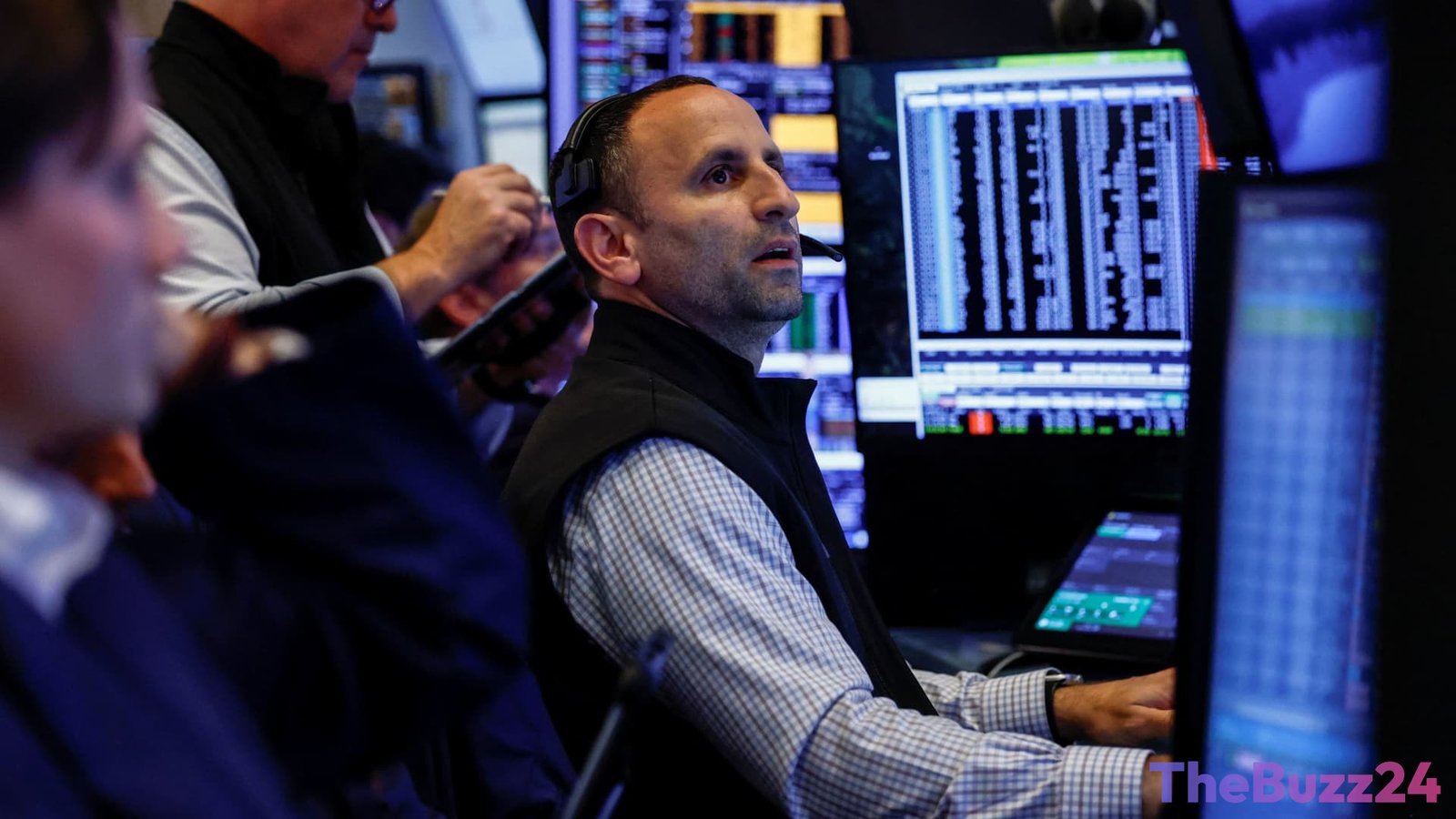
Wall Street Volatility Gauge Surges to Multi-Month Highs Amid Severe Equity Liquidation
Wall Street’s primary benchmark for equity market anxiety experienced an explosive surge on Thursday, catching derivatives desks and institutional investors off guard. The Cboe Volatility Index (VIX) leapt by more than 5.7 points within 90 minutes of the opening bell to cross above 28, marking its highest reading since late March. With an intraday swing spanning over 11 points, the move represents one of the most violent single-day shifts in market sentiment recorded this year.
The volatility spike coincided with heavy selling pressure across broader equity markets, with the S&P 500 tumbling roughly 3%. Despite the dramatic climb in the index, several market strategists observed that implied volatility could have technically climbed even further. Under standard options pricing heuristics, where roughly 16 points on the VIX correspond to a 1% daily move in the index, the scale of Thursday’s benchmark plunge suggested an even steeper volatility premium might have been warranted.
Derivatives activity pointed toward urgent demand for portfolio protection, with VIX call volumes approaching 800,000 contracts by midday—more than three times the 30-day average. Market observers indicated that the aggressive selling was not tied to traditional macroeconomic triggers, such as sharp movements in benchmark interest rates or energy commodities, but rather resembled institutional portfolio de-risking and potential hedge fund liquidations.
The turbulence follows persistent weakness in the semiconductor sector, which has faced steady headwinds since reaching cyclical peaks earlier in the summer. While quantitative risk models signaled a clear mandate to trim exposure, tactical traders are actively assessing whether this sudden surge in volatility represents a forced institutional unwind that could set the stage for an imminent capitulation rebound.
Key Takeaways
- The Cboe Volatility Index (VIX) surged past 28 with an intraday range of over 11 points as the S&P 500 slid roughly 3%.
- Trading in VIX call options hit nearly 800,000 contracts by midday, reaching 3.5 times the 30-day rolling average.
- Market participants pointed to hedge fund liquidations and institutional de-risking rather than macroeconomic shifts as the primary catalyst.
Editor’s Analysis & Impact
The violent upswing in the VIX illustrates a fragile market environment where underlying liquidity can rapidly evaporate during concentrated equity selloffs. When major indices drop 3% in a single session without an overt macroeconomic catalyst—such as unexpected central bank rhetoric or sudden energy supply shocks—structural factors are typically at play. Forced hedge fund liquidations and rapid portfolio unwinds often disproportionately impact market breadth, accelerating drops in high-beta sectors like semiconductors. Looking forward, elevated volatility readings above 25 will likely force algorithmic and risk-parity strategies to continue reducing equity exposure, capping near-term upside until institutional liquidation volume stabilizes.
Frequently Asked Questions
Q: What does a spike in the VIX indicate?
A: The VIX measures the market's expectation of 30-day forward-looking volatility derived from S&P 500 index options. A sharp rise indicates growing uncertainty, fear, and demand for downside portfolio hedging among institutional traders.
Q: Why did analysts believe the VIX should have risen even further?
A: Traders often utilize a general rule of thumb where 16 index points on the VIX correspond roughly to a 1% daily move in the S&P 500. Given that the S&P 500 dropped by about 3%, standard pricing models suggest the volatility surge could have registered even higher readings.
Q: What caused the sudden selloff in the market?
A: Market participants noted that macroeconomic factors like interest rates and crude oil prices remained relatively stable, suggesting the downturn was driven primarily by institutional de-risking, tech sector weakness, and hedge fund liquidations.
AI Disclosure: This article is based on verified data and official reports. Our Team and AI have cross-referenced every financial detail with primary sources to ensure total accuracy.
More from this Category