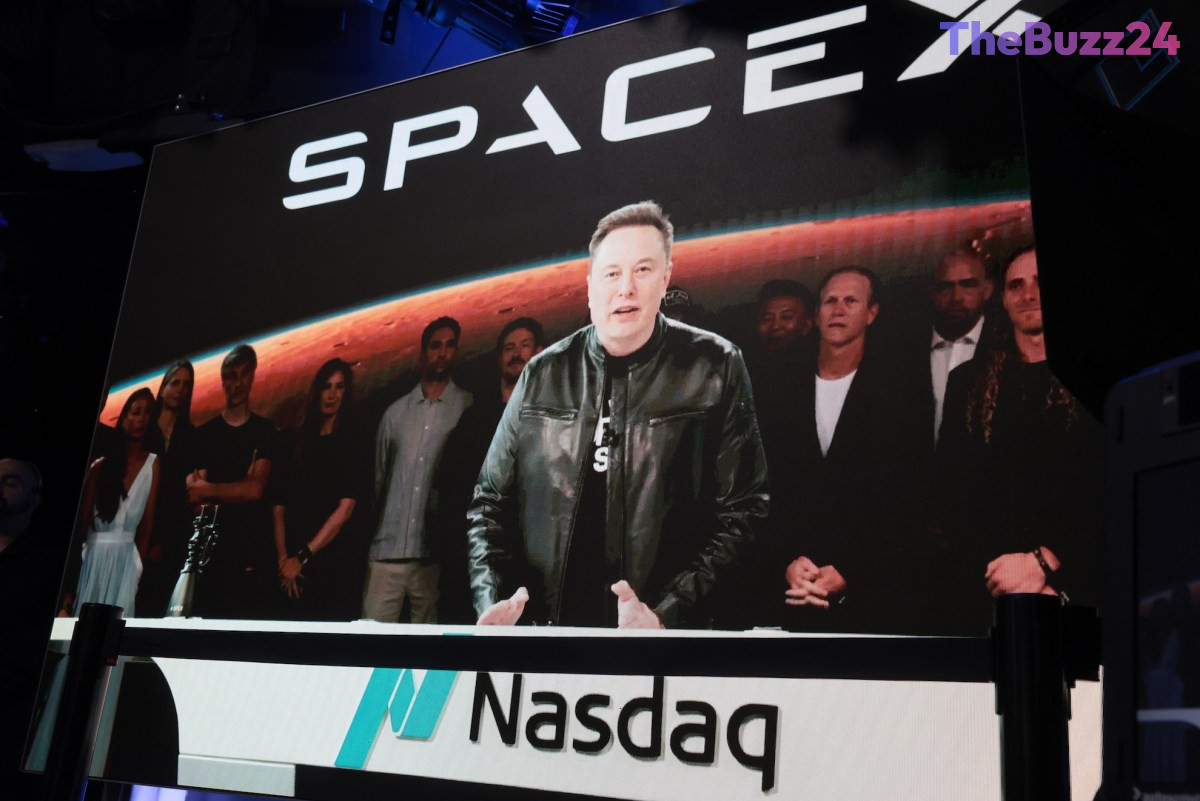
SpaceX Goes Public: A Historic Market Debut and the Rise of a Trillion-Dollar Titan
SpaceX has officially entered the public markets, marking a watershed moment in aerospace and technology history. The company’s initial public offering (IPO) saw 555.6 million shares priced at $135 each, ultimately raising a staggering $85.7 billion. This debut not only stands as the largest IPO ever recorded but has also propelled CEO Elon Musk to become the world’s first trillionaire, cementing his influence over the global tech landscape.
Following its Nasdaq debut, the stock experienced immediate volatility and growth, opening at $150 and closing its first day at $160.95—a 19% increase. The market enthusiasm was reflected in record-breaking trading volumes across retail platforms. As the company settles into its life as a public entity, it has already begun aggressive expansion, including a $60 billion stock-based acquisition of Cursor, further signaling its intent to leverage its newfound capital for rapid growth.
Despite the excitement, the company’s S-1 filings reveal a complex financial picture. SpaceX reported a $4.9 billion loss on $18 billion in revenue for 2025, contributing to a cumulative loss of over $37 billion since its inception. Nevertheless, the company’s valuation has ballooned to $2.7 trillion, making it one of the most valuable corporations in the world. With Musk retaining over 50% of the voting power, the company remains under his firm control, even as it navigates the scrutiny and transparency requirements of the public market.
Looking ahead, the integration of SpaceX’s various divisions—ranging from the Starlink satellite network to its xAI initiatives—remains a focal point for investors. While the company continues to secure massive compute-leasing deals with major tech players like Google and Anthropic, the market remains focused on whether the firm can achieve long-term profitability while maintaining its ambitious Starship development schedule.
Key Takeaways
- SpaceX completed the largest IPO in history, raising $85.7 billion and pushing its valuation to $2.7 trillion.
- Elon Musk has become the world's first trillionaire, maintaining a majority voting stake in the publicly traded company.
- Despite significant revenue, the company faces ongoing financial pressure with over $37 billion in cumulative losses since its founding.
Editor’s Analysis & Impact
The public listing of SpaceX represents a paradigm shift in the aerospace and capital markets. By transitioning from a private venture to a public titan, SpaceX has effectively institutionalized the ‘Musk economy,’ where massive capital raises are used to subsidize long-term, high-risk R&D projects like Starship and xAI. The market’s willingness to overlook billions in cumulative losses suggests that investors are pricing the company not as a traditional aerospace firm, but as a foundational infrastructure provider for the future of AI and space-based internet. However, the concentration of power in Musk’s hands and the potential for future share dilution pose significant governance risks. The long-term success of this IPO will depend on whether SpaceX can transition from a capital-burning innovator to a sustainable, cash-flow-positive enterprise while managing the intense scrutiny of public shareholders.
Frequently Asked Questions
Q: What was the total amount raised by the SpaceX IPO?
A: The SpaceX IPO raised a total of $85.7 billion, making it the largest initial public offering in history.
Q: Does Elon Musk still control SpaceX after it went public?
A: Yes, Elon Musk retains over 50% of the voting power, granting him a controlling interest in the company's strategic decisions.
AI Disclosure: This article is based on verified data and official reports. Our Team and AI have cross-referenced every financial detail with primary sources to ensure total accuracy.
More from this Category