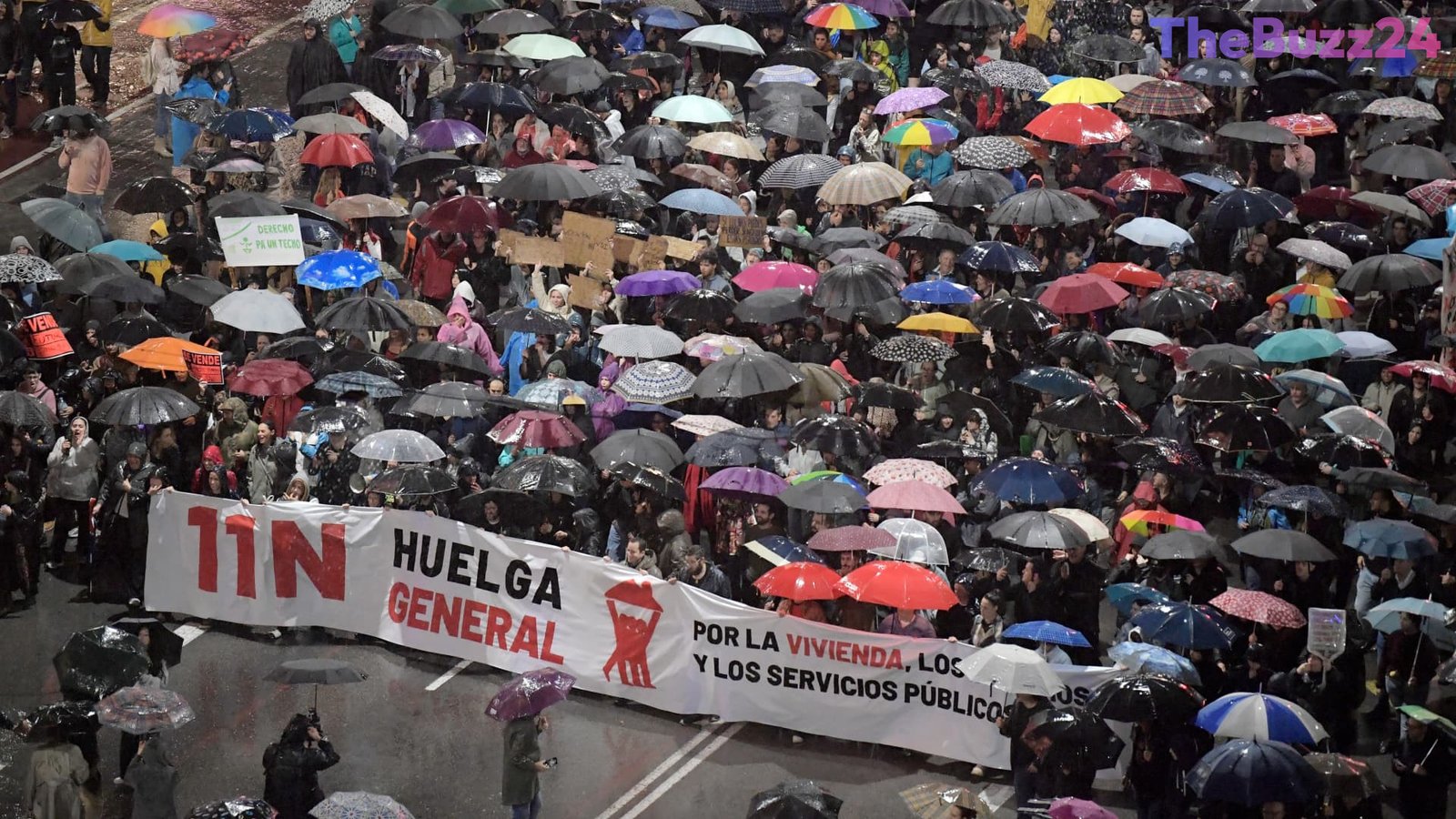
Spain Paralyzed by Mass General Strike as Housing Costs and Inflation Ignite Pre-Election Unrest
Millions of workers across Spain have taken to the streets in the country’s first nationwide general strike in 14 years, causing widespread disruption to public transit, commercial aviation, and industrial operations. Escalating public outrage over skyrocketing rental prices and the soaring cost of living catalyzed the 24-hour labor movement, organized primarily by major trade unions CCOO and UGT. Early morning demonstrations quickly led to blockades around Madrid and clashes between protestors and law enforcement, underscoring the deep economic grievances felt across the nation.
At the core of the widespread labor action is a severe housing crisis. Over the past decade, rental prices across Spain have nearly doubled, leaving homeownership out of reach for broad segments of the working population. The Bank of Spain estimates a current housing shortage of 750,000 units, which could expand to one million over the next two years. In response, union leaders and housing activists are demanding immediate federal intervention, including caps on lease rates, an end to short-term tourist rentals, and an increase in the national minimum wage.
The strike arrives less than three weeks before a pivotal general election set for November 29. Prime Minister Pedro Sánchez and his left-wing coalition are leveraging the social movement to place affordable housing and social safety nets at the heart of their campaign. However, opposition parties, including the conservative Popular Party and the far-right Vox, have denounced the strike as a politically motivated effort to preserve the ruling party’s power. Polling data suggests a potential shift toward a right-wing majority, driven in part by voter dissatisfaction over public safety, infrastructure management, and recent economic challenges.
As public sentiment remains sharply polarized, the turnout and conduct during these demonstrations could heavily influence the trajectory of the upcoming vote. While progressive groups hope the mass mobilization will redirect national debate toward economic inequality and social protections, any escalation into violence risks bolstering support for conservative candidates advocating for stricter public order policies.
Key Takeaways
- Spain is experiencing its first general strike in 14 years due to surging housing prices and rising living costs.
- Major trade unions are demanding government intervention in the rental market, where shortages could reach 1 million homes within two years.
- The mass protests occur just weeks before the November 29 general election, where polls hint at a potential conservative shift.
Editor’s Analysis & Impact
The widespread general strike in Spain underscores a growing systemic crisis within European economies, where wage growth has failed to keep pace with inflation and real estate appreciation. A persistent structural deficit in housing supply threatens long-term macroeconomic stability by dampening consumer spending and increasing household debt burdens. From a political perspective, the timing of the strike acts as a critical flashpoint ahead of the national election. If progressive leadership fails to offer actionable solutions to housing affordability, the current social friction may accelerate a voter realignment toward conservative and right-wing parties. Beyond domestic borders, Europe’s broader labor market stability remains fragile, as similar cost-of-living pressures fuel social unrest across several EU member states.
Frequently Asked Questions
Q: Why are Spanish workers engaging in a nationwide general strike?
A: Workers are protesting against skyrocketing housing costs, soaring inflation, and inadequate wage growth, while demanding government intervention in rental markets and higher minimum wages.
Q: How does the general strike relate to the upcoming Spanish election?
A: Occurring less than three weeks before the November 29 vote, the strike serves as a major political battlefield, with left-wing parties seeking to prioritize social welfare issues while opposition parties accuse unions of political bias.
Q: What is the extent of Spain's housing shortage?
A: The Bank of Spain estimates an immediate deficit of approximately 750,000 residential units, a shortfall that could widen to one million over the next two years if left unaddressed.
AI Disclosure: This article is based on verified data and official reports. Our Team and AI have cross-referenced every financial detail with primary sources to ensure total accuracy.
More from this Category