Stoke Space Secures $1 Billion to Challenge SpaceX with Fully Reusable Rockets
Stoke Space Technologies has successfully closed the initial phase of a massive $1 billion Series E funding round, bringing its total capital raised to $2.3 billion. This financial injection is aimed at scaling the company’s manufacturing infrastructure, increasing flight frequency, and accelerating the development of its next-generation launch vehicles. Led by Point72 Ventures and Spark Capital, the round also drew participation from prominent backers including Y Combinator, Woven Capital, and Glade Brook Capital.
Unlike many of its competitors in the private space sector, Stoke Space is targeting complete reusability for both the booster and the upper stage of its rockets. To overcome the extreme thermal challenges of atmospheric reentry—an obstacle that has historically plagued spacecraft development—Stoke is utilizing a novel active cooling system. This technology circulates super-cooled liquid hydrogen through the vehicle’s thermal shielding, a method the company has already tested extensively on the ground.
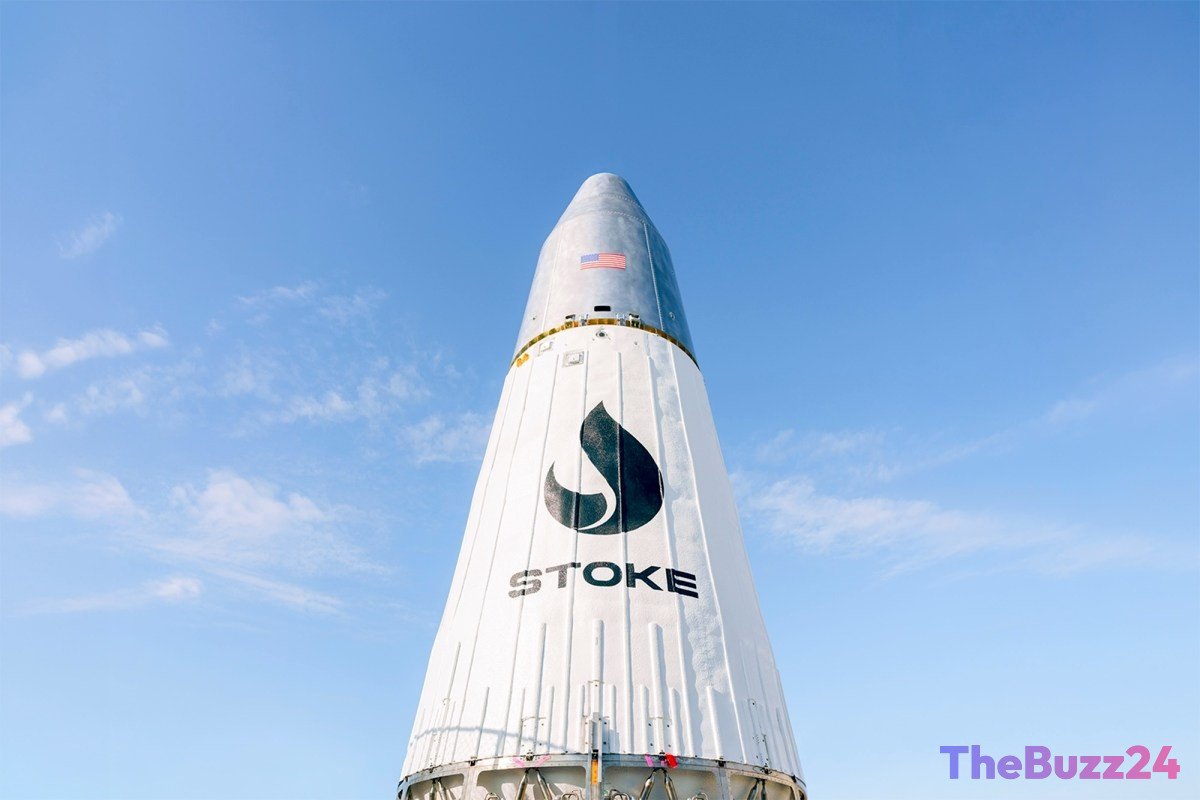
The company’s debut rocket, the Nova Pathfinder, is scheduled for its maiden flight in early 2027. Capable of delivering three metric tons to low-Earth orbit (LEO), the Pathfinder will serve as a critical stepping stone. Stoke has already secured multiple launch contracts for the vehicle and is currently preparing for integrated ground testing, which will pair the rocket with its launch pad systems for the first time.
Looking further ahead, Stoke is developing the Nova Block 2, a larger vehicle designed to carry 15 metric tons to LEO, with a targeted debut in 2029. This timeline aligns with the projected retirement of SpaceX’s workhorse Falcon 9 rocket. By focusing purely on launch services for third-party customers rather than building its own satellite constellations, Stoke aims to capture a significant share of the commercial market, offering satellite operators a dedicated alternative to SpaceX’s heavily internal-use Starship.
Key Takeaways
- Stoke Space raised $1 billion in a Series E round, bringing its total funding to $2.3 billion to scale production and infrastructure.
- The company's Nova Pathfinder rocket, featuring a unique actively cooled heat shield, is scheduled for its first flight in early 2027.
- Stoke plans to debut the larger Nova Block 2 rocket in 2029, aiming to capture commercial launch demand as SpaceX potentially phases out the Falcon 9.
Editor’s Analysis & Impact
Stoke Space’s successful $1 billion funding round underscores the intense investor appetite for viable alternatives to SpaceX’s dominance in the launch market. By aiming for 100% reusability from day one, Stoke is attempting to leapfrog intermediate rocket designs and drastically lower the cost of orbit access. Their strategic decision to remain a pure-play launch provider is a clever differentiator. Satellite operators are increasingly wary of relying on SpaceX, whose Starlink constellation often competes for internal launch priority. If Stoke can successfully execute its active-cooling heat shield technology and meet its 2027 and 2029 launch targets, it could break the current monopoly on heavy-lift reusability, reshaping the economics of the global space industry.
Frequently Asked Questions
Q: What makes Stoke Space's rockets different from other reusable rockets?
A: Unlike most competitors that only reuse the first-stage booster, Stoke Space is designing its rockets for 100% reusability, meaning both the booster and the second (upper) stage will return to Earth for reuse. They also utilize a unique active cooling system that flows liquid hydrogen through the heat shield to survive reentry.
Q: When is Stoke Space planning its first orbital launch?
A: The company expects its first vehicle, the Nova Pathfinder, to take flight in early 2027, followed by the larger Nova Block 2 vehicle in 2029.
Q: Who is funding Stoke Space's development?
A: Stoke's latest $1 billion Series E round was led by Point72 Ventures and Spark Capital, with participation from Y Combinator, Woven Capital, Glade Brook Capital, and others, bringing their total funding to $2.3 billion.
AI Disclosure: This article is based on verified data and official reports. Our Team and AI have cross-referenced every financial detail with primary sources to ensure total accuracy.
More from this Category