Strategic Ties: Myanmar President Visits India Amid Regional Geopolitical Shifts
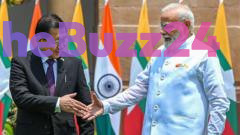
Myanmar President Min Aung Hlaing has concluded a significant five-day diplomatic visit to India, marking his first international trip since assuming the presidency earlier this year. During his stay, he held high-level discussions with Prime Minister Narendra Modi, focusing on critical bilateral issues including trade expansion, regional connectivity, and border security. The visit serves as a pivotal moment for Myanmar’s leadership as it seeks to navigate international isolation following the 2021 military coup and the subsequent civil conflict.
The discussions in New Delhi addressed the complex political landscape within Myanmar, with Prime Minister Modi reportedly raising concerns regarding the state of democracy and the ongoing detention of Aung San Suu Kyi. Despite these tensions, India has maintained a pragmatic approach, emphasizing the necessity of sustained dialogue and an inclusive peace process. Both nations reaffirmed their commitment to ensuring that their shared 1,643km border is not utilized for activities that threaten the security interests of either country.
Beyond political dialogue, the visit included a trip to Mumbai, where the Myanmar delegation engaged with business leaders to explore investment opportunities. For India, the engagement is rooted in long-term strategic interests, particularly the need to maintain stability along its volatile north-eastern frontier and to counter the growing influence of other regional powers. By hosting the president, India aims to balance its democratic values with the geopolitical reality of maintaining a stable, independent neighbor that serves as a crucial gateway to Southeast Asia.
Analysts suggest that this visit provides a degree of diplomatic validation for Myanmar’s current administration, which has been under intense scrutiny from Western nations. As the regional security environment evolves, India’s strategy remains focused on fostering a stable, sovereign Myanmar that can effectively manage its internal challenges while remaining a key partner in India’s broader ‘Act East’ policy.
Key Takeaways
- Myanmar President Min Aung Hlaing visited India to discuss trade, border security, and regional stability in his first foreign trip since taking office.
- India continues to prioritize strategic interests and border security in Myanmar, despite international criticism regarding the legitimacy of Myanmar's recent elections.
- The visit highlights a shift in regional diplomacy as Myanmar seeks to broaden its international engagement while India aims to balance its influence against other regional competitors.
Editor’s Analysis & Impact
The visit of Min Aung Hlaing to India underscores a pragmatic shift in South Asian geopolitics, where strategic necessity often supersedes ideological alignment. For India, Myanmar is not merely a neighbor but a vital buffer zone and a gateway to the ASEAN market. The ‘Act East’ policy requires a stable Myanmar to succeed, particularly as China continues to expand its economic and military footprint in the region. By engaging with the military-backed leadership, India is attempting to prevent a total vacuum that could be filled by Beijing, while simultaneously signaling a preference for regional stability over the volatility of prolonged civil war. The future outlook suggests that India will continue to walk a fine line, providing enough diplomatic engagement to maintain influence while encouraging a transition toward a more inclusive political framework to mitigate long-term security risks along its borders.
Frequently Asked Questions
Q: Why is India's relationship with Myanmar strategically important?
A: India shares a 1,643km border with Myanmar, making it essential for maintaining security in India's north-eastern states and serving as a critical link for India's 'Act East' policy.
Q: What was the primary focus of the talks between Prime Minister Modi and President Min Aung Hlaing?
A: The talks focused on trade, connectivity, border security, and the broader political situation in Myanmar, including concerns regarding democracy and the detention of political figures.
AI Disclosure: This article is based on verified data and official reports. Our Team and AI have cross-referenced every financial detail with primary sources to ensure total accuracy.
More from this Category